
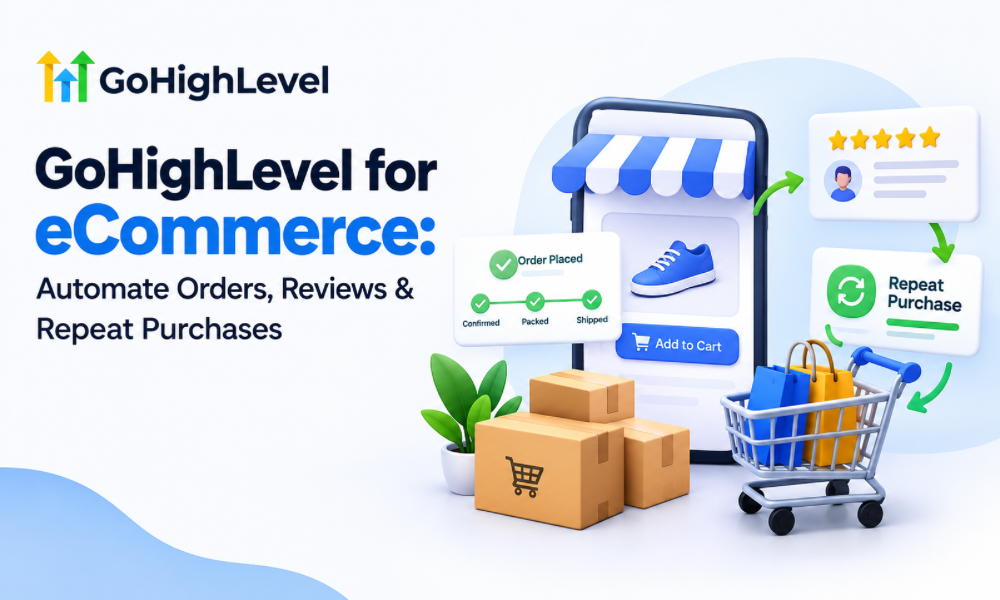
eCommerce businesses generate a large amount of customer data every day. Orders, abandoned carts, customer inquiries, shipping updates, reviews, repeat purchases, and promotional interactions can quickly become difficult to manage manually. As an online store grows, marketing teams need systems that can keep customer communication organized while reducing repetitive administrative work.
GoHighLevel can support an eCommerce automation strategy by connecting customer information to follow-up campaigns, review requests, lead nurturing, and repeat-purchase workflows. Instead of treating every customer interaction as a separate task, businesses can create automated journeys based on what customers do.
The objective is not simply to send more messages. Effective automation should make communication more timely and relevant. A customer who has just completed a purchase should receive a different message from someone who abandoned a checkout or purchased several months ago.
When these processes are designed properly, automation can help eCommerce brands maintain consistent communication while giving marketing teams more time to focus on strategy, products, and customer experience.
Why eCommerce Businesses Need Automation
Running an online store involves hundreds of small customer interactions. A customer may discover a product, visit the website several times, place an order, receive the product, leave a review, and eventually purchase another item.
Managing every stage manually becomes increasingly difficult as order volume increases.
Automation allows businesses to establish rules around these customer actions. For example, an order can trigger a confirmation sequence, while a later event can trigger a review request. A customer who purchases a particular product can enter a relevant follow-up campaign instead of receiving generic promotional messages.
This creates a more organized customer journey.
GoHighLevel as an eCommerce Marketing Layer
GoHighLevel can function as a marketing and customer-relationship layer around an eCommerce operation.
The store remains responsible for transactions and fulfillment, while GoHighLevel can support communication, segmentation, follow-up, and customer engagement depending on the available integration setup.
This distinction is important.
The goal is not necessarily to replace the eCommerce platform. Instead, GoHighLevel can help businesses build marketing processes around customer activity.
This approach becomes particularly useful when an online store wants more control over what happens after a customer submits an order.
Connecting Orders With Customer Journeys
An order is more than a transaction. It can represent the beginning of another customer interaction.
When a customer completes a purchase, the business may want to introduce complementary products, request feedback, provide educational information, or prepare the customer for a future purchase.
An automated workflow can help organize these steps.
For example, a customer purchasing a skincare product could receive information about product usage, followed by a review request and eventually a reminder about replenishment.
The exact timing depends on the product and customer journey, but the principle is consistent: customer actions should determine relevant follow-up.
Creating Post-Purchase Workflows
The period immediately after a purchase can influence the customer’s overall experience.
Instead of sending promotional messages immediately, businesses can first provide useful information.
A post-purchase workflow might include an order-related communication, product guidance, usage information, customer support instructions, and eventually a review request.
Once the customer has had sufficient time to experience the product, another workflow can encourage feedback.
This creates a customer journey that feels more connected than sending unrelated promotional emails.
Automating Review Requests
Reviews can provide valuable social proof for eCommerce businesses.
However, manually asking every customer for a review can become difficult when order volumes increase.
Automation allows businesses to create a consistent review-request process.
After a suitable period, customers can receive a message asking whether they have had an opportunity to use their purchase and share their experience.
The timing should reflect the product.
A customer may need only a few days to review a simple accessory, while a skincare product, supplement, appliance, or subscription-related product may require considerably more time.
Personalizing Review Requests
Not every customer should necessarily receive the same review message.
Customer information can help businesses create more relevant communication.
For example, messages can reference the purchased product category or customer experience stage.
Personalization should remain natural. Overly specific messaging can feel automated rather than helpful.
The purpose of automation is to make communication more timely, not to make customers feel like they are interacting with a machine.
Responding to Positive Customer Feedback
A positive review can create additional marketing opportunities.
Depending on the business process and customer permissions, positive feedback can be incorporated into approved marketing activities or used to identify customers who may be interested in future engagement.
The business can also use recurring positive themes to understand which product benefits customers value most.
Those insights can influence future advertising, product descriptions, landing pages, and email campaigns.
Automation therefore does more than collect reviews. It can help turn customer feedback into useful marketing intelligence.
Handling Negative Reviews Professionally
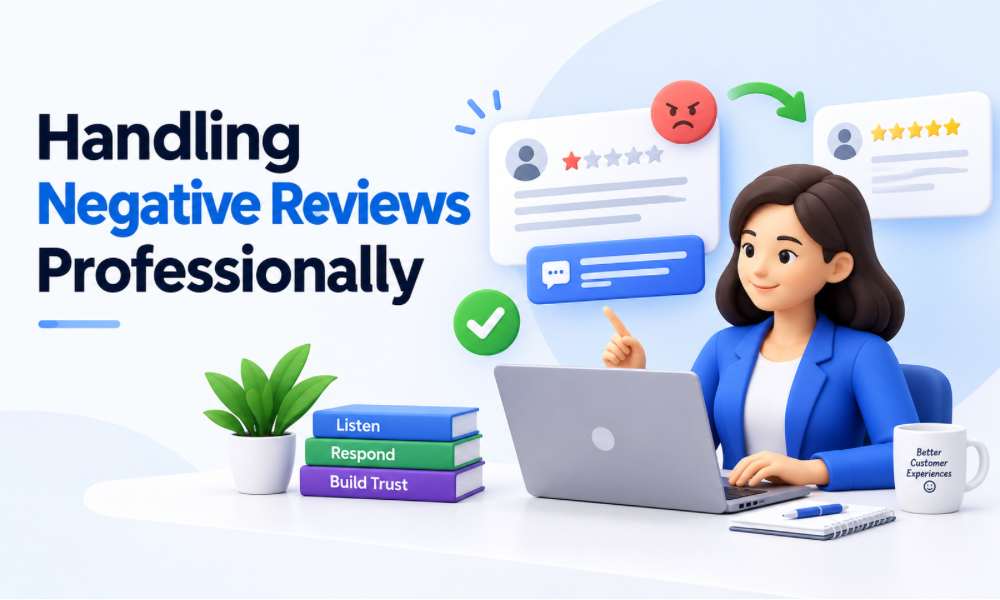
Automation should also account for dissatisfied customers. Instead of immediately pushing an unhappy customer toward another promotional campaign, the workflow can identify the feedback and route it toward an appropriate support process. This creates an opportunity for the business to address the customer’s concern. For real estate businesses using ghl for real estate, this approach can help manage customer feedback while maintaining more relevant and timely communication throughout the client journey. Negative feedback should not simply be hidden or ignored. It can reveal problems involving product quality, delivery, communication, expectations, or customer support. The right workflow allows the business to respond appropriately.
Building Repeat-Purchase Campaigns
Repeat purchases are especially important for products that customers consume, replace, or regularly reorder.
An automated campaign can be based on the expected product lifecycle.
For example, if a customer typically needs to replace a product after several weeks, a reminder can be scheduled around that period.
The message could provide a simple reminder, introduce a relevant product, or direct the customer back to the store.
The timing should be based on actual customer behavior whenever possible rather than arbitrary promotional schedules.
Product-Specific Replenishment Automation
Different products have different purchase cycles.
A coffee customer may reorder regularly, while a furniture customer may not purchase another major item for years.
This means a single repeat-purchase workflow is rarely appropriate for an entire store.
Customer segmentation can make automation more relevant.
Customers can be grouped according to product category, purchase frequency, average order value, or other useful attributes.
This allows businesses to build different journeys around different buying patterns.
Cross-Selling After an Order
Cross-selling can be another useful automation strategy.
After a customer purchases a particular product, the business can identify complementary products that may be relevant.
For example, someone purchasing a camera may eventually need accessories, while someone purchasing a coffee machine may be interested in compatible supplies.
The key is relevance.
Cross-selling should be based on a logical relationship between products rather than sending unrelated offers.
When the recommendation genuinely helps the customer, the communication is more likely to feel useful rather than intrusive.
Upselling Existing Customers
Upselling involves encouraging customers to consider a higher-value option. Automation can introduce an upgrade when the customer reaches an appropriate point in the journey. For example, a customer who repeatedly purchases a basic product might eventually receive information about a premium version. A GoHighLevel expert team can help businesses build automated workflows that consider customer behavior and engagement before presenting relevant upgrade opportunities. However, timing matters. An upsell immediately after every purchase can become repetitive. A more thoughtful workflow can consider previous purchases and engagement before presenting another offer.
Segment Customers by Purchase Behavior
Effective eCommerce automation depends heavily on segmentation.
Customers can be grouped according to factors such as first purchase, repeat purchase, product category, order value, engagement, purchase frequency, or time since last order.
This makes communication more relevant.
A first-time customer should not necessarily receive the same campaign as a long-term customer who has purchased ten times.
Segmentation also allows businesses to experiment with different messages and determine which customer groups respond to particular campaigns.
Re-Engaging Inactive Customers
Some customers purchase once and never return.
Rather than treating these customers as permanently lost, businesses can create re-engagement campaigns.
The campaign might remind customers about products, introduce something new, provide educational information, or offer an appropriate incentive.
The message should be based on the customer’s previous relationship with the brand.
For example, someone who purchased a particular product category could receive content related to that category instead of a generic store-wide promotion.
Abandoned Cart Follow-Up
Abandoned checkout behavior can represent another automation opportunity.
When a customer begins the purchasing process but does not complete it, a carefully designed follow-up sequence can remind them about the unfinished action.
However, the sequence should not immediately assume that the customer simply forgot.
The customer may have encountered a payment problem, shipping concern, technical issue, or unexpected cost.
A useful abandoned-cart workflow can therefore include a reminder followed by helpful information rather than relying entirely on aggressive discounts.
Customer Support Automation
eCommerce automation is not limited to marketing.
Customer support processes can also benefit from structured workflows.
Common questions about order status, returns, product information, shipping, and account details can be routed according to the customer’s situation.
Automation can help identify the customer and provide relevant information before a support representative becomes involved.
The goal should be to make support faster while ensuring customers can still reach a person when the issue requires human attention.
Using GoHighLevel for Multiple Customer Touchpoints
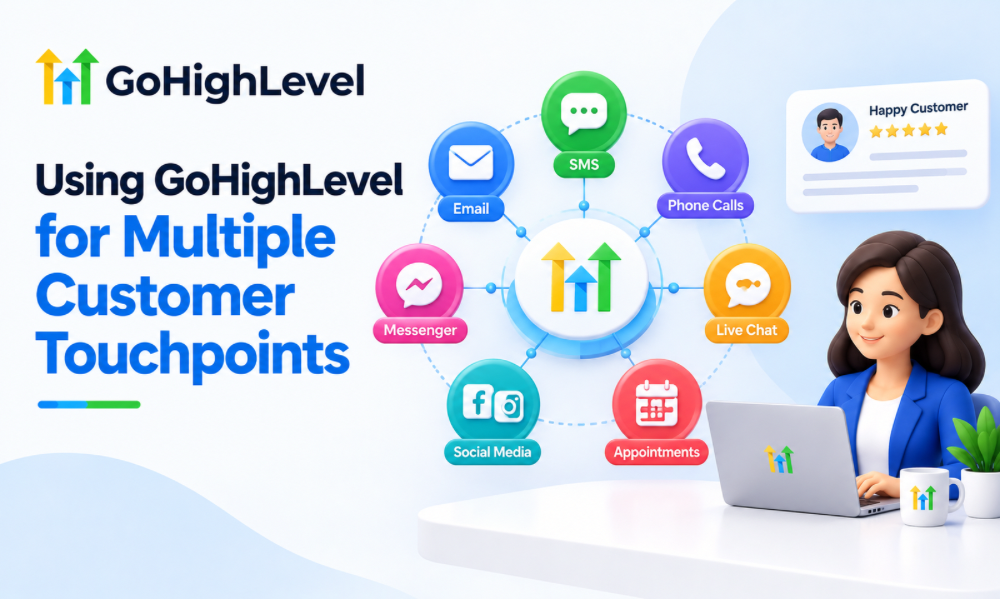
Modern customers may interact with a business through email, SMS, forms, landing pages, appointment-style interactions, and other communication channels.
A coordinated automation strategy can help businesses avoid treating each channel independently.
For example, a customer who has already completed a purchase should not continue receiving messaging designed for prospects who have never bought anything.
Customer status should influence communication.
This is where a properly structured CRM and workflow system becomes valuable.
The Role of GoHighLevel Marketing Agencies
Some eCommerce companies have internal marketing teams, while others work with external specialists.
GoHighLevel marketing agencies can help businesses design customer journeys, create workflows, organize segmentation, and connect marketing activities with CRM processes.
The value of an agency should not simply be measured by how many workflows it creates.
The more important question is whether those workflows solve actual operational and customer-experience problems.
A strong implementation should be documented so that the business understands what each automation does and why it exists.
When a GoHighLevel Expert Team Can Help
As an eCommerce operation becomes more complex, multiple workflows may begin interacting with one another.
Orders can trigger campaigns. Campaigns can modify customer status. Reviews can initiate follow-ups. Repeat purchases can move customers into new segments.
This can become difficult to manage without a clear structure.
A GoHighLevel expert team can help map these processes before building them.
The team can review the customer journey, identify automation opportunities, organize workflow logic, and test different scenarios.
This can be especially useful for businesses that have already accumulated several disconnected automations.
Working With a Go High Level Freelancer
Smaller eCommerce businesses may prefer working with an individual specialist rather than a large agency.
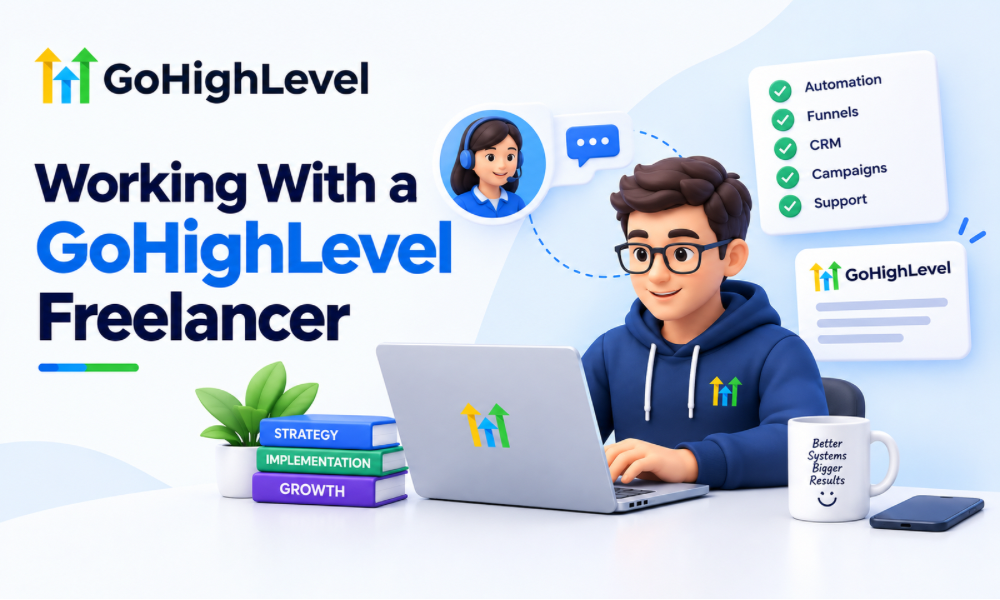
A Go High Level freelancer can assist with specific projects such as setting up post-purchase workflows, configuring segmentation, creating follow-up sequences, or reviewing existing automation.
This can be useful when the project has a clearly defined scope.
However, businesses should ensure that the freelancer documents the setup properly so the system does not become dependent on one person’s memory.
A second GoHighLevel freelancer may also be brought in later, so clear documentation can make future maintenance easier.
GoHighLevel SaaS Automation for eCommerce Operations
Businesses managing multiple brands, stores, or client accounts may require a more structured automation environment.
gohighlevel saas automation can be relevant when standardized workflows need to be deployed repeatedly across different accounts or business environments.
Instead of rebuilding similar processes from scratch, a company can establish reusable frameworks and adjust them according to each store’s requirements.
This can reduce implementation time while creating greater consistency.
However, standardized automation should still allow for differences between products, customer segments, purchasing cycles, and business models.
Automation for Different Business Models
Not every eCommerce company sells products in the same way.
Subscription businesses may need renewal reminders and failed-payment communication.
Retail brands may focus on repeat purchases and seasonal campaigns.
High-ticket product businesses may require longer consideration journeys.
Consumable-product businesses may focus heavily on replenishment.
Because these models behave differently, the automation strategy should be built around the actual customer lifecycle.
The same workflow should not simply be copied across every business.
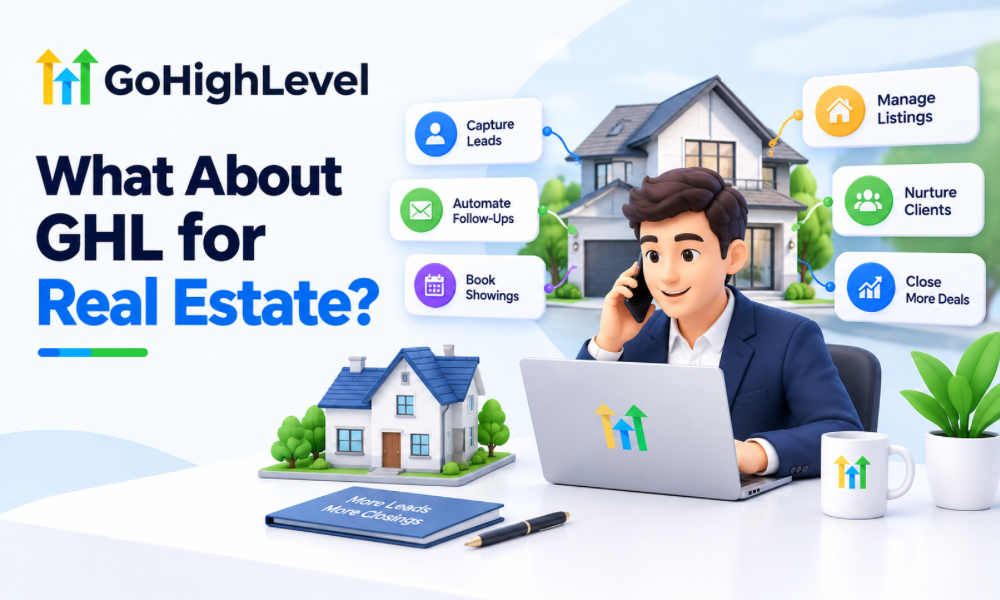
What About GHL for Real Estate?
Although GHL for real estate is commonly associated with lead nurturing, appointment workflows, and property-related follow-up rather than traditional eCommerce, the underlying automation concepts can still provide useful lessons.
Real estate workflows often depend on customer stages, timing, segmentation, and personalized follow-up.
Those same principles can apply to eCommerce.
The difference is the customer journey.
An online store may move customers from browsing to purchase to repeat purchase, while real estate may involve lead capture, qualification, consultation, property interest, and long-term nurturing.
Understanding this distinction prevents businesses from copying workflows without considering their actual sales cycle.
How Agencies Can Use Automation for Multiple Stores
Businesses that manage multiple eCommerce brands may benefit from reusable automation frameworks.
GoHighLevel marketing agencies can develop standardized structures for common processes such as lead capture, customer follow-up, review requests, and re-engagement.
However, reusable frameworks should not mean identical messaging.
Each brand has different products, customer expectations, purchase cycles, and communication styles.
The underlying automation architecture can be standardized while the customer-facing content is adapted to each business.
When to Use a GoHighLevel Expert Team
Complex eCommerce automation may involve numerous workflows and integrations.
A GoHighLevel expert team can help review the existing system, identify redundant workflows, organize customer segments, and build a more structured automation framework.
This becomes especially valuable when the business is moving from manual processes to automation for the first time.
The team can also help document the setup so internal employees understand how the system operates.
The Future of eCommerce Automation
As customer data becomes more connected, eCommerce businesses will have more opportunities to build personalized customer journeys.
Automation systems can increasingly respond to purchase history, engagement patterns, product categories, and customer lifecycle stages.
The challenge will be maintaining relevance.
More automation does not necessarily mean better marketing.
Businesses that focus on useful timing, accurate segmentation, clear customer journeys, and responsible communication can build systems that support both efficiency and long-term customer relationships.