
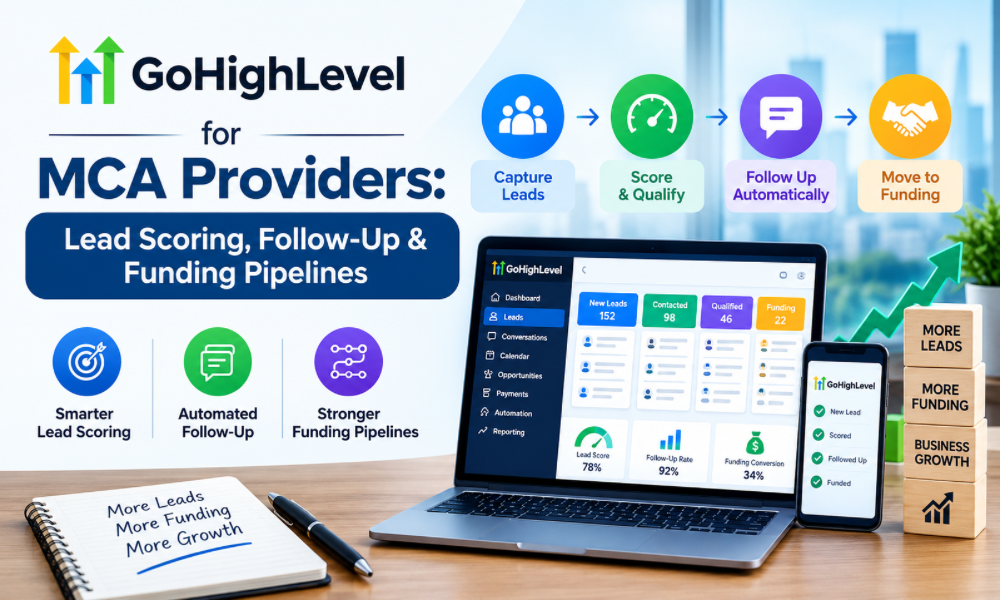
Merchant Cash Advance (MCA) providers operate in a fast-moving financial services environment where response time, lead quality, document collection, and consistent follow-up can directly influence funding opportunities. Prospective merchants may apply to several providers at once, so sales teams must respond quickly, identify qualified prospects, and stay in touch throughout the funding process.
Managing these activities through spreadsheets, disconnected communication tools, and manual reminders can create serious operational challenges. Leads may go untouched, sales representatives may overlook promising applications, and merchants may receive inconsistent updates while waiting for decisions. A well-configured GoHighLevel system can help MCA providers organize their sales operations, automate routine communication, and improve visibility into every opportunity.
Working with a GHL automation specialist can help providers build workflows that reflect their actual funding processes rather than relying on generic CRM templates. Businesses that hire GoHighLevel consultant professionals can also create a more structured approach to lead qualification, follow-up, and pipeline management.
The objective is not simply to automate messages. It is to develop a connected system that helps teams understand which prospects need attention, what stage each application has reached, and what action should happen next. With the right configuration, GoHighLevel can support a more organized MCA sales process while keeping human judgment central to funding decisions.
Understanding the MCA Sales Journey
An MCA sales journey typically begins when a business owner expresses interest in receiving working capital. The merchant may complete a website form, respond to an advertisement, call a sales representative, or submit information through a referral partner. From there, the provider may need to establish contact, gather preliminary details, review eligibility criteria, collect documents, coordinate underwriting, and communicate the next steps.
Each stage introduces opportunities for delays and misunderstandings. A prospect who receives no response may move to another provider, while an application missing essential information can remain inactive until someone follows up. Without a shared system, sales representatives may also struggle to determine whether a colleague has already contacted a merchant.
GoHighLevel can help bring these activities into one operational environment by connecting lead records, communication history, tasks, workflows, and pipeline stages. The precise setup depends on the provider’s existing processes, integrations, and compliance requirements.
A hire a GoHighLevel expert is especially useful when an MCA company needs its CRM to reflect multiple lead sources, sales representatives, funding products, or referral relationships. Instead of forcing the business to adapt to an unsuitable template, the system can be designed around how its team actually handles applications.
Building an MCA Lead Capture and Qualification System
MCA providers often receive prospects from paid advertising, organic search, landing pages, referral partners, inbound calls, and existing customer relationships. When these leads enter separate systems, sales teams can lose visibility into where inquiries originate and whether anyone has responded.
GoHighLevel can centralize lead capture through supported forms, landing pages, contact records, and configured integrations. Each record should contain the information necessary to begin the sales conversation, such as the merchant’s business name, contact details, preferred contact method, and source of inquiry.
Additional information can be collected progressively when appropriate. For example, a provider may ask about the business industry, time in operation, approximate monthly revenue, or desired funding amount during an initial qualification process. Sensitive financial documents should be collected and stored through appropriate secure systems rather than casually distributed through ordinary messaging channels.
Source tracking is also important. If a company receives leads from several advertising campaigns or referral partners, identifying the source helps it understand which channels generate useful opportunities rather than simply producing high inquiry volumes.
A GHL automation specialist can configure source fields, assignment rules, and intake workflows so that new prospects enter the correct process. The result is a more reliable starting point for qualification and follow-up.
Using Lead Scoring to Prioritize MCA Opportunities
Not every inquiry represents the same level of readiness. Some merchants may have an immediate funding need and complete application information, while others may still be researching financing options or may not meet the provider’s initial requirements.
Lead scoring helps sales teams prioritize their attention by assigning points to defined behaviors or information. An MCA provider might consider whether a prospect has submitted an application, responded to an outreach message, provided requested documents, scheduled a consultation, or confirmed a current funding requirement.
For example, a prospect who completes an application and responds to a qualification call may receive a higher engagement score than someone who only visits a landing page. The scoring model should reflect the provider’s actual sales process and be reviewed against historical outcomes to determine whether it is useful.
GoHighLevel can support scoring-related workflows using available contact fields, tags, custom values, and automation conditions. Depending on the account configuration, some scoring logic may require additional integrations or custom implementation.
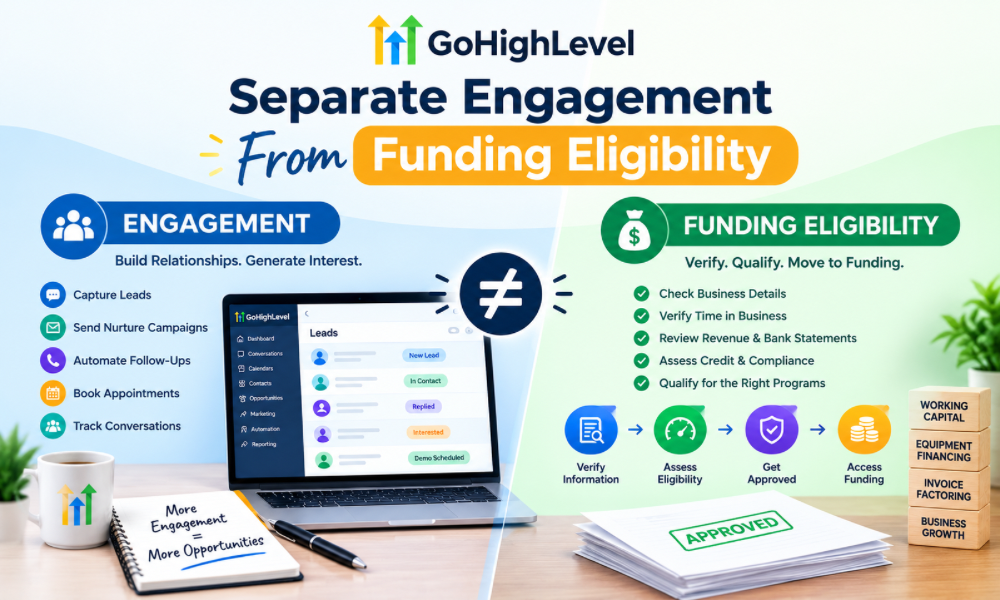
The important distinction is that engagement scoring should not automatically be treated as a credit decision. A merchant’s willingness to respond to messages does not establish creditworthiness, and an automated score should not replace the provider’s approved underwriting process.
Separate Engagement From Funding Eligibility
A strong MCA CRM distinguishes between sales readiness and funding eligibility. A highly responsive merchant may still need underwriting review, while a prospect who responds slowly may ultimately qualify for a suitable funding option.
Providers should therefore maintain separate indicators for engagement, application completeness, and underwriting status. These indicators answer different operational questions and help prevent sales representatives from interpreting a high engagement score as approval.
Businesses that hire GoHighLevel consultant professionals should define these distinctions before building automated scoring rules. The consultant can help map which fields influence sales prioritization, which events trigger follow-up, and which decisions must remain with authorized personnel.
The model should also be reviewed regularly. If high-scoring leads consistently fail to progress, the business may need to revise its scoring criteria or improve the information collected during intake. Effective scoring supports better prioritization; it does not eliminate the need for human evaluation.
Automating Follow-Up Without Losing the Human Touch
Speed matters in MCA sales because prospective merchants may contact multiple providers while comparing funding options. An immediate acknowledgment confirms that the inquiry has been received and explains what the merchant can expect next.
GoHighLevel workflows can send configured email or SMS responses when a prospect submits a form, provided the appropriate channel is available and the business has the required permissions. A notification can also alert the assigned sales representative so that personal outreach can begin promptly.
The initial response should be useful rather than overly promotional. It might confirm receipt of the inquiry, explain the next step, and provide a clear way to speak with a representative. Messages should not imply that funding is approved or guaranteed before the required review has occurred.
A GHL automation specialist can configure the trigger conditions, assignment logic, and communication timing to reduce delays without creating unnecessary messages. The workflow should also recognize existing contacts and avoid sending duplicate acknowledgments when the same merchant submits multiple inquiries.
Create Follow-Up Sequences Based on Prospect Behavior
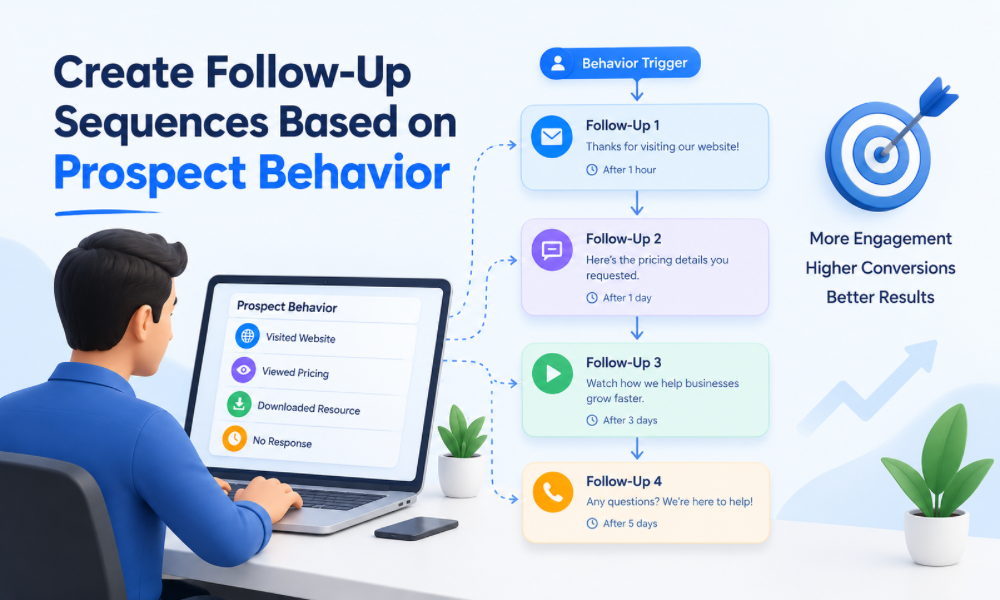
A single unanswered message rarely provides enough information to determine whether a merchant remains interested. A structured follow-up sequence gives sales teams additional opportunities to connect while allowing the workflow to respond to changes in the prospect’s behavior.
For example, a provider might send an initial acknowledgment, create a task for a representative to call, and schedule a later follow-up if the prospect has not responded. If the merchant replies, books a meeting, or requests no further communication, the workflow should respond appropriately instead of continuing the original sequence.
Different pipeline stages should have different communication logic. A new inquiry may need an introduction, while a merchant with incomplete documents may need a reminder explaining what remains outstanding. Someone awaiting a funding decision may require a status update from the responsible team rather than another sales pitch.
Businesses should establish reasonable contact limits, respect consent and opt-out requirements, and provide a clear way for prospects to communicate their preferences. Automation should improve responsiveness without creating pressure or confusing merchants about their application status.
Designing a Funding Pipeline in GoHighLevel
A funding pipeline gives MCA providers a shared view of where each opportunity stands. Rather than relying on individual representatives to remember every conversation, the CRM records the current stage and helps identify the next required action.
A practical pipeline might include new inquiry, initial contact, qualification in progress, application received, documents pending, underwriting review, offer presented, merchant decision, agreement completion, funded, and closed or disqualified. The exact stages should reflect the provider’s terminology and operating procedures.
Each stage should have a clear definition. For example, an opportunity should not move to underwriting review until the required preliminary information has been received and the responsible team has confirmed that the file is ready for review. A merchant who has received an offer should not be marked as funded until funding has actually been confirmed through the appropriate process.
GoHighLevel opportunities, custom fields, tags, and workflows can help represent these stages and coordinate related tasks. Where underwriting or funding information lives in another platform, the provider may need a supported integration or a controlled manual update process.
Automate Stage Changes and Internal Tasks
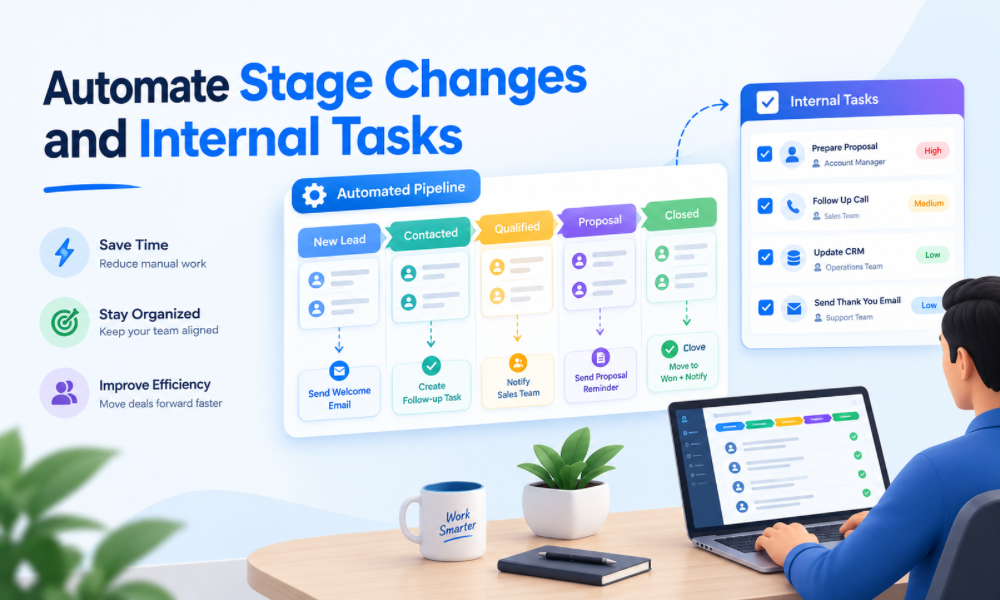
A pipeline becomes more valuable when changes in status lead to useful operational actions. When a new application is received, the system might notify the assigned representative and create a qualification task. When a document status changes to pending, it could create a reminder to contact the merchant. When an opportunity moves into underwriting, the relevant team may receive a notification.
These actions reduce reliance on memory and help prevent opportunities from becoming inactive without explanation. They also make it easier for managers to identify bottlenecks across the sales process.
However, automatic stage changes should be used carefully. A prospect opening an email should not automatically be marked as qualified, and a completed form should not trigger a funded status. Critical stages should depend on verified events or confirmation from authorized team members.
Companies that hire a GoHighLevel expert should establish clear rules for each transition and test them with realistic scenarios before launching the workflow. This helps prevent incorrect reporting and unnecessary communication.
Managing Documents and Merchant Communication
MCA applications can involve business bank statements, application forms, identification, and other supporting information depending on the provider’s requirements. Missing documents can delay review, especially when merchants are unsure what to submit or where to send it.
GoHighLevel can help coordinate document requests by recording application status, assigning tasks, and sending reminders when information remains outstanding. Custom fields can identify which items have been received, which require review, and which still need to be supplied.
The CRM should not automatically be treated as a secure document repository simply because it can store contact information. Providers must evaluate the security, access controls, retention policies, and regulatory requirements of the systems used to handle sensitive financial information. Secure document portals or approved third-party systems may be more appropriate for collecting and storing financial records.
Communication should also be specific. Instead of sending a vague reminder, the workflow should explain what is missing and how the merchant can submit it through the approved channel. This reduces confusion and gives the sales team a clearer view of the application’s progress.
Reporting and Performance Optimization
An effective MCA CRM should help management understand more than the total number of inquiries received. It should reveal which sources generate qualified opportunities, how quickly representatives respond, where applications stall, and how many opportunities progress through each stage.
Useful measurements may include time to first response, contact rate, qualification rate, application completion rate, document completion time, offer acceptance rate, and funding conversion rate. Each metric should have a clear definition so that different team members interpret the numbers consistently.
For example, a campaign might generate many leads but few completed applications. This could indicate a mismatch between the advertising message and the actual qualification requirements. Alternatively, strong application volume combined with a high number of incomplete files might suggest that the document collection process needs improvement.
GoHighLevel reporting and configured fields can support parts of this analysis, although some metrics may require external reporting tools or integrations. Data quality is essential: if representatives fail to update opportunity stages, dashboards may present an inaccurate picture of performance.
A GoHighLevel expert team can help establish consistent field definitions, reporting conventions, and workflow rules so that management decisions are based on more reliable information.
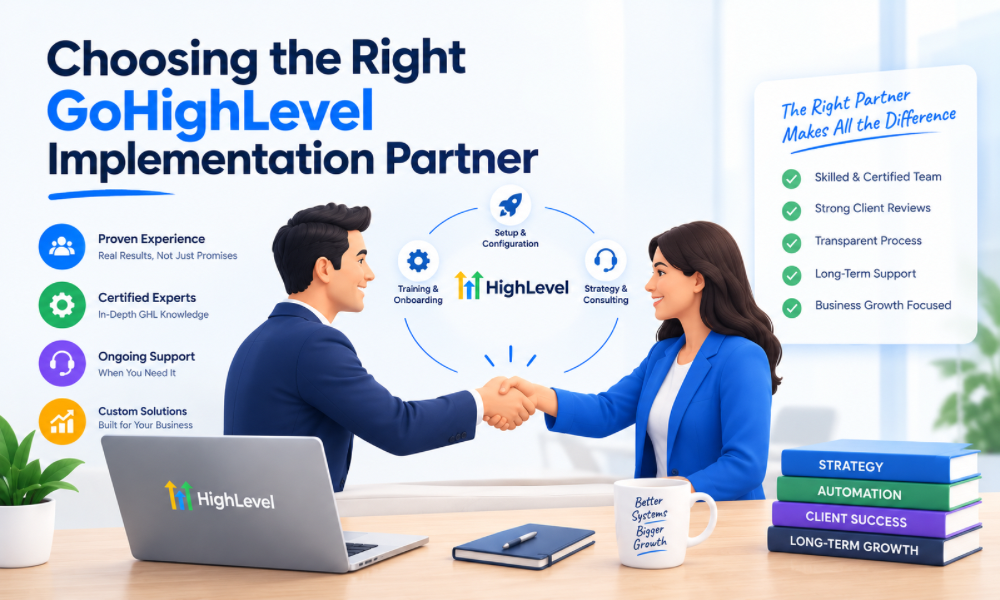
Choosing the Right GoHighLevel Implementation Partner
A generic CRM setup may be sufficient for a simple sales process, but MCA providers often need more detailed coordination between intake, qualification, follow-up, document collection, underwriting, and funding. Poorly planned automation can create duplicate contacts, incorrect stage changes, excessive reminders, and confusing reports.
When businesses hire GoHighLevel consultant professionals, they should look for experience with pipeline design, workflow logic, CRM data organization, integrations, and testing. The consultant should first understand how the company operates before recommending automation.
Providers serving specific markets may also benefit from working with specialists who understand their communication requirements and business context. For example, gohighlevel experts Toronto may be relevant to companies seeking implementation support in Toronto, but geographic proximity alone does not establish technical competence or MCA-specific experience.
A capable GoHighLevel expert team should document the system, explain how workflows operate, and provide a practical process for testing and maintenance. Businesses should avoid implementations that depend entirely on undocumented rules or one person’s memory.
Conclusion: Build a More Organized MCA Funding Process
GoHighLevel can help MCA providers bring lead capture, follow-up, sales activity, and funding pipeline visibility into a more coordinated system. Lead scoring can support prioritization, automated communication can reduce avoidable delays, and structured pipeline stages can help teams understand what needs attention next.
The greatest benefit comes from connecting these capabilities to a clearly defined sales process. Engagement scores should not replace underwriting, document reminders should respect security requirements, and funding stages should reflect verified progress rather than automated assumptions.
Working with a GHL automation specialist, choosing to hire a GoHighLevel expert, or partnering with a GoHighLevel expert team can help providers build a CRM that reflects their operational needs. The right implementation should be practical, documented, measurable, and adaptable as the business grows.