Building a funnel in GoHighLevel is only the first step toward generating leads and sales. A well-designed landing page, an attractive offer, and an automated follow-up sequence may look impressive, but they don’t guarantee visitors will take action. If people are visiting your pages without submitting forms, booking appointments, or completing purchases, something in the customer journey may be preventing them from moving forward.
A funnel can underperform for several reasons. The offer may not match the audience’s needs, the landing page may confuse visitors, the form may ask for too much information, or the follow-up process may fail to engage interested prospects. Sometimes, the problem is not visible on the page at all. A broken workflow, incorrect trigger, tracking issue, or poorly configured integration can quietly undermine an otherwise promising campaign.
This is why a GoHighLevel funnel audit should examine the complete journey rather than focusing exclusively on page design. The objective is to understand where prospects lose interest, identify technical and strategic problems, and make improvements based on actual performance data. Integrating GoHighLevel automation services can also help streamline follow-ups, improve lead nurturing, and reduce friction throughout the customer journey.
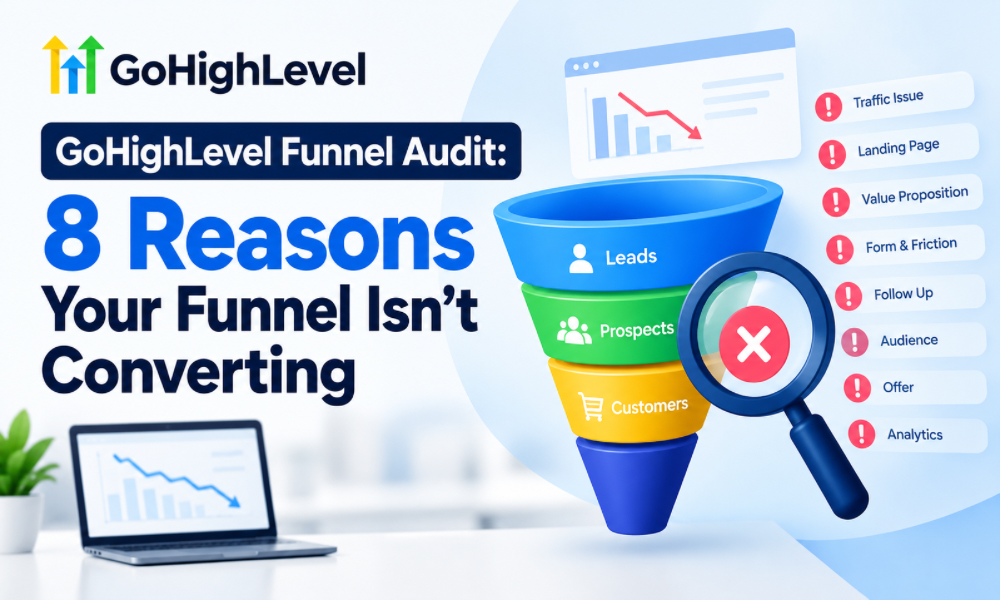
Whether you are managing funnels for your own business or building campaigns for clients, a structured audit can help you distinguish between problems that require immediate fixes and those that need broader strategic changes. Here are eight common reasons your GoHighLevel funnel may not be converting and how to address them.
Your Offer Doesn’t Match What Visitors Actually Want
One of the most common reasons a funnel fails is that the offer does not align with the visitor’s expectations. Businesses often spend considerable time improving page layouts, adjusting colors, and testing buttons while overlooking the fundamental question: does the offer provide a compelling reason for the target audience to act?
A funnel can attract relevant traffic and still produce few conversions if visitors do not understand the value of the offer. For example, a marketing agency might advertise help with generating qualified leads but direct visitors to a generic consultation page that says very little about the problems the agency solves. The visitor may be interested in getting more leads but remain uncertain about what the consultation will deliver.
The first step in an audit is to compare the advertisement, traffic source, landing page, and call to action. These elements should communicate a consistent message. If an advertisement promises a free website assessment, the landing page should immediately explain what the assessment includes, who it is for, and what the visitor receives after submitting the form.
Your offer should also reflect the audience’s level of awareness. Someone who has only recently identified a problem may respond better to an educational resource than a request to purchase an expensive service immediately. A visitor who has already compared providers may be more interested in a consultation, demonstration, or detailed proposal.
Review your funnel from the perspective of a potential customer. Ask whether the benefit is specific, whether the outcome is realistic, and whether the next step feels worthwhile. Improving the offer can have a greater impact than making minor design changes to an otherwise functional page.
Your Landing Page Creates Confusion
A landing page should make it easy for visitors to understand what is being offered and what they should do next. When a page contains too many competing messages, unnecessary navigation, vague headlines, or distracting elements, visitors may leave without taking action.
During a GoHighLevel funnel audit, examine the first screen visitors see on both desktop and mobile devices. The headline should communicate the primary benefit, while the supporting text should explain why the offer matters. The main call to action should be easy to recognize without requiring visitors to search through the entire page.
Consider a page promoting a strategy consultation. If the headline talks about business growth, the supporting copy discusses unrelated services, and the button says something vague such as “Learn More,” the visitor may struggle to understand the intended action. A clearer headline, concise explanation, and specific button label can create a more coherent experience.
Page length also deserves attention. Long pages are not automatically ineffective, particularly when visitors need detailed information before making a decision. However, every section should help answer a question, establish credibility, explain the offer, or reduce uncertainty. Repeated claims and irrelevant content can make the decision more difficult.
Check the visual hierarchy as well. Important information should stand out, paragraphs should be readable, and buttons should have sufficient contrast. Remove unnecessary links if they distract visitors from the primary conversion goal.
If your business needs assistance reviewing its landing pages and conversion paths, experienced gohighlevel crm services providers can help assess how the funnel experience connects with the broader customer journey. The objective is not simply to make the page look better. It is to make the offer easier to understand and act upon.
Your Forms Ask for Too Much Information
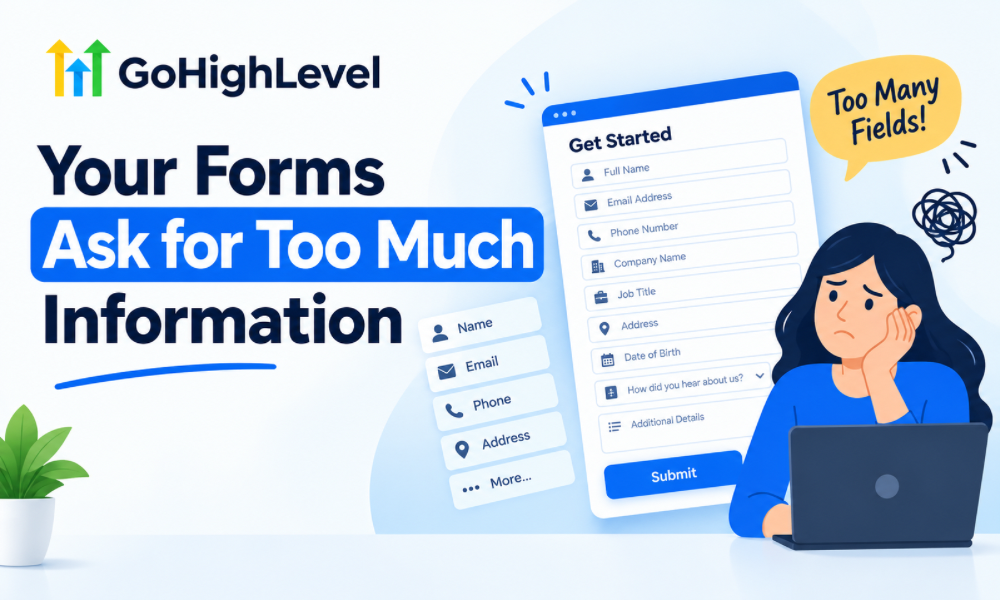
Every additional form field introduces another decision for the visitor. Although some information is necessary to qualify a lead, requesting too much too early can discourage people from completing the form.
Imagine a visitor who wants to book a short consultation. If the form requires a full business address, company revenue, employee count, several qualification answers, and extensive contact information, the process may feel disproportionate to the value being offered.
Review every field and determine whether the information is genuinely necessary at that stage. A basic lead-generation form might require only a name, email address, and one relevant qualification question. Additional details can be collected during the consultation or through a later onboarding process.
The appropriate form length depends on the offer and audience. A high-value B2B consultation may justify more qualification than a downloadable guide. The goal is not to remove every field but to balance lead quality with completion rates.
GoHighLevel forms should also be tested for usability. Confirm that required fields are clearly identified, validation messages are understandable, and visitors receive appropriate confirmation after submission. Check whether the form works correctly on smaller screens, where typing and navigating between fields can be more difficult.
If the funnel uses a multi-step form, ensure that each step feels logical and that progress is clear. Avoid making the first step unnecessarily demanding simply because the form has been divided into multiple screens.
Finally, verify what happens after submission. The contact should be recorded correctly, the visitor should receive the expected confirmation, and the appropriate workflow should begin. A form that appears to work but fails to pass data into the CRM can create a serious operational problem.
Your Call to Action Doesn’t Give Visitors a Clear Next Step
A call to action is more than a button. It is the point where visitors decide whether they are willing to continue the relationship with your business.
Weak calls to action often use vague language, compete with other page elements, or ask for a commitment that feels too large. A visitor who is still evaluating a service may hesitate when the only available option is to purchase immediately or speak with a salesperson without understanding what the conversation involves.
Your call to action should describe the action and, where appropriate, communicate its value. Labels such as “Book Your Strategy Call,” “Request a Website Review,” or “Get Your Custom Proposal” provide a clearer expectation than generic wording.
Placement matters too. Visitors should encounter a relevant call to action after receiving enough information to understand the offer. On longer landing pages, repeating the primary action at appropriate points can help interested readers proceed without scrolling back to the top.
However, adding more buttons does not automatically increase conversions. Too many different calls to action can split attention between unrelated goals. If the page asks visitors to book a meeting, download a guide, follow social accounts, explore several services, and subscribe to a newsletter, the main conversion objective becomes less obvious.
Test the complete action rather than the button alone. If a visitor clicks the button but abandons the calendar, the problem may involve scheduling options or the booking process. If visitors do not click at all, the offer, messaging, or placement may require improvement.
A useful audit identifies the exact step where the visitor stops progressing rather than assuming that every low conversion rate is caused by poor button design.
Your Follow-Up Automation Is Broken or Poorly Timed
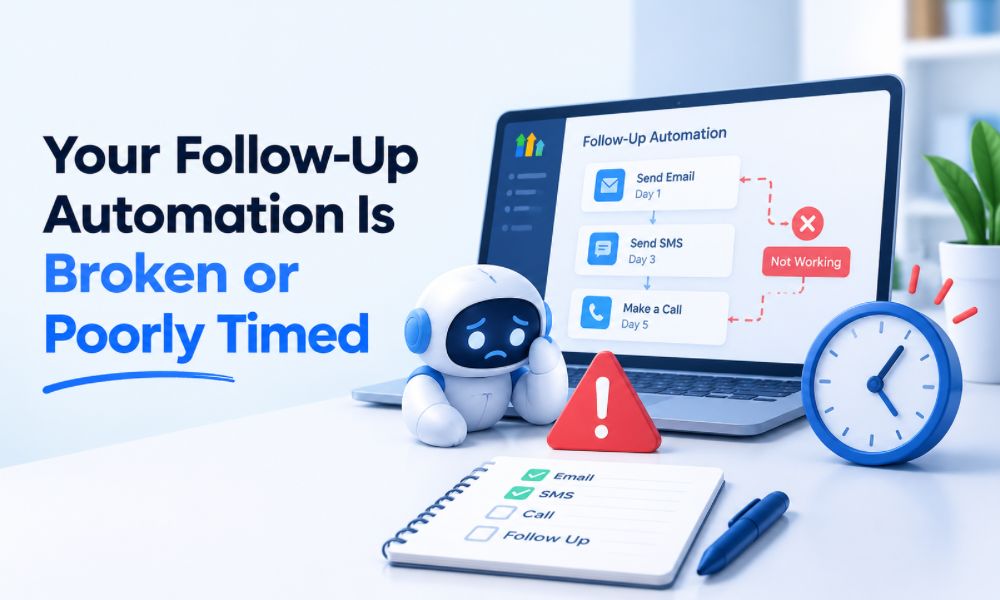
A funnel does not end when someone submits a form. For many businesses, the most important work begins afterward.
A prospect may submit an inquiry, book a consultation, or request pricing, but the opportunity can disappear if the business responds too slowly or fails to provide the expected next step. Even when the landing page performs well, an unreliable follow-up system can prevent those leads from becoming customers.
During the audit, inspect the workflows connected to your forms, calendars, pipelines, and offers. Confirm that the correct trigger is being used and that contacts enter the intended sequence. Check whether conditions, delays, and exclusions work as expected.
For example, a person who books a consultation should receive a confirmation and appropriate reminders. They should not continue receiving messages asking them to schedule the same appointment. Likewise, a prospect who has already purchased should not remain in a promotional sequence intended for new leads.
Review the timing and relevance of your messages. Immediate confirmation is often useful after a form submission, while subsequent messages should provide meaningful information or help the prospect complete the next step. Repeated generic reminders can create frustration rather than engagement.
Businesses offering gohighlevel automation services should also test workflow behavior under different conditions. Submit forms using test contacts, book and cancel appointments, change pipeline stages, and verify that the correct messages are sent or stopped.
An experienced GoHighLevel automation expert can help diagnose complex workflow problems, particularly when multiple automations interact with the same contact. However, even a straightforward funnel should have a documented testing process before it goes live.
Your Funnel Isn’t Optimized for Mobile Visitors
A landing page that looks excellent on a desktop computer may be difficult to use on a smartphone. Text can become too small, buttons can be difficult to tap, images may occupy too much space, and forms may require unnecessary scrolling.
These problems can affect conversions because visitors often arrive through mobile search, social media, email, and advertising. If the page creates friction on a smaller screen, interested prospects may leave before reaching the offer.
Test the funnel on multiple screen sizes rather than relying exclusively on the page builder’s preview. Review the headline, spacing, image proportions, form layout, button size, and overall reading experience. Check whether visitors can understand the offer quickly without excessive scrolling.
Pay particular attention to forms and calendars. Input fields should be easy to select, labels should remain readable, and the booking process should not require awkward horizontal scrolling. If the page uses embedded elements, verify that they display correctly across supported browsers and devices.
Page speed is another important consideration. Oversized images, unnecessary scripts, and poorly optimized embedded content can make the experience feel slow. Compress images where appropriate, remove unused elements, and investigate performance issues before making large design changes.
A certified GoHighLevel (GHL) expert may be able to help with page configuration and responsive design, but technical assistance should be guided by evidence. Identify the specific device-related problem first, then test whether the changes improve usability and conversions.
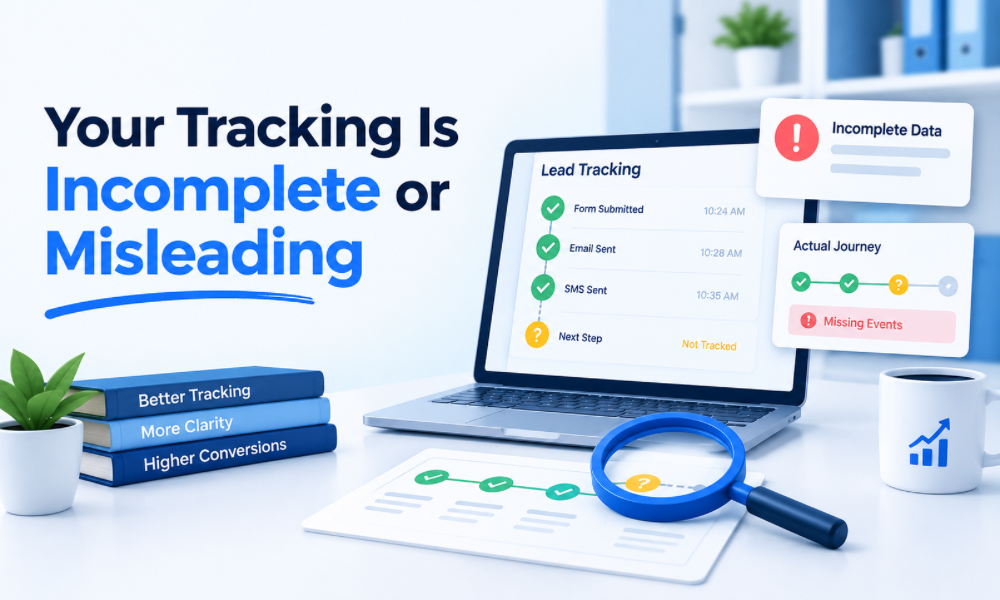
Your Tracking Is Incomplete or Misleading
You cannot confidently optimize a funnel if you do not know what visitors are doing.
A funnel may appear unsuccessful because conversions are not being tracked correctly. Alternatively, a dashboard may report clicks or form interactions that do not represent genuine leads. Without reliable measurement, businesses risk changing the wrong elements or making decisions based on incomplete information.
Start by defining the primary conversion action. Depending on the funnel, this might be a successful form submission, a booked appointment, a completed purchase, or a qualified lead entering a particular pipeline stage.
Then verify that each important event is recorded accurately. Check form submissions, calendar bookings, thank-you pages, payment confirmations, and relevant CRM updates. If external analytics or advertising platforms are involved, confirm that their tracking configurations match the actual customer journey.
Avoid counting the same conversion multiple times. For example, a thank-you page reload should not automatically create another conversion if the original form submission has already been recorded. Likewise, button clicks should not be treated as completed leads when visitors abandon the form afterward.
It is also important to distinguish between a lead and a qualified opportunity. A funnel that generates many inquiries but very few relevant prospects may need improvements to its targeting, messaging, or qualification process rather than its page design.
Businesses using gohighlevel crm services should connect funnel activity with CRM outcomes wherever possible. This makes it easier to understand which campaigns generate valuable opportunities, not simply which pages attract the most interactions.
You Aren’t Testing the Funnel Systematically
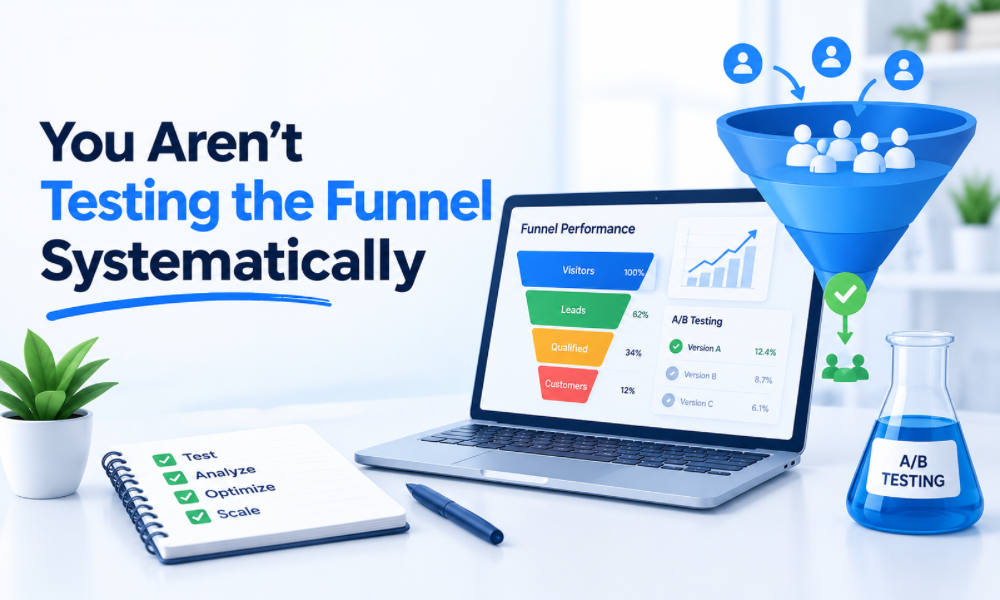
A funnel audit should lead to informed changes, not a series of random adjustments.
Businesses sometimes change the headline, page design, offer, form, and follow-up sequence at the same time. If conversions improve or decline afterward, it becomes difficult to identify which change influenced the outcome.
A more effective approach begins with a clear hypothesis. For example, if visitors reach the landing page but rarely submit the form, you might suspect that the offer is unclear or the form requires too much information. Test one meaningful change and compare the results with the original version.
Choose the metric that reflects the objective. A lead-generation funnel may be evaluated through form completion rate and qualified leads, while a booking funnel may require attention to completed appointments and attendance. A sales funnel should ultimately be assessed through purchases, revenue, or another relevant business outcome.
Allow enough time and traffic to interpret results responsibly. Small samples can produce misleading fluctuations, particularly when traffic sources or audience quality vary. Where possible, compare similar periods and avoid drawing strong conclusions from a handful of visitors.
Keep a record of changes, test dates, traffic sources, and outcomes. This creates a useful history of what has been tried and helps prevent the same unsuccessful adjustments from being repeated.
If internal resources are limited, you may choose to hire GoHighLevel expert support to review the funnel, identify the most likely bottlenecks, and establish a practical testing plan. The most useful support combines technical knowledge with a clear understanding of the business objective.