
Online reviews have become one of the strongest forms of social proof for modern businesses. Before contacting a company, booking an appointment, purchasing a service, or visiting a local business, customers often look at what other people have experienced. A business with a consistent stream of genuine positive reviews can appear more credible and established, while a business with very few reviews may struggle to create the same level of confidence.
The challenge is that businesses cannot simply ask every customer for feedback manually. As the customer base grows, remembering when to send a review request becomes increasingly difficult. Some customers may receive a request too early, while others may never receive one at all.
GoHighLevel can help businesses create a structured review-request process that automatically reaches customers after meaningful interactions. Instead of relying on employees to remember every follow-up, businesses can build workflows that trigger requests based on appointments, purchases, completed services, or other customer events.
The goal is not to manufacture positive reviews. A responsible review automation strategy should make it easier for satisfied customers to share genuine feedback while giving dissatisfied customers an appropriate opportunity to communicate their concerns directly.
What Is Review Request Automation?
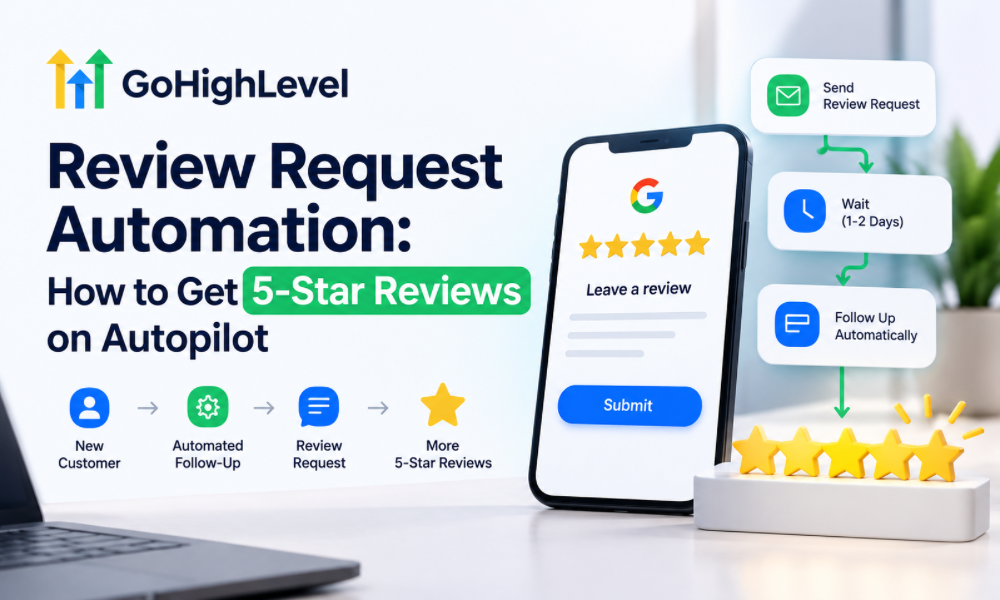
Review request automation is a workflow that automatically contacts customers after a relevant interaction and asks them to provide feedback.
The trigger could be an appointment being completed, an order being delivered, a service being marked complete, or another meaningful customer event.
Once the trigger occurs, the workflow can wait for an appropriate amount of time before sending a message.
The message can contain a direct link to the business’s preferred review destination, along with a simple explanation of how the customer can provide feedback.
This eliminates the need for employees to manually remember every review request.
Using Completed Services as a Trigger
Service businesses can use completed appointments or jobs as a natural automation trigger.
Once a service is marked complete, the workflow can begin the review process.
For example, a home service company may wait a short period after a technician completes a job before sending a review request.
This allows the customer to assess the service.
The same concept can apply to consultants, agencies, clinics, contractors, salons, professional services, and other appointment-driven businesses.
Creating a Simple Review Request
A review request does not need to be complicated.
The message should explain why the business is asking for feedback and provide a convenient way for the customer to leave a review.
Long promotional messages can reduce clarity.
A simple, respectful request is often more appropriate.
The customer should understand what is being requested without feeling pressured to provide a specific rating.
The purpose of automation should be convenience and consistency, not manipulation.
Email Versus SMS Review Requests
Different customers respond differently to communication channels.
Email provides more space for context and can work well for businesses that already communicate with customers through email.
SMS can be more immediate and may be effective when customers are accustomed to receiving text updates from the business.
The choice should depend on the customer’s existing communication preferences and the nature of the relationship.
Some businesses may use one channel, while others may use a carefully timed combination.
The important consideration is to avoid excessive messaging.
Personalizing Review Requests
Automation does not have to mean generic communication.
Customer information can be used to make the message more relevant.
The business may reference the service performed, appointment type, or general customer relationship where appropriate.
Personalization should remain accurate and natural.
A message that contains incorrect information can damage trust.
Businesses should therefore test their fields and workflow conditions before activating the automation for real customers.
Creating Different Workflows for Different Services
A business offering multiple services may not want to use one review request for everyone.
Different services may have different completion times, customer expectations, and communication styles.
Creating service-specific workflows can make the experience more relevant.
For example, a business may use one workflow for recurring services and another for one-time projects.
This approach can also make performance easier to analyze because the business can determine which service categories generate the most customer engagement.
Segmenting Customers Before Sending Requests
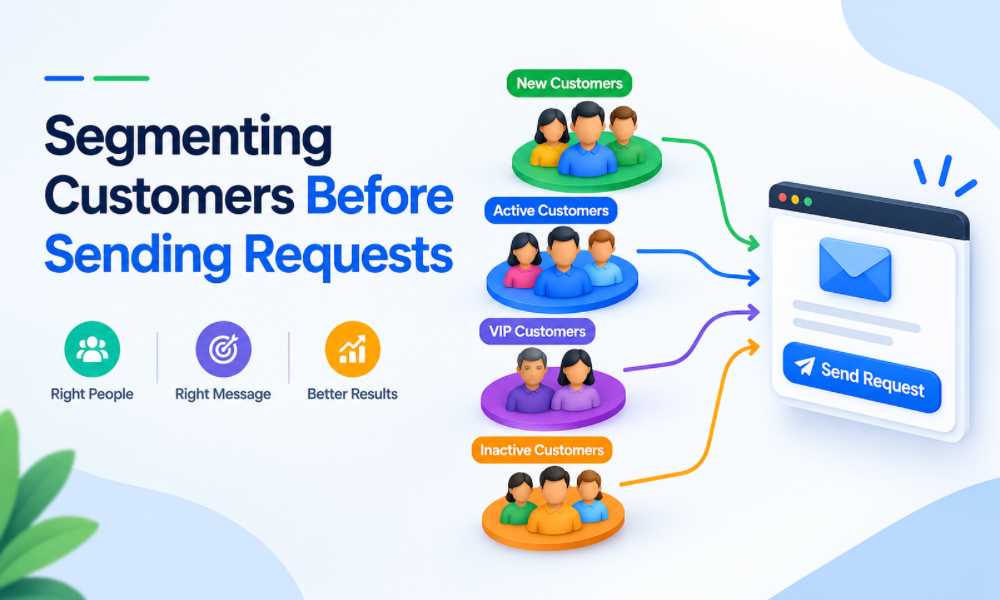
Customer segmentation can improve the quality of automated communication.
Businesses may segment customers based on service type, purchase history, location, customer status, or other relevant information.
This allows the review request to be triggered only when the appropriate conditions are met.
A first-time customer may receive a different follow-up sequence than a long-term customer.
Likewise, a customer who has already submitted feedback may not need another review request immediately.
Segmentation helps prevent unnecessary messages.
The Role of GoHighLevel CRM Services
Review automation works best when customer information is organized correctly.
This is where gohighlevel crm services can become useful.
A properly configured CRM can help businesses track contacts, appointments, opportunities, customer status, and other information needed to trigger appropriate follow-up.
Without organized customer data, review automation can become unreliable.
For example, if completed appointments are not recorded correctly, the system may not know when to initiate a review request.
CRM structure therefore forms the foundation of effective automation.
How GoHighLevel Marketing Agencies Can Help
Businesses that do not have internal automation expertise may work with GoHighLevel marketing agencies to build their review systems.
An agency can review the existing customer journey, identify appropriate triggers, configure workflows, connect review destinations, and test communication sequences.
The agency can also help integrate review requests into broader marketing campaigns.
The objective should not be to create the largest possible number of automated messages.
Instead, the focus should be on creating a reliable customer-feedback process that fits the business.
Review Automation Beyond One Campaign
A strong review strategy does not end when a customer submits a review.
The feedback can become part of a broader customer relationship.
Positive customer feedback may reveal common strengths that can be highlighted in marketing.
Repeated complaints may identify areas that require operational improvement.
Review patterns can therefore provide more than social proof.
They can become a source of business intelligence.
Using Reviews to Improve Marketing Messages
Customers often use language that businesses do not think to use in their own marketing.
For example, several customers might repeatedly mention fast communication, friendly service, simple onboarding, or professional support.
These patterns can help businesses understand which benefits resonate with customers.
Marketing teams can then evaluate whether those themes should appear in website copy, advertisements, landing pages, or email campaigns.
This makes customer feedback useful beyond the review platform itself.
Review Requests and Customer Retention
The review process can also strengthen the relationship with existing customers.
A review request reminds customers that their experience matters.
When combined with useful post-service communication, it can become part of a larger retention strategy.
However, businesses should avoid turning every review request into a sales pitch.
The customer should be able to provide feedback without immediately receiving another promotional offer.
Keeping the request focused can make the communication feel more authentic.
GoHighLevel SaaS Automation for Multiple Clients
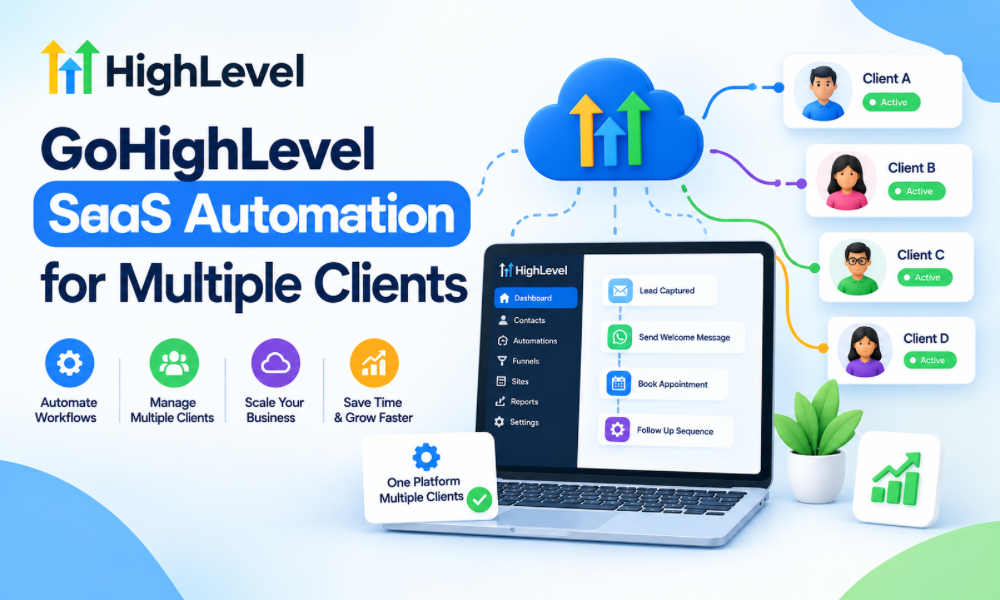
Agencies managing multiple businesses may have a different requirement.
They may want to create repeatable review automation frameworks that can be adapted for different clients.
This is where gohighlevel saas automation can become valuable.
A standardized framework can provide a starting point for common processes such as customer follow-up, review requests, lead nurturing, and appointment reminders.
However, each client should still receive an appropriate configuration.
A restaurant, real estate company, medical practice, and home service provider may require completely different review timing and messaging.
Standardization should improve efficiency without eliminating customization.
Managing Review Automation as a Freelancer
Smaller businesses may not need a large agency to create a review system.
A GoHighLevel freelancer can help configure workflows, organize customer fields, test triggers, and connect communication processes.
This can be useful for businesses that already use GoHighLevel but do not have the time or expertise to build more advanced workflows.
Before hiring a freelancer, businesses should define what the automation needs to accomplish.
Clear requirements make implementation easier and reduce the possibility of building unnecessary complexity.
Review Automation for Real Estate Businesses
Real estate is another industry where customer trust can strongly influence new business.
Agents and brokerages can use post-transaction communication to request feedback after a meaningful customer milestone.
The timing is important because a real estate relationship can continue for months.
A review request may be appropriate after a transaction has been completed or another significant service milestone has occurred.
The principles used in GHL for real estate can also demonstrate why lifecycle-based automation matters. The system should recognize the customer’s stage and respond accordingly rather than treating every contact as an identical lead.
Why GHL for Real Estate Requires Careful Timing
Real estate customers may interact with agents over a long period.
Sending a review request too early can feel inappropriate, while waiting too long may mean the customer becomes less engaged.
A thoughtful GHL for real estate workflow can account for the completion of the relevant customer journey before triggering a feedback request.
This same lifecycle principle can be adapted to many other industries.
Creating a Review Automation Framework
A simple framework can contain several stages.
First, identify the event that makes the customer eligible.
Second, determine the appropriate waiting period.
Third, send the review request.
Fourth, monitor whether the customer responds.
Fifth, send an optional reminder if appropriate.
Finally, stop the workflow.
This structure keeps the automation focused.
Additional branches can be added when there is a genuine business reason, but unnecessary complexity should be avoided.
Testing Every Workflow Path
Testing is one of the most important parts of automation.
Create test records that represent different customer situations.
Test a customer who completes a service.
Test someone who does not meet the eligibility criteria.
Test a customer who already received a review request.
Test a customer who responds.
Test a customer who does not respond.
Check that each workflow behaves as expected.
An automation that works correctly in one scenario may still behave incorrectly in another.
Preventing Duplicate Review Requests
Duplicate requests can create a poor customer experience.
Imagine a customer completes three services in a short period and receives three identical review requests within a few days.
The system may technically be working, but the communication strategy is not.
Businesses should consider frequency limits and customer-level conditions.
A customer who recently submitted a review may not need another request immediately.
This requires careful workflow design.
Monitoring Review Automation Performance
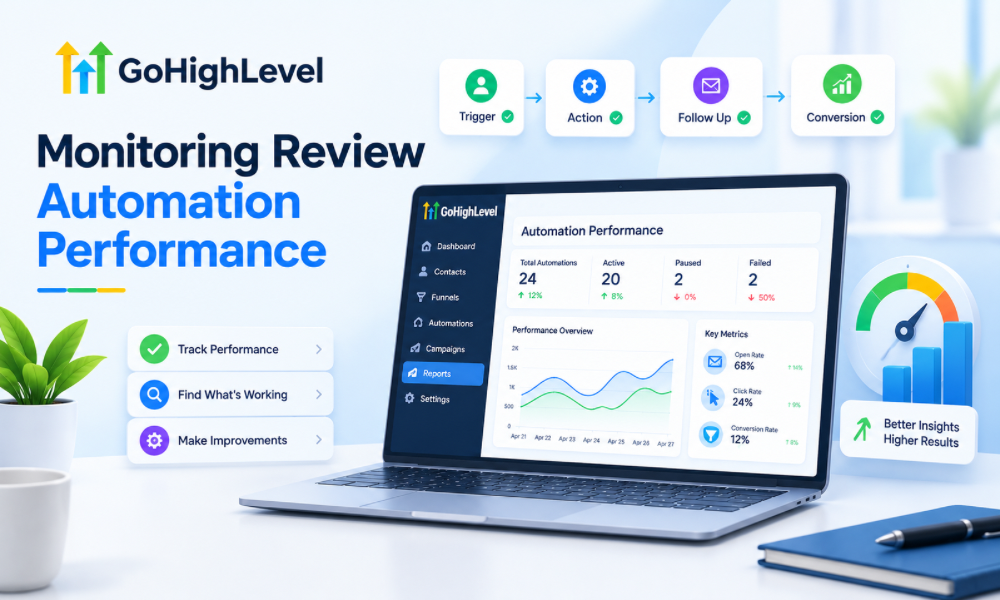
Automation should be measured.
Useful metrics can include review-request delivery, engagement, click activity, completed reviews, response timing, and customer feedback patterns.
The goal is not simply to maximize clicks.
A review request with a high click rate but very few completed reviews may need improvement.
Similarly, a workflow that produces many reviews but generates customer complaints about excessive messaging may need to be adjusted.
Metrics should be evaluated alongside qualitative feedback.
Improving the Message Over Time
Review request automation should evolve.
Test different subject lines, message structures, timing intervals, and calls to action where appropriate.
However, changes should be made carefully.
If several variables are changed at once, it becomes difficult to understand what caused an improvement or decline.
Small, controlled adjustments can provide more useful insights.
Integrating Reviews Into the Customer Journey
Review requests should not feel like a completely separate marketing activity.
They can fit naturally between other customer communications.
For example, after a service is completed, the customer may receive a thank-you message, followed later by a review request.
The business can then continue normal customer communication.
This creates a more coherent experience.
How GoHighLevel CRM Services Support Scaling
As a company grows, manual review requests become increasingly difficult to maintain.
gohighlevel crm services can help businesses create structured systems around customer records and post-service activity.
The CRM can become the central place where customer status, interactions, and follow-up processes are organized.
This makes it easier to expand automation without relying on spreadsheets or manual reminders.
Choosing Between DIY and Professional Help
Some businesses can create simple review workflows internally.
If the customer journey is straightforward and the business already understands GoHighLevel, a basic automation may not require external support.
More complicated environments may benefit from professional implementation.
For example, businesses with multiple services, locations, teams, integrations, and customer segments may require more advanced workflow logic.
In these situations, professional GoHighLevel marketing agencies or specialists can help create a more scalable structure.
Building Automation Without Losing the Human Touch
Automation should not make customer relationships feel robotic.
A review request is still a communication between a business and a customer.
The message should be polite, concise, and appropriate to the relationship.
Businesses can use personalization and natural language to maintain a human tone.
Automation should handle timing and consistency while the message itself remains respectful.
Scaling Review Requests Across Multiple Locations
Businesses with multiple locations can use automation to create location-specific review processes.
Each location may have its own customer database, team, service area, or review destination.
The workflow can be structured so that the correct customer receives the appropriate request.
This prevents customers from being directed to the wrong location.
For multi-location businesses, careful segmentation becomes especially important.
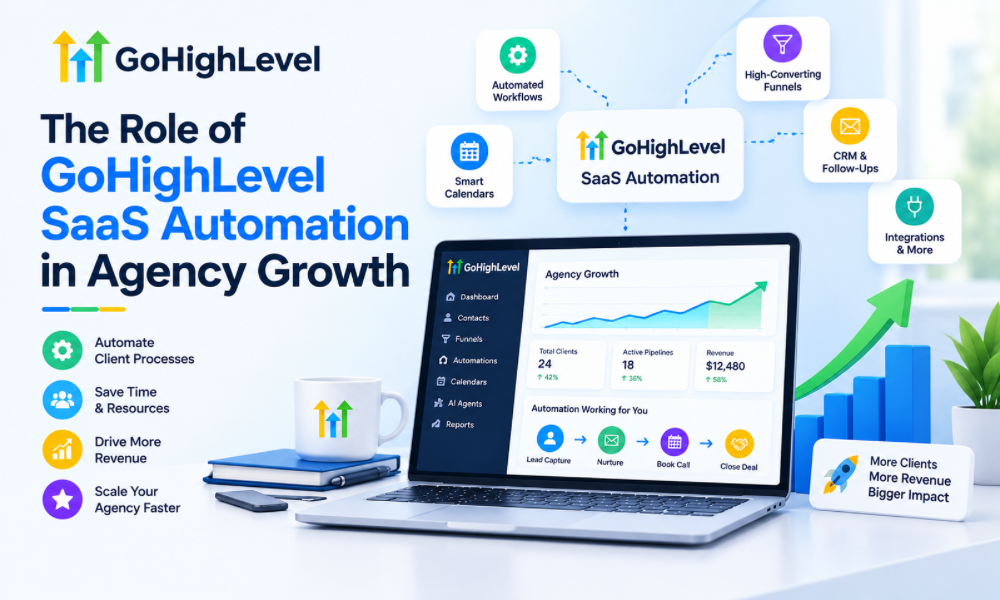
The Role of GoHighLevel SaaS Automation in Agency Growth
Agencies can also turn review automation into a repeatable service offering.
With gohighlevel saas automation, agencies can create standardized systems for businesses that need automated customer follow-up.
The underlying structure can be reused while messages, timing, fields, and review destinations are customized.
This can make client onboarding more efficient.
However, agencies should continue monitoring each implementation to ensure the automation remains aligned with the client’s actual customer journey.
When a Go High Level Freelancer Is Enough
A Go High Level freelancer may be appropriate when the project is relatively focused.
For example, a small business might need one review workflow, a few customer fields, and basic follow-up.
A freelancer can potentially complete this type of project without the overhead associated with a larger agency.
For more complex multi-location or multi-client environments, a broader implementation team may be more appropriate.