
How SMEs Can Scale Without Hiring Using GHL
Why Hiring Is No Longer the First (or Best) Path to Scaling for SMEs
For decades, the default growth strategy for small and medium-sized enterprises (SMEs) was simple:More customers = more staff.Sales reps were hired to handle leads.Assistants were hired to manage admin.Support staff were hired to respond to customers.But in today’s environment, this model is increasingly risky.Hiring is expensive.Hiring is slow.Hiring introduces complexity and management overhead.Many SMEs now face a hard truth: they need to scale revenue faster than they can scale headcount.This is where system-driven growth replaces people-driven growth.
The Real Cost of Hiring (Beyond Salaries)
Most SMEs underestimate the true cost of hiring.Beyond salaries, hiring includes:
- Recruitment time
- Training and onboarding
- Management overhead
- Errors during ramp-up
- Turnover riskEach new hire increases operational complexity — not just capacity.For small businesses, this complexity often becomes a bottleneck rather than a solution.
Why Hiring Too Early Slows SMEs Down
Hiring feels like progress, but premature hiring often:
- Reduces agility
- Increases fixed costs
- Creates dependency
- Locks businesses into rigid structuresInstead of freeing the owner, it often adds more responsibility.Many SMEs reach a stage where revenue grows — but profit and freedom shrink.
The Shift From Headcount to Leverage
Modern scaling is not about doing more work.It’s about creating leverage.Leverage comes from:
- Automation
- Standardization
- Repeatable systems
- Technology that replaces manual effortSMEs that scale efficiently focus on output per person, not just people count.
Why Most SME Workloads Are System Failures — Not Capacity Problems
When SME owners feel overwhelmed, the problem is rarely volume alone.It’s usually because:
- Follow-ups are manual
- Scheduling is inefficient
- Information is scattered
- Tasks are repetitiveThese are system problems — not staffing problems.Adding people to broken systems only multiplies inefficiency.
Where SMEs Lose the Most Time (and Don’t Realize It)
Across industries, SMEs lose time to:
- Manual lead follow-ups
- Missed calls
- Scheduling back-and-forth
- Repetitive customer communication
- Internal coordinationEach task feels small. Together, they consume an enormous capacity.This is exactly where automation creates scale.
Why Technology Replaced Teams in High-Growth Businesses
High-growth SMEs don’t scale by building large teams early.They scale by:
- Automated fully responsive
- Centralizing communication
- Standardizing workflows
- Reducing decision fatigueTechnology absorbs the workload that would otherwise require hiring.
The Myth: “Automation Replaces People”
Automation doesn’t replace people — it replaces low-value manual work.It allows:
- Sales teams to focus on conversations
- Owners to focus on strategy
- Support teams to handle exceptionsThe goal is not fewer people — it’s better user friendly.
Why SMEs Need an All-in-One Scaling Platform
Scaling without hiring requires:
- Centralized data
- Automated communication
- Workflow logic
- Visibility into performanceFragmented tools cannot deliver this.This is why platforms like GoHighLevel have become foundational for modern SMEs.
The Danger of Partial Automation
Many SMEs try to automate pieces:
- Email only
- Scheduling only
- CRM only
Partial automation creates:
- Gaps
- Confusion
- More tools to manageTrue scale requires end-to-end automation, not isolated fixes.
Scaling Without Hiring Requires a Mental Shift
The biggest barrier to system-based scaling is mindset.SMEs must stop asking:
- “Who should we hire?”And start asking:
- “What should never require a human again?”This question changes everything.
Why SMEs Delay Automation (and Pay for It Later)
Common reasons SMEs delay automation: Learn more about our GoHighLevel VA service.
- “We’ll do it once we grow.”
- “We don’t have time to set it up.”
- “We’ll hire first.”Ironically, automation is what makes growth manageable.Delaying it increases stress and limits upside.
The Opportunity Cost of Hiring Instead of Automating
Every hire delay:
- System maturity
- Operational clarity
- Profit scalabilitySMEs that automate early build a foundation that supports growth for years.
Scaling Without Hiring Is About Control, Not Cutting Costs
This approach isn’t about avoiding people — it’s about:
- Maintaining quality
- Preserving margins
- Protecting flexibilityAutomation gives SMEs control over their growth rather than having to react to it.
How GoHighLevel Enables SMEs to Scale Without Hiring (When Implemented Strategically)
Why GoHighLevel Is Built for Lean Scaling
GoHighLevel is designed to replace multiple roles with systems:
- CRM replaces manual tracking
- Automation replaces follow-up labor
- Calendars replace admin coordination
- Pipelines replace guessworkThis makes it ideal for SMEs aiming to scale lean.
Replacing Manual Lead Follow-Up With Automation
One of the first hiring pressure points for SMEs is lead follow-up.GoHighLevel automates:
- Instant lead responses
- Multi-step follow-ups
- Channel-specific communicationThis removes the need to hire just to “keep up” with leads.Professional gohighlevel services ensure these systems are fast, relevant, and brand-appropriate.
Eliminating Scheduling Roles With Smart Booking Systems
Scheduling is one of the most time-consuming admin tasks.GoHighLevel enables:
- Self-booking calendars
- Automated confirmations
- Reminders and reschedulingThis replaces:
- Back-and-forth emails
- Manual calendar management
- Scheduling assistantsBooking becomes frictionless — without hiring.
Scaling Sales Operations Without More Salespeople
Sales don’t scale just by adding more reps.It scales by:
- Better lead qualification
- Faster response times
- Clear pipelinesGoHighLevel supports:
- Automated lead routing
- Pipeline-based workflows
- Sales task automationThis increases output per salesperson instead of headcount.
Automating Customer Onboarding and Support Touchpoints

Post-sale work often creates pressure to hire support staff.GoHighLevel automates:
- Onboarding messages
- Expectation setting
- Check-ins and remindersCustomers feel supported — without constant manual outreach.
Internal Coordination Without Middle Management
As teams grow, coordination becomes complex.GoHighLevel workflows:
- Assign tasks automatically
- Notify team members
- Track accountabilityThis reduces the need for managerial overhead.
Centralized Communication Reduces Staffing Needs
When communication is scattered:
- Messages are missed
- Context is lost
- Follow-ups require effort
GoHighLevel centralizes:
- SMS
- Calls
- ConversationsThis reduces inefficiency and prevents the need for extra staff.
Automation That Works 24/7 (Without Overtime)
One of the biggest advantages of automation is availability.GoHighLevel systems:
- Respond after hours
- Capture missed calls
- Book appointments anytimeSMEs can compete with larger businesses — without expanding teams.
Why Strategy Matters More Than Features
GoHighLevel is powerful — but power without strategy creates complexity.SMEs that hire gohighlevel experts gain: See our GHL automation services.
- Lean system excellent design
- Clean workflows
- Faster ROI
- Lower operational riskExpert implementation replaces hiring pressure with system leverage.
Avoiding the Trap of Over-Automation
Scaling without hiring does not mean automating everything.Bad automation:
- Over-messages customers
- Creates confusion
- Damages trust
Expert-led gohighlevel services focus on:
- Automating what should be automated
- Preserving human touch where it mattersBalance is key.
Measuring Output Per Person Instead of Team Size
One of the biggest mindset shifts automation enables is measurement.SMEs begin tracking:
- Leads handled per person
- Revenue per employee
- Time saved per workflowThis changes growth conversations from “Who do we hire?” to “What system do we improve?”
Scaling Offers Without Scaling Staff
With the right systems:
- New offers reuse existing workflows
- New channels plug into existing automation
- Growth doesn’t require rebuilding operationsThis is how SMEs expand profitably.
Why Hiring Experts Beats Hiring Employees Early
Hiring employees adds fixed costs.Hiring experts adds leverage.Businesses that hire gohighlevel experts benefit from:
- Experience without payroll burden
- Systems without long-term overhead
- Faster time to scaleThis is often the smartest first “hire.”
Long-Term Advantages of Scaling Without Hiring
SMEs that scale with systems:
- Maintain higher margins
- Stay agile
- Adapt faster to change
They are less exposed to:
- Turnover risk
- Management complexity
- Operational drag
Systems Scale Faster Than People
People are valuable — but systems create leverage.SMEs that rely solely on hiring:
- Grow slower
- Carry more risk
- Lose flexibility
SMEs that automate intelligently:
- Scale revenue faster
- Protect margins
- Maintain control
From People-Dependent Growth to System-Led Scale — How SMEs Build Capacity Without Headcount
Why Scaling Without Hiring Is a Structural Decision, Not a ShortcutMany SMEs initially approach “scaling without hiring” as a temporary workaround — something to delay hiring until revenue catches up. But the businesses that truly benefit from this approach understand a deeper truth:Scaling without hiring is not about avoiding people — it is about building structure before complexity sets in.Hiring before systems exist locks inefficiency into the organization. Scaling with systems first creates a foundation where every future hire is more productive, more focused, and less overwhelming to manage.This section explores how SMEs evolve from founder-driven execution to system-led operations with GoHighLevel—and why this evolution determines long-term success.
The Three Growth Phases SMEs Experience (and Where Most Get Stuck)
Most SMEs move through three predictable growth phases:Phase 1: Founder-Driven ExecutionThe owner does everything — sales, follow-up, scheduling, service delivery. Growth is limited by personal capacity.Phase 2: Scramble HiringAs demand increases, the business hires reactively to “keep up.” Systems are informal. Knowledge lives in people’s heads.Phase 3: Operational ComplexityMore people create more coordination needs. Communication slows. Costs rise. Margins shrink.Most SMEs believe Phase 2 is unavoidable.In reality, system-led scaling allows businesses to bypass the most painful parts of Phase 2.
Why GoHighLevel Enables a Different Growth Path
GoHighLevel enables SMEs to redesign how work flows through the business before headcount increases.Instead of: Learn more about our GHL CRM setup service.
- Hiring people to respond
- Hiring people to schedule
- Hiring people to follow up
SMEs build systems that:
- Respond automatically
- Route intelligently
- Track consistentlyThis changes the economics of growth.
Replacing “Busy Work” With Infrastructure
A large portion of SME workload is not strategic — it is repetitive.Examples include:
- Sending the same follow-up messages
- Confirming appointments
- Answering basic questions
- Updating lead statusThese tasks feel necessary but create no long-term leverage.GoHighLevel replaces busy work with infrastructure — systems that operate continuously without fatigue.
Capacity Is Not Time — It Is Design
Many SME owners believe they lack time.In reality, they lack designed capacity.Capacity comes from:
- Clear workflows
- Automation triggers
- Defined ownership
- Centralized informationWhen these elements are in place, the same team can handle significantly more volume without stress.
Scaling Sales Without Expanding Sales Teams
Sales hiring is often the first pressure point for SMEs.But sales performance depends more on systems than headcount.With GoHighLevel, SMEs scale sales by:
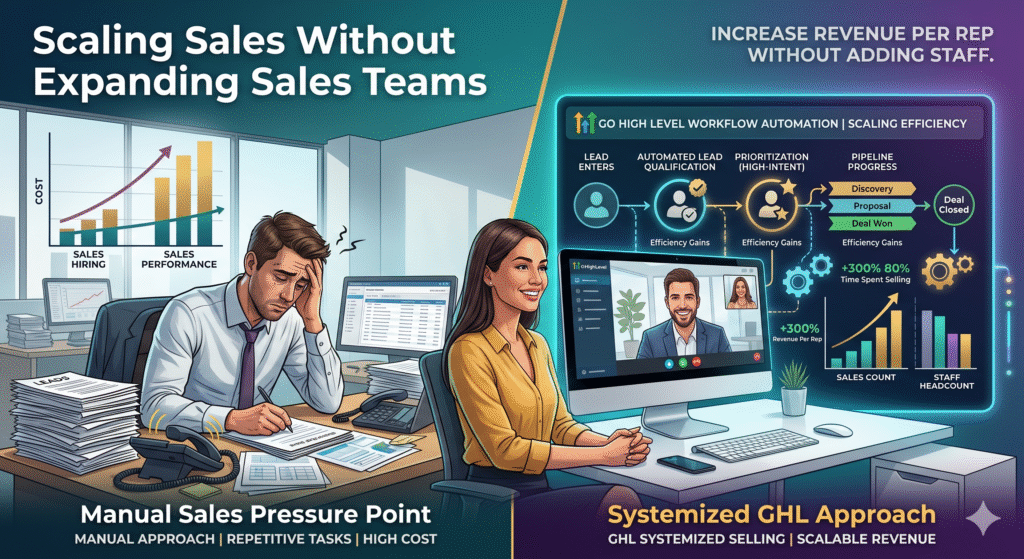
- Automating lead qualification
- Prioritizing high-intent leads
- Enforcing pipeline discipline
- Triggering follow-ups automaticallySalespeople spend more time selling — not managing.This increases revenue per rep without adding staff.
Why Follow-Up Automation Is a Staffing Multiplier
Follow-up is one of the most labor-intensive tasks in sales.Manual follow-up requires:
- Memory
- Consistency
- Availability
Automation removes all three constraints.With professional gohighlevel services, follow-up systems:
- Respond instantly
- Persist intelligently
- Adapt to behaviorOne person with strong automation can outperform a team without it.
Scaling Customer Experience Without Support Teams
Support and onboarding are common reasons SMEs hire early.But much of customer support involves:
- Repeating instructions
- Setting expectations
- Providing free updates
GoHighLevel automates:
- Onboarding sequences
- Check-in messages
- Status updatesCustomers feel supported — even when teams are lean.This reduces the need for additional support staff.
Why Centralization Reduces Staffing Needs
Fragmented systems create work:
- Searching for information
- Repeating conversations
- Clarifying context
GoHighLevel centralizes:
- CRM data
- Communication history
- Booking informationWhen context is always available, fewer people are needed to manage it.
The Psychological Shift: From “Who Will Do This?” to “Why Does This Exist?”
System-led SMEs ask different questions.Instead of:
- “Who can we hire to handle this?”They ask:
- “Why does this require a person at all?”This mindset shift unlocks scale.Many tasks exist only because systems don’t.
Avoiding the Trap of Scaling Chaos
Scaling without hiring is not automatic. Without a strategy, automation can create chaos instead of clarity.Common risks include:
- Overlapping workflows
- Conflicting messages
- Poor handoffs between systemsThis is why SMEs rely on experienced gohighlevel experts — to design systems that scale cleanly.
System Maturity: The Difference Between Growth and Control
As SMEs grow, system maturity matters more than speed.Immature systems: Book a free consultation →
- Break under pressure
- Require constant fixes
- Create stress
Mature systems:
- Absorb volume
- Surface exceptions
- Enable focusGoHighLevel supports maturity — but only when implemented intentionally.
Measuring Scale the Right Way
System-led SMEs measure growth differently.Instead of tracking:
- Number of hires
They track:
- Leads handled per person
- Revenue per employee
- Time saved through automationThese metrics reveal whether systems are working.
When Hiring Finally Makes Sense
Scaling without hiring does not mean “never hire.”It means:
- Hiring later
- Hiring deliberately
- Hiring into systems — not chaos
When systems are in place, new hires:
- Ramp faster
- Make fewer mistakes
- Add leverage instead of complexityAutomation prepares the business for smart hiring.
Why Hiring Experts First Is Often the Smartest Move
Before hiring employees, many SMEs choose to hire gohighlevel experts.This provides:
- Immediate leverage
- Proven system design
- Faster scalability
- Lower long-term costExperts build systems that employees can later operate efficiently.
Long-Term Advantages of System-Led Scaling
SMEs that scale without hiring early enjoy:
- Higher margins
- Greater flexibility
- Lower risk
- Faster adaptation to changeThey are not locked into fixed costs or rigid structures.
Scaling Through Uncertainty
Markets change. Demand fluctuates. Teams evolve.System-led businesses adapt faster because:
- Systems absorb shocks
- Automation adjusts faster than people
- Costs remain variableThis resilience is a competitive advantage.
From Reactive Growth to Intentional Scale
Most SMEs grow reactively:
- Hiring when overwhelmed
- Fixing problems under pressureSystem-led SMEs grow intentionally:
- Designing capacity in advance
- Anticipating growth
- Protecting marginsGoHighLevel enables this shift — when paired with strategic execution.
Systems Create Freedom Before They Create Scale
Scaling without hiring is not about doing more with less — it’s about doing the right work with clarity.When systems handle:
- Repetition
- Coordination
- Follow-upPeople handle:
- Relationships
- Strategy
- CreativityGoHighLevel provides the platform.
Ready to implement this in your GHL account?
Book a free 45-minute strategy call. Our certified GoHighLevel specialists will audit your setup.
Get Your GHL Setup Done Right
Free 45-min audit call — zero cost, no commitment.
Our GHL Services
- GHL CRM Setup
- GHL Virtual Assistant
- Funnel Builder
- Automation Specialist
- White-Label SaaS
- GHL Migration
Popular Posts
- High-Converting GHL Sales Funnel
- GHL Automation Templates
- GHL Pipeline Management