
Go High Level Onboarding Checklist for SMEs
Why Most GoHighLevel Setups Fail Before They Start
GoHighLevel is one of the most powerful all-in-one platforms available to SMEs today. CRM, automation, messaging, funnels, booking, pipelines, reporting—everything lives under one roof.And yet, a large percentage of SMEs never unlock even 30–40% of their value.Not because GoHighLevel is flawed—but because onboarding is rushed, misaligned, or treated as a technical task instead of a business system design process.At GoHighLevel Expert Services, we consistently see this pattern:SMEs jump straight into tools before clarifying workflows, goals, and ownership—and end up overwhelmed, underutilizing the platform, or rebuilding later.This onboarding checklist is designed to prevent that.It is not just a “click-this, connect-that” guide.It is a strategic onboarding framework that ensures GoHighLevel becomes a growth engine—not another abandoned tool.
Pre-Onboarding Foundations (What Must Be Clear Before You Touch GHL)Define Your Primary Business Objective in GoHighLevel
Before logging in, answer this clearly:
- Are you trying to increase lead conversions?
- Improve follow-up speed?
- Reduce manual work?
- Improve booking and no-show rates?
- Centralize sales + marketing operations?Mistake to avoid:Trying to “set everything up” at once.GoHighLevel works best when onboarding is goal-driven rather than feature-driven.
- Identify Your Core Customer Journey (End-to-End)
You must map the real journey, not the ideal one:
- Where do leads come from?
- How do they first contact you?
- How are they followed up today?
- How do bookings happen?
- How does a deal close?
- What happens after the sale?This journey becomes the backbone of your GHL setup.Without this clarity, automations become noise instead of leverage.
Decide What Will Be Automated vs Human-Handled
One of the biggest onboarding mistakes SMEs make is over-automation.
Before setup, clearly define:
- What should happen instantly (automation)
- What requires human judgment
- Where automation should pause when humans engageGood automation supports people—it does not replace them.
Clean Your Existing Data (Before Importing Anything)
If you are migrating from:
- Spreadsheets
- Another CRM
- Email platformsDo not import everything blindly.
Checklist: Learn more about our GHL CRM setup service.
- Remove duplicate contacts
- Standardize phone/email formats
- Archive dead or irrelevant leads
- Tag contacts by source or status (if possible)Dirty data = broken automation.
Assign Internal Ownership Early
Even in small teams, someone must own:
- CRM accuracy
- Automation logic
- Pipeline updatesThis avoids the “everyone thought someone else handled it” problem.
Core GoHighLevel Account Setup (The Non-Negotiables)
Account & Sub-Account StructureEnsure:
- Proper business name
- Correct timezone
- Accurate business details
- Branded domain connected (important for trust & deliverability)This affects:
- Email/SMS deliverability
- Calendar accuracy
- Automation timing
Connect Communication Channels Correctly
Checklist:
- Twilio (SMS & calls)
- Email service (SMTP or built-in)
- Business phone number
- Reply-to email verified
Do not skip testing:
- Test SMS delivery
- Test inbound replies
- Test voicemail & call routingCommunication failures destroy trust instantly.
Set Up Your CRM Pipelines Based on Reality
Create pipelines that reflect actual sales behavior, not theory.
Best practices:
- 5–8 stages max
- Clear definition per stage
- One “next action” per stage
Example stages:
- New Lead
- Contacted
- Booked
- Qualified
- Proposal Sent
- Won / LostPipelines should drive action—not just track status.
Configure Lead Sources & Attribution
Make sure every lead entering GHL is tagged with:
- Source (ads, website, referral, call, etc.)
- Campaign (if applicable)
This allows:
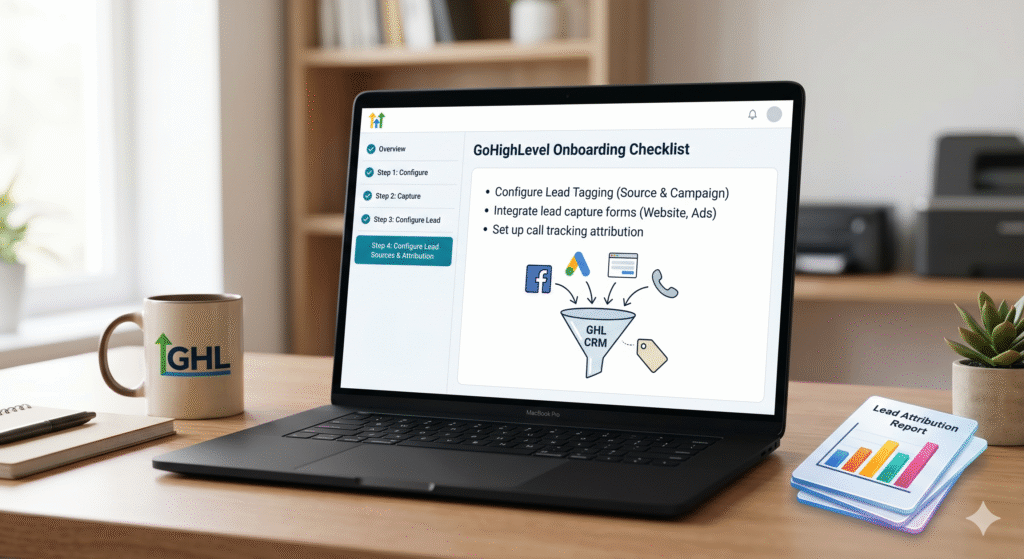
- Smarter automation
- Better reporting
- Data-driven decisions
Set User Roles & Permissions
For teams:
- Restrict access where needed
- Prevent accidental workflow edits
- Ensure accountabilitySecurity and clarity matter—even for SMEs.
Automation & Workflow Setup (Where Real ROI Is Created)
Build an Instant Lead Response WorkflowThis is non-optional.
Every new lead should:
- Receive instant acknowledgment
- Be assigned to a pipeline
- Trigger internal notificationSpeed = trust.This single workflow often dramatically increases conversion rates.
Create a Missed Call Text-Back Automation
Checklist:
- Trigger on missed calls
- Immediate SMS sent
- Booking link included
- Follow-up sequence if no replyMost SMEs lose revenue here—this workflow recovers it.
Appointment Booking & Reminder Automation
Set up: See our GHL automation services.
- Calendar availability
- Buffer times
- Confirmation messages
- Reminder sequences (SMS + email)
Goal:
- Reduce no-shows
- Reduce admin work
- Improve experience
Pipeline-Stage Based Follow-UpsEach pipeline stage should trigger:
- Relevant follow-ups
- Task creation
- Internal alerts if stalledThis prevents deals from dying silently.
Automation Pause Rules (Critical but Often Missed)Ensure:
- Automation pauses when a human replies
- No automated messages interrupt live conversationsThis protects trust and avoids embarrassing moments.
Post-Sale & Retention Setup (Most SMEs Skip This)
Post-Sale Onboarding WorkflowAfter a deal is won:
- Welcome message
- Clear next steps
- Expectation setting
- Support informationThis reduces buyer’s remorse and support load.
Customer Check-In & Retention AutomationsSet:
- 7-day check-in
- 30-day feedback
- Periodic value remindersRetention is cheaper than acquisition—and automation makes it scalable.
Review & Feedback RequestsTrigger review requests:
- After milestones
- After positive interactionsSocial proof compounds long-term growth.
Reporting, Testing & OptimizationSet Up Dashboards That MatterAvoid vanity metrics.Track:
- Lead response time
- Conversion by stage
- Booking vs no-show rates
- Source performanceIf you can’t see it, you can’t improve it.
Test Every Critical FlowBefore going live:
- Submit test leads
- Miss test calls
- Book test appointments
- Reply mid-automationTesting prevents silent failures.
Document Your System (Lightweight, Not Corporate)Simple documentation:
- What each workflow does
- Who owns what
- What not to change casuallyThis protects your setup as you grow.
Common GoHighLevel Onboarding Mistakes SMEs Must Avoid
- Setting up too many workflows too fast
- Copy-pasting generic templates blindly
- Ignoring post-sale automation
- No internal ownership
- Treating onboarding as “done” instead of ongoingGoHighLevel is not “set and forget.”It is a living system.
Why Expert-Led Onboarding Makes a DifferenceSMEs that work with GoHighLevel Expert Services typically experience:
- Faster time-to-ROI
- Cleaner automation logic
- Fewer rebuilds
- Higher adoption by teamsThe difference isn’t the software—it’s implementation quality.
Onboarding Determines Everything That FollowsGoHighLevel can: Book a free consultation →
- Replace multiple tools
- Reduce hiring pressure
- Improve conversions
- Centralize operationsBut only if onboarding is done intentionally.A rushed setup creates chaos.A strategic onboarding creates leverage.This checklist is your safeguard against wasted time, missed revenue, and underused potential.If GoHighLevel is going to power your growth, it must be built on clarity, structure, and real business logic—not guesswork.
Optimizing the Front-End Experience Inside GoHighLevel (Where Trust Is Won or Lost)
Why Onboarding Is Incomplete Without Front-End OptimizationMost SMEs assume GoHighLevel onboarding is finished once:
- Automations are live
- Pipelines are set
- Messages are firingBut there is a critical layer many businesses overlook:What does the customer actually see and experience?Your funnels, forms, booking pages, and communication touchpoints are not “extras.” They are trust interfaces. If these elements feel clunky, outdated, or confusing, even the best automation behind the scenes will underperform.True GoHighLevel onboarding is not just functional—it must also be experience-driven.
Design High-Trust Funnels and Pages (Not Just “Working” Ones)A page that technically works but looks rushed or generic damages credibility.During onboarding, SMEs must ensure that:
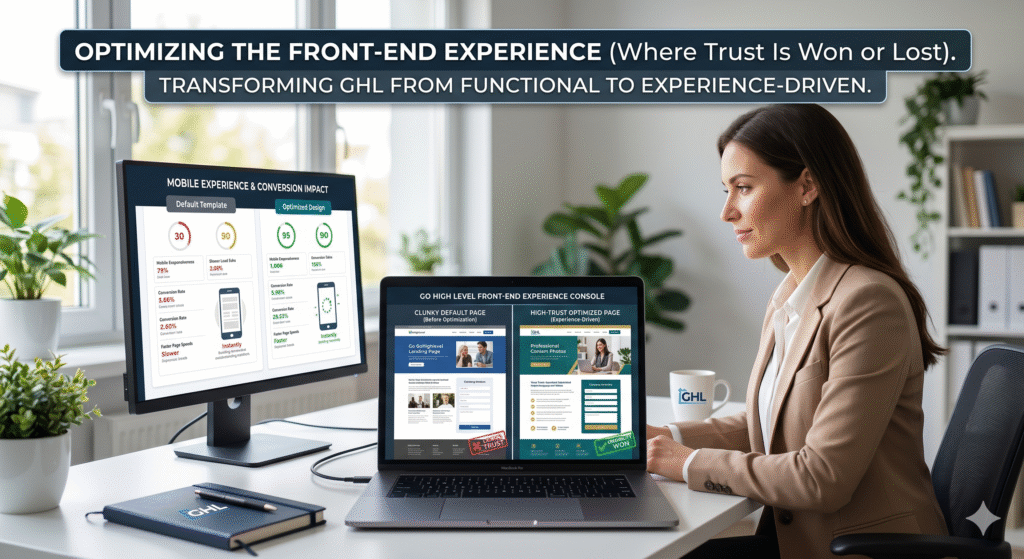
- Funnels reflect excellent designs, not default templates
- Layouts feel modern and intentional
- Visual hierarchy guides the user clearlyDesign impacts perception instantly.Prospects decide whether to trust you before reading a single line of copy.GoHighLevel allows full control over layouts—but design quality depends on how it’s implemented.
Ensure All Pages Are Fully Responsive Across DevicesA critical onboarding checkpoint many SMEs skip: mobile optimization.Reality check:
- Most leads arrive on mobile
- Many bookings happen on phones
- AI-driven discovery often routes users to mobile firstEvery funnel, form, and booking page inside GoHighLevel must be:
- Fully responsive
- Easy to read without zooming
- Clickable without frustration
- Fast-loading on mobile networksIf your pages break on mobile, automation efficiency becomes irrelevant.
Prioritize User-Friendly Navigation and FlowA common onboarding mistake is overloading pages with:
- Too many form fields
- Too much text
- Multiple CTAs fighting for attentionGoHighLevel works best when front-end assets are user-friendly, meaning:
- One clear action per page
- Simple language
- Predictable navigation
- Minimal frictionAsk during onboarding:“Can a first-time visitor understand what to do here in 5 seconds or less?”If the answer is no, redesign—not re-automate.
Align Messaging Between Automation and PagesAnother overlooked issue: message mismatch.Example:
- SMS says “Quick 15-minute call.”
- Booking page shows a 45-minute consultation
- Confirmation email uses a different language againThis inconsistency creates doubt.During onboarding, ensure:
- Funnel copy
- SMS/email wording
- Calendar titles
- Confirmation messagesAll use the same framing and expectations.Consistency builds confidence. Confusion kills conversions.
Optimize Forms for Conversion, Not Data HoardingSMEs often treat forms like surveys.During onboarding, ask:
- What information is truly required now?
- What can be collected later?
- What fields cause drop-offs?Best practices:
- Short forms for first contact
- Progressive data collection
- Clear explanation of why information is neededGoHighLevel supports advanced forms—but restraint improves performance.
Build Booking Pages That Reduce AnxietyBooking pages are decision points.They should:
- Clearly explain what happens next
- Reinforce value
- Remove uncertaintyA strong booking page inside GoHighLevel:
- Feels professional
- Sets expectations
- Looks intentional
- Is fully responsive
- Is user-friendly on all devicesThis directly reduces no-shows and improves close rates.
Use Visual Structure to Support Automation OutcomesAutomation drives traffic.Design converts it.Ensure onboarding includes:
- Clear section spacing
- Scannable layouts
- Visual emphasis on primary CTA
- Minimal distractionsGreat automation feeding poor design wastes opportunity.
System Maintenance, Scalability & Long-Term Success
Why Onboarding Is the Start—not the FinishOne of the most damaging beliefs SMEs have is:“Once GoHighLevel is set up, we’re done.”In reality, onboarding establishes the first version of your operating system.Sustainable success depends on:
- Ongoing refinement
- Regular testing
- Controlled expansionGoHighLevel rewards businesses that treat systems as living assets.
Schedule Regular Workflow & Page ReviewsAt a minimum, SMEs should review:
- Automations (monthly)
- Funnels and forms (quarterly)
- Booking flows (after any offer change)This prevents:
- Automation drift
- Message mismatch
- Broken logic after updatesThe goal is not constant change—but intentional improvement.
Plan for Scalability From Day OneEven if you’re small now, onboarding should assume growth.Ask: Explore our GoHighLevel services →
- Can this pipeline handle 10× leads?
- Can this workflow scale across offers?
- Can new team members be added without chaos?Well-onboarded GoHighLevel systems grow with the business—not against it.
Use GoHighLevel Updates Strategically (Not Reactively)GoHighLevel frequently rolls out free updates with new features and improvements.But not every update should be adopted immediately.Best practice:
- Review updates intentionally
- Adopt what aligns with your strategy
- Avoid feature-chasingFree updates are powerful when applied thoughtfully—not impulsively.
Protect System Integrity as Teams GrowAs more people access GoHighLevel:
- Mistakes become more likely
- Workflows can be edited unintentionally
- Accountability can blurStrong onboarding includes:
- Clear permissions
- Change-control discipline
- Ownership claritySystems fail more often due to internal misuse than to technical issues.
Measure What Matters (and Ignore the Rest)Avoid drowning in metrics.During onboarding, define:
- 5–7 core KPIs
- Clear success benchmarks
- Review cadenceExamples:
- Lead response time
- Booking rate
- No-show rate
- Pipeline conversionData should guide decisions—not create noise.
Keep the Experience Clean as You Add MoreAs you add:
- More workflows
- More funnels
- More campaignsComplexity grows.The most successful SMEs:
- Remove unused assets
- Archive old funnels
- Simplify automation logicElegance scales better than complexity.
Revisit Design Standards RegularlyWhat looked modern two years ago may now look dated.Excellent designs evolve.Ensure:
- Visual consistency across pages
- Updated layouts
- Modern UI expectationsDesign decay quietly erodes trust—even when automation still works.
The Strategic Advantage of Expert-Led GoHighLevel SystemsWhy Many SMEs Rebuild Instead of OptimizingA common pattern:
- DIY onboarding
- Partial success
- System sprawl
- Performance plateaus
- Full rebuild laterThis is costly and avoidable.Expert-led onboarding focuses on:
- Long-term architecture
- Clean logic
- Sustainable growthThe difference is experience—not effort.
GoHighLevel as a Competitive Advantage (When Done Right)When onboarding is executed well, GoHighLevel becomes:
- A sales engine
- A customer experience platform
- An operational backboneIt enables:
- Faster responses
- Better follow-up
- Lower staffing pressure
- Higher trustPoor onboarding turns it into “just another tool.”
Onboarding Is Where Outcomes Are DecidedEvery result you want from GoHighLevel—better conversions, smoother operations, scalable growth—is determined during onboarding.
- Excellent designs shape first impressions
- Fully responsive pages protect mobile conversions
- User-friendly flows reduce friction
- Free updates extend long-term valueBut only when these elements are strategically integrated, not randomly assembled.At gohighlevelexpertservices, we view onboarding as business system engineering, not software setup.Because in GoHighLevel, how you start determines how far you scale.
Ready to implement this in your GHL account?
Book a free 45-minute strategy call. Our certified GoHighLevel specialists will audit your setup.
Get Your GHL Setup Done Right
Free 45-min audit call — zero cost, no commitment.
Our GHL Services
- GHL CRM Setup
- GHL Virtual Assistant
- Funnel Builder
- Automation Specialist
- White-Label SaaS
- GHL Migration
Popular Posts
- High-Converting GHL Sales Funnel
- GHL Automation Templates
- GHL Pipeline Management