
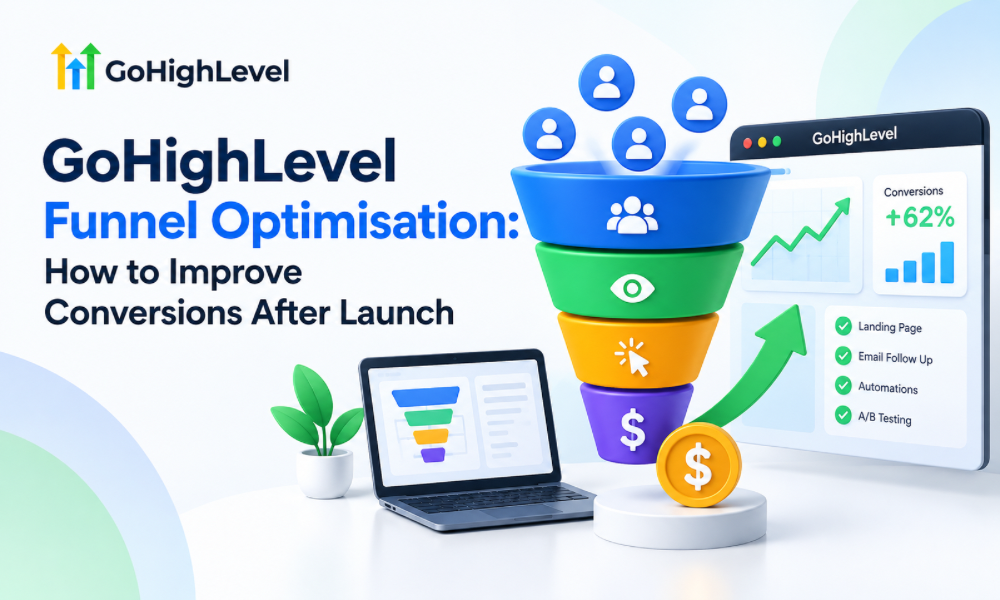
Launching a funnel is only the first step in the conversion process. A funnel can look polished, load correctly, and successfully collect leads while still underperforming commercially. Many businesses treat launch day as the finish line, when it should be the point where meaningful optimization begins.
Once a GoHighLevel funnel is live, real visitors start revealing how people interact with the pages, forms, offers, calls to action, and follow-up messages. Some visitors may leave immediately, while others may reach the final step but never submit their information. Some leads may convert but fail to respond afterward. These behaviors provide valuable clues about where improvements are needed.
Effective funnel optimisation is therefore an ongoing process of observing user behavior, identifying friction, testing improvements, and connecting the funnel with the rest of the customer journey.
Start by Looking Beyond the Conversion Rate
Conversion rate is one of the most important funnel metrics, but it should not be the only number you review. A funnel might generate a healthy percentage of leads while producing poor-quality prospects. Another funnel might have a lower conversion rate but generate customers who spend significantly more.
After launch, businesses should look at the complete journey from visitor to customer. This includes traffic sources, landing-page engagement, form completion, booked appointments, sales conversations, follow-up responses, and eventual revenue.
This broader perspective helps identify whether the problem is actually the funnel itself or whether the issue exists somewhere later in the sales process.
Identify Where Visitors Are Leaving
A funnel consists of several steps, and every step creates an opportunity for visitors to drop out. Someone may click an advertisement but leave the landing page immediately. Another visitor may read the offer but avoid completing the form. Someone else may begin the booking process but abandon it before choosing a time.
Understanding where the largest drop-off occurs gives you a starting point for optimization.
Rather than changing the entire funnel at once, focus on the stage where the greatest amount of potential value is being lost. Improving one significant bottleneck can often produce a bigger impact than making numerous cosmetic changes throughout the funnel.
Reconsider the First Few Seconds of the Landing Page
Visitors make quick judgments when they arrive on a landing page. If they cannot immediately understand what the business offers and why it matters to them, they may leave before exploring further.
The headline should communicate the primary benefit or problem being addressed. Supporting copy should provide enough context to make the offer understandable without overwhelming the visitor.
The page should also make the next step obvious.
A visitor should not have to search for the form, button, or booking option. When the primary action is visually and logically clear, the funnel creates less friction between interest and conversion.
Improve the Offer Before Changing the Design
A common optimization mistake is focusing too heavily on colors, fonts, button styles, and visual elements.
Design matters, but it cannot compensate for an unclear or unconvincing offer.
If visitors understand the service but do not see a strong reason to take action, changing the button color is unlikely to solve the problem.
Review the offer from the customer’s perspective. Is the benefit clear? Does it address a real problem? Does the visitor understand what happens after submitting the form? Is there enough information to reduce uncertainty?
Sometimes the biggest conversion improvement comes from changing the message rather than changing the layout.
Make Forms Easier to Complete
Forms can create significant friction inside a funnel.
Businesses often ask for information simply because it might be useful later. However, every additional field increases the amount of effort required from the visitor.
The form should collect information that is genuinely necessary for the next stage of the process.
If a short form can capture the initial lead and additional information can be collected later, that may create a smoother experience.
The right balance depends on the business model. A highly qualified service may require more information before a consultation, while a simple lead magnet may only need basic contact details.
Give Visitors a Reason to Trust You
Conversion is heavily influenced by confidence.
Visitors may hesitate because they are unsure whether the company is legitimate, whether the service will work, or whether they will receive unwanted communication after submitting their information.
Trust elements can address these concerns naturally.
Relevant testimonials, clear business information, useful explanations, case studies, guarantees where appropriate, and transparent expectations can make the decision easier.
Trust elements should support the actual offer rather than become decorative additions that clutter the page.
Strengthen the Call to Action
A call to action should communicate what the visitor gets by taking the next step.
Generic phrases can sometimes be less compelling than action-oriented language that connects directly with the offer.
The CTA should also match the stage of the customer journey.
Someone who has just discovered a business may not be ready to “Buy Now,” while someone who has already requested pricing may be ready for a direct sales action.
The best CTA is not necessarily the most aggressive one. It is the one that makes sense for the visitor’s current level of intent.
Connect the Funnel With Your CRM
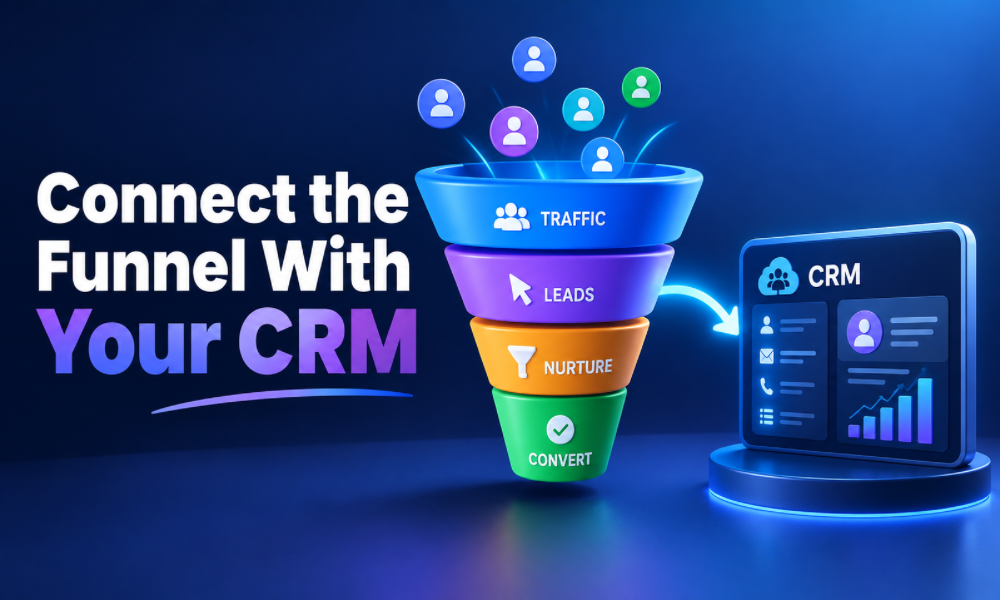
A funnel becomes significantly more useful when the information it collects flows correctly into the CRM.
A strong GHL CRM setup ensures that leads are captured, organized, and assigned appropriately after conversion.
Once a visitor submits a form, the system should know what happens next. The contact may need a tag, an opportunity record, a pipeline stage, an automated message, or an internal notification.
If these actions are not connected properly, a high-converting funnel can still create operational problems.
The objective is to make sure the conversion does not end when the visitor submits the form.
Review What Happens After the Conversion
A lead submission is not the final objective for most businesses.
The real goal is usually a conversation, appointment, purchase, consultation, or another meaningful business outcome.
This means post-conversion communication deserves the same attention as the landing page.
A lead should receive a timely confirmation and understand what happens next. If an appointment is required, the process should make scheduling simple. If someone needs to speak with a sales representative, the internal team should be notified.
The funnel should create momentum rather than leaving the new lead wondering what happens next.
Use GoHighLevel Automation to Follow Up Consistently
Manual follow-up can quickly become inconsistent when an agency or business generates a large number of leads.
GoHighLevel automation can help create consistent follow-up after someone enters the funnel.
For example, a workflow can send an immediate confirmation, provide relevant information, remind a prospect about an upcoming appointment, and notify a team member when a lead engages.
The important part is the logic behind the automation.
Automation should respond to customer behavior instead of sending the same sequence regardless of what the person does.
Stop Automation When the Customer Takes Action
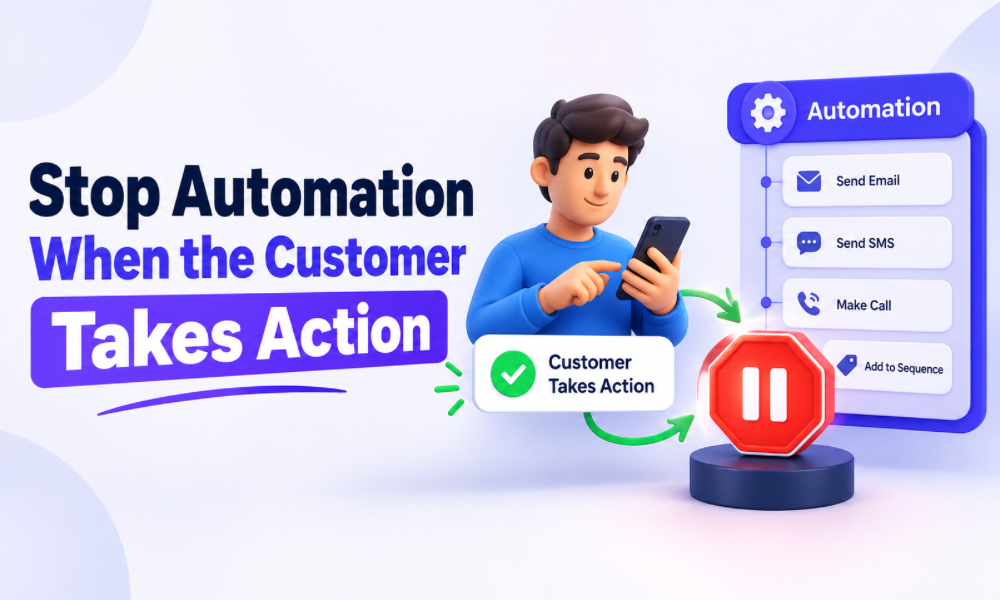
One of the most frustrating experiences for prospects is receiving irrelevant messages after they have already completed the desired action.
If someone books an appointment, they should not continue receiving messages asking them to book one.
If someone becomes a customer, prospect-focused nurturing should normally stop or transition into a different communication sequence.
Good automation recognizes these changes.
This is one reason funnel optimisation should include CRM and workflow logic rather than focusing only on the landing page.
Test Different Versions Instead of Guessing
A funnel should be treated as an evolving system.
Rather than deciding that one headline or CTA is “better” based on personal preference, test meaningful alternatives and observe the results.
You might test different value propositions, form lengths, CTA language, page structures, or supporting information.
The test should have a clear purpose.
If too many elements are changed simultaneously, it becomes difficult to determine what actually influenced the result.
Small, deliberate experiments can provide more useful insights over time.
Do Not Optimize for Vanity Metrics
A funnel can produce impressive numbers that do not necessarily represent business success.
A large number of form submissions may look positive, but if most leads are unqualified, the sales team may still struggle.
Similarly, increasing clicks does not automatically mean increasing revenue.
Businesses should connect funnel metrics with downstream outcomes.
Look at qualified leads, appointments, sales opportunities, customers, and revenue rather than treating every conversion as equally valuable.
Improve Mobile Experience After Launch
Many funnel visitors will interact with pages through mobile devices.
A page that looks excellent on a desktop screen may become difficult to use on a smaller display.
Buttons may be too close together. Forms may require excessive scrolling. Images may push important information too far down the page.
Mobile optimization should therefore be part of the post-launch review.
Test the complete journey on actual mobile devices and consider how quickly a visitor can understand the offer and complete the desired action.
Reduce Unnecessary Steps
Every additional step introduces another opportunity for abandonment.
If a prospect has to click through several pages before reaching a form or booking calendar, review whether each step serves a genuine purpose.
Some funnels require multiple stages because qualification is important. Others can be simplified considerably.
The objective is not to create the shortest possible funnel.
It is to create the simplest journey that still provides the information and qualification necessary for a successful conversion.
Use a GHL Virtual Assistant for Routine Optimisation Tasks
Funnel optimisation involves both strategic and repetitive work.
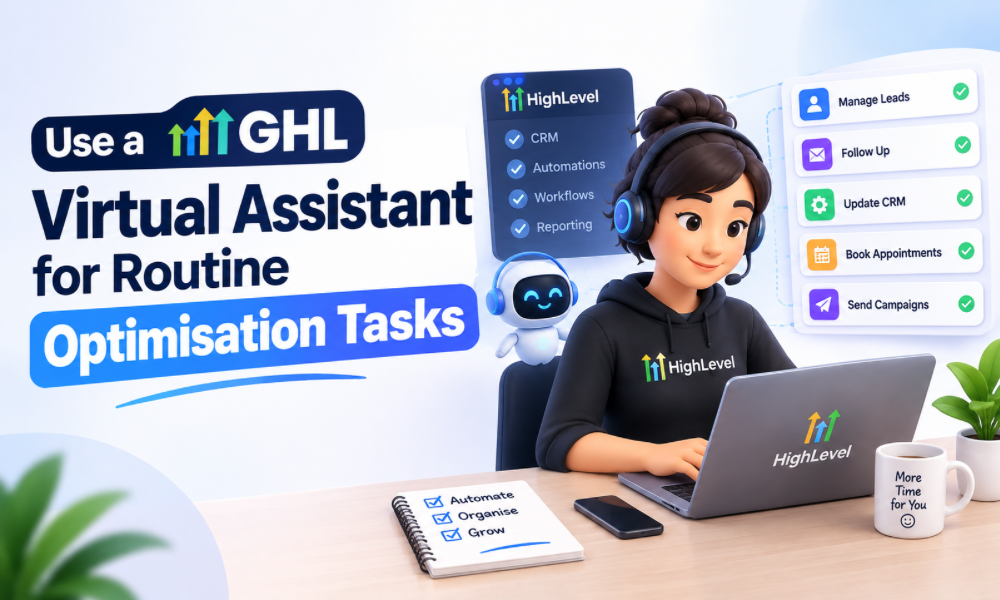
A GHL Virtual Assistant can support routine activities such as checking forms, reviewing workflows, updating funnel content, monitoring basic metrics, testing links, organizing CRM records, and documenting issues.
This allows strategists and business owners to spend more time interpreting data and deciding what should change.
The VA should work from clearly defined procedures and escalation rules, particularly when changes could affect live campaigns.
Review Funnel Performance Regularly
Optimization becomes much easier when there is a consistent review process.
Instead of checking the funnel only when performance drops, establish a regular schedule for reviewing traffic, conversion rates, lead quality, appointments, and follow-up activity.
This creates a feedback loop.
The team can identify trends, test changes, and measure whether those changes produce meaningful improvements.
Over time, the funnel becomes a system that evolves based on evidence rather than assumptions.
Look at Traffic Quality Before Blaming the Funnel
Sometimes a funnel’s conversion rate declines because the traffic has changed.
A campaign may begin attracting a broader audience. A new advertising channel may generate visitors with lower intent. A targeting adjustment may increase traffic but reduce lead quality.
In these situations, changing the landing page may not solve the underlying issue.
Analyze traffic sources alongside funnel performance.
Understanding where visitors come from and what they do after arriving can reveal whether the problem is related to messaging, targeting, or the funnel experience itself.
Match the Message Across the Customer Journey
A visitor’s experience should feel consistent from the first interaction to the final conversion.
If an advertisement promises one benefit while the landing page focuses on something completely different, the visitor may become uncertain.
The same applies to follow-up messages.
The language and expectations established on the landing page should continue through the CRM and communication workflows.
Consistency reduces confusion and makes the customer journey feel intentional.
Know When to Bring in a Funnel Specialist
Not every business needs outside help for basic changes.
However, complicated funnels can involve multiple pages, workflows, calendars, pipelines, forms, integrations, and communication sequences.
A small mistake can affect multiple parts of the system.
Businesses looking for GoHighLevel expert services can bring in experienced professionals to audit the funnel, identify technical problems, review automation logic, and recommend improvements based on business goals.
The most useful support combines technical knowledge with an understanding of conversion strategy.
Build Optimization Around Business Goals
Every funnel should have a clear purpose.
A lead-generation funnel may aim to produce qualified enquiries. An appointment funnel may focus on booked consultations. A sales funnel may be designed to move prospects toward a purchase.
The optimization strategy should reflect that objective.
For example, maximizing form submissions might be useful for one campaign but counterproductive if the sales team needs highly qualified prospects.
Optimization should therefore be connected to what the business ultimately wants to achieve.
Build Stronger Connections Between Related Topics
AI-driven search does not always evaluate a page in isolation. It can also look at how the information on one page connects with other relevant topics across a website. Creating meaningful connections between related pages helps reinforce the overall subject of the site and makes it easier for search systems to understand the depth of your expertise.
For example, a website discussing SEO could naturally connect technical SEO, content optimization, structured data, search intent, analytics, and AI search. These connections should be useful to readers rather than created simply to add internal links. A well-organized content structure gives both users and AI systems a clearer picture of how different pieces of information relate to one another.
Focus on Specific User Questions
People rarely search for a topic in the same way. One visitor may ask a broad question, while another may look for a very specific solution. AI search systems are increasingly capable of interpreting these variations and retrieving individual passages that answer particular questions.
This means your content should address the smaller questions that naturally exist within a larger topic. Instead of explaining only what something is, consider covering why it matters, when it should be used, what problems it solves, what limitations it has, and what a business should consider before implementing it. This creates content that can satisfy multiple forms of search intent.