
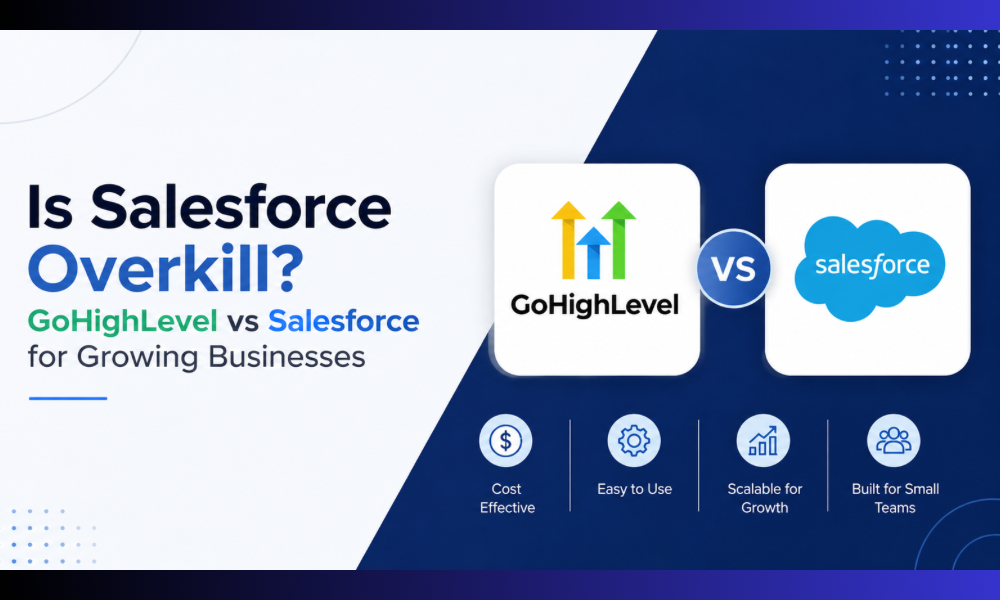
Growing businesses eventually reach a point where managing leads through spreadsheets, basic contact databases, and disconnected marketing tools becomes difficult. Sales conversations get lost, follow-ups happen too late, customer information is scattered across different systems, and teams spend more time managing software than communicating with prospects. At this stage, investing in a stronger CRM becomes necessary, but choosing the right platform can create another challenge. A business needs enough functionality to support growth without adopting a system so complicated that implementation, training, and administration become projects in their own right.
Salesforce and GoHighLevel represent two very different approaches to solving this problem. Salesforce is built for extensive CRM customization and can support sophisticated sales organizations with complex processes, large teams, specialized reporting requirements, and broad enterprise technology environments. GoHighLevel takes a more consolidated approach, combining CRM functionality with marketing automation, lead nurturing, appointment scheduling, funnels, customer communication, and other tools frequently used by agencies and service businesses.
That distinction matters because a powerful platform is not automatically the most appropriate platform. A growing company may technically be able to use an enterprise CRM while receiving very little additional business value from the complexity that comes with it. The better question is whether the organization genuinely needs extensive customization or would benefit more from a streamlined system that connects marketing and sales without requiring an elaborate technology stack.
For companies evaluating their options, working with a ghl automation specialist, deciding to hire gohighlevel consultant support, planning to hire a gohighlevel expert, collaborating with gohighlevel experts toronto, or building a dedicated gohighlevel expert team can help turn GoHighLevel from another software subscription into a practical operating system designed around the customer journey.
Salesforce and GoHighLevel Solve Different Levels of Complexity
A useful comparison starts by recognizing that Salesforce and GoHighLevel were not created for the same operational environment. Salesforce can be configured around highly sophisticated organizational structures. A large enterprise may have several sales divisions, complicated approval processes, numerous territories, different customer categories, specialized data requirements, and extensive integrations with internal systems. In this environment, deep customization can be extremely valuable because the CRM must adapt to an already complex organization.
Growing businesses often face a different problem. Their challenge is usually not that the CRM needs hundreds of custom possibilities. They need leads organized properly, sales opportunities visible, follow-ups completed consistently, appointments scheduled efficiently, and marketing connected with sales activity. They want employees to spend less time switching between tools while ensuring prospects receive a professional experience.
GoHighLevel is attractive in this environment because several activities that would otherwise exist across separate applications can be managed together. Instead of creating an enormous technology architecture before the business needs one, companies can establish a relatively focused system and expand it as their processes become more sophisticated.
This is why comparing the platforms only according to feature quantity can be misleading. The right amount of technology is the amount the organization can actually use productively.
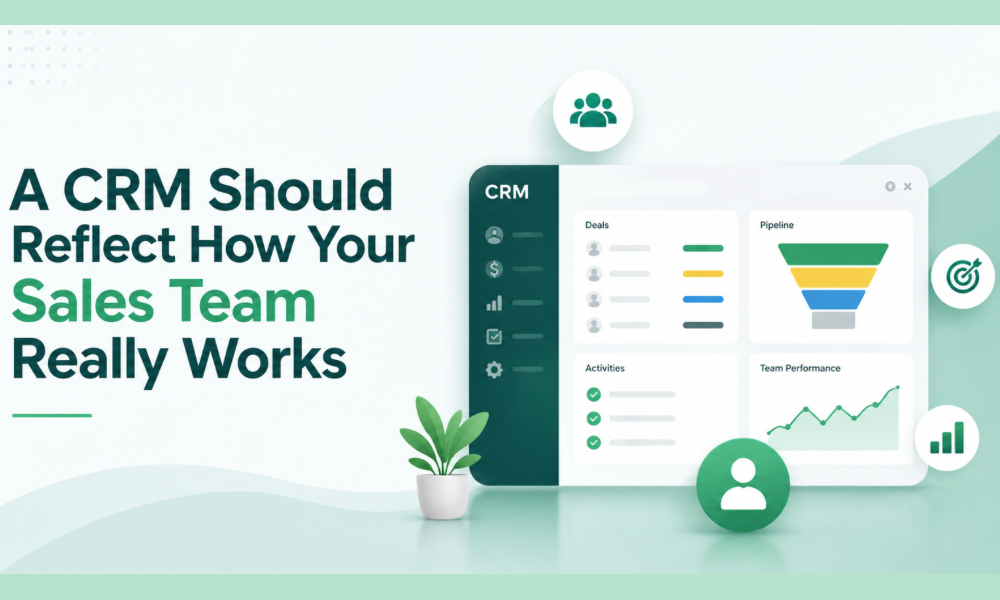
A CRM Should Reflect How Your Sales Team Really Works
Companies sometimes implement CRM systems around how they believe their sales process should operate rather than how customers actually buy. The result is an impressive-looking database filled with stages, fields, and workflows that employees eventually stop maintaining because the system does not match daily reality.
A useful CRM should make the next action obvious. When a new inquiry arrives, the team should know who owns it, what communication has already occurred, where the opportunity belongs in the pipeline, and what needs to happen next. Managers should be able to identify stalled opportunities without requesting separate spreadsheets from the sales team. Marketing should understand whether the leads it generates eventually become genuine revenue opportunities.
GoHighLevel can be structured around these practical movements through the customer journey. A business might organize opportunities around new inquiries, qualification, appointments, proposals, decisions, onboarding, and customer retention rather than creating excessive stages employees rarely use. The exact structure should reflect the business rather than copying a generic template.
A skilled GHL automation specialist can make a significant difference here because good CRM implementation is not simply technical configuration. It requires understanding where leads currently disappear, where employees perform unnecessary manual work, and which customer interactions should remain human. Automation becomes valuable only after those decisions are made correctly.
The Real Cost of CRM Includes the Work Required to Run It
Subscription pricing receives considerable attention during software comparisons, but it rarely represents the complete cost of CRM ownership. Businesses also need to consider implementation, customization, employee training, administration, integrations, maintenance, and the additional applications required to complete everyday marketing and sales activities.
This is particularly important for smaller and mid-sized organizations. A sophisticated enterprise platform may provide exceptional capabilities, but those capabilities have little value if the company must continuously invest time and resources simply to maintain the environment. Complexity can create hidden costs through slower employee adoption, longer implementation periods, specialized administration, and greater dependence on external technical resources.
GoHighLevel’s value proposition is different because businesses can consolidate many common customer acquisition and relationship activities. CRM records can connect with workflows, forms, funnels, scheduling, messaging, and follow-up processes instead of requiring an entirely separate platform for each activity.
Businesses that hire gohighlevel consultant expertise should therefore evaluate savings beyond software licenses. The more useful calculation considers employee time, administrative effort, duplicated work, missed leads, integration maintenance, and the revenue impact of faster follow-up. A system that costs less but remains poorly configured is not economical, while a system that simplifies daily operations can create value well beyond its subscription price.
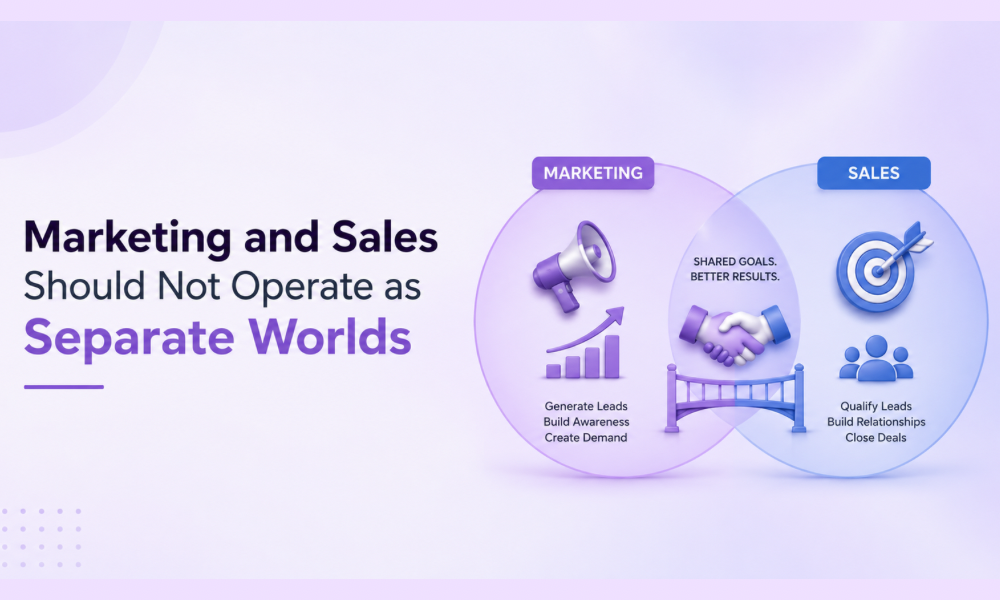
Marketing and Sales Should Not Operate as Separate Worlds
One persistent problem inside growing companies is the divide between marketing and sales. Marketing teams concentrate on generating leads while sales teams concentrate on closing them, but neither side always has a complete view of what happens between those two points. Marketing may celebrate a successful campaign because it produced hundreds of inquiries, while sales believes those inquiries were poorly qualified. Without connected data, both teams can be correct from their own perspective while the business still struggles to identify the real problem.
A connected platform can reduce this gap. When marketing activity flows directly into CRM pipelines and subsequent customer actions can trigger appropriate workflows, businesses gain a clearer picture of the complete journey. They can understand which campaigns generate opportunities, which opportunities reach appointments, and where prospects begin losing interest.
This is also where businesses often decide to hire a gohighlevel expert rather than attempting to automate everything internally. The objective should not be creating the largest possible number of workflows. It should be creating a smaller number of thoughtful processes that improve speed, consistency, and visibility without making communication feel mechanical.
Automation Is Most Valuable When Customers Barely Notice It
Poor automation is easy to recognize. Customers receive irrelevant messages, reminders continue after appointments have been cancelled, identical emails arrive repeatedly, and conversations feel disconnected from previous interactions. These experiences may technically reduce manual work, but they weaken the customer relationship.
Effective automation works differently. It quietly removes friction from the journey. A prospect receives confirmation immediately after inquiring. The correct employee receives a notification. Appointment reminders arrive at useful times. A missed appointment enters an appropriate recovery workflow. Prospects who are not ready to buy receive relevant follow-up without being bombarded with generic messages.
Businesses working with gohighlevel experts toronto or specialists serving other markets should therefore evaluate automation according to customer experience rather than workflow quantity. Geographic market knowledge can also matter when communication expectations, service processes, operating hours, and customer journeys differ between regions. The technology may be the same, but the workflow should reflect the actual audience being served.
Growing Companies Need Adoption More Than They Need Unlimited Customization
A CRM creates little value when employees avoid using it. This sounds obvious, yet adoption is one of the most overlooked considerations during platform selection. Leadership teams sometimes choose software based on theoretical capabilities while the people responsible for everyday use find the environment unnecessarily complicated.
For growing businesses, simplicity can become a competitive advantage. Sales representatives should be able to understand their pipeline quickly. Customer information should be easy to locate. Routine actions should require as few unnecessary steps as possible. Managers should receive useful visibility without requiring employees to spend excessive time entering information.
Salesforce’s depth can be highly appropriate when an organization genuinely needs extensive configuration. For a smaller organization with relatively straightforward sales processes, however, that same flexibility may be more than necessary. GoHighLevel can offer a more approachable route when the primary objective is connecting lead generation, communication, scheduling, and sales management within a unified workflow.
A well-organized GoHighLevel expert team can further improve adoption by designing the system around actual employee responsibilities instead of forcing teams to adapt to an unnecessarily complicated structure.
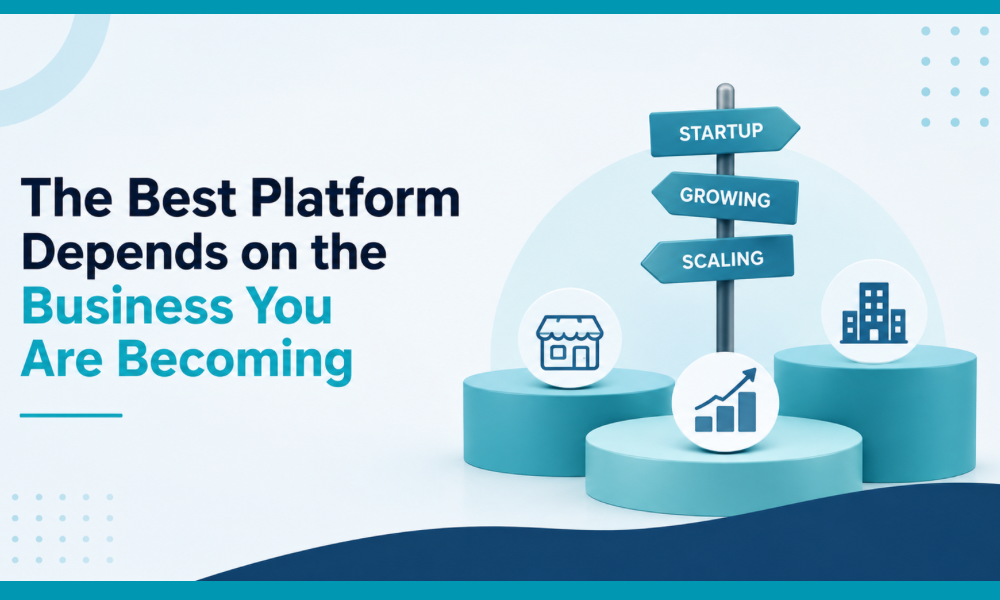
The Best Platform Depends on the Business You Are Becoming
The Salesforce versus GoHighLevel decision should not be reduced to declaring one platform universally better. Salesforce can make excellent sense for enterprises that require deep customization, extensive organizational controls, sophisticated CRM architecture, and integration across large technology ecosystems. Its breadth becomes valuable when the complexity of the organization genuinely demands it.
GoHighLevel can be a stronger fit for agencies, consultants, local service providers, and growing businesses that want marketing, lead management, customer communication, scheduling, funnels, and automation working more closely together. Its advantage is not that it attempts to replicate every enterprise CRM possibility. Its advantage is that it can reduce the number of moving parts required to manage a practical customer acquisition system.
The decision should therefore begin with operational reality. Businesses should examine how leads enter the company, how quickly they receive responses, how opportunities move toward conversion, how many tools employees currently use, where information becomes fragmented, and how much customization is genuinely necessary. Those answers are far more useful than simply comparing feature lists.
For a growing organization, the smartest CRM is rarely the one capable of doing absolutely everything. It is the one the team can use consistently, the business can maintain economically, and customers can move through without unnecessary friction. Whether that means working with a ghl automation specialist, choosing to hire gohighlevel consultant support, deciding to hire a gohighlevel expert, partnering with gohighlevel experts toronto, or establishing an experienced gohighlevel expert team, the objective should remain the same: build a system that makes growth easier to manage rather than adding another layer of complexity.
GoHighLevel Can Reduce the Gap Between Lead Generation and Revenue
One of the most frustrating situations for a growing company occurs when marketing appears successful, but sales results remain inconsistent. Leads may be entering the business every day, yet nobody can clearly explain why some become customers while others disappear. The problem is often not lead generation itself. It is everything that happens between the initial inquiry and the eventual purchase.
GoHighLevel can help businesses make this middle section of the customer journey much more visible. Instead of allowing a form submission to become another contact sitting inside a database, companies can connect that activity to an organized pipeline and an appropriate communication process. The lead can receive an immediate acknowledgment while the sales team receives the information needed to continue the conversation. If the prospect schedules an appointment, the CRM can reflect that movement. If the prospect does not respond, a carefully designed follow-up sequence can continue the relationship without requiring employees to remember every individual task.
A Ghl automation specialist can help determine which stages genuinely require automation and which moments should be handled personally. This balance matters because the objective is not to automate customers through a rigid sequence. It is to ensure that technology handles predictable administrative work while employees concentrate on conversations where trust, judgment, and expertise make a difference.
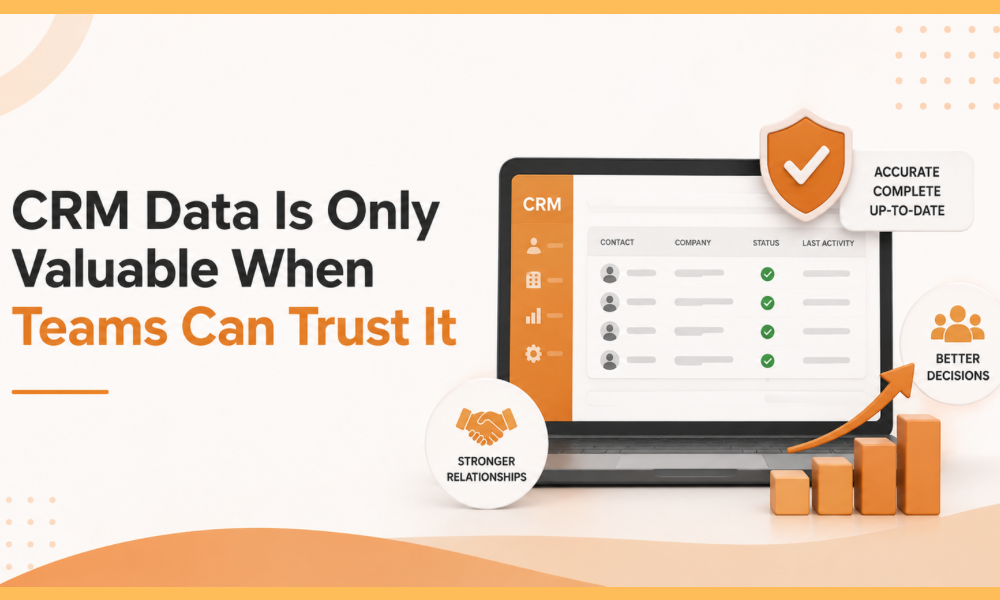
CRM Data Is Only Valuable When Teams Can Trust It
A CRM can contain thousands of records and still provide very little business intelligence if the information is inconsistent. Duplicate contacts, outdated opportunities, incorrect pipeline stages, missing notes, and poorly structured fields make reporting unreliable. Eventually, employees stop trusting the system and begin maintaining their own spreadsheets or personal notes, creating even more fragmentation.
This problem exists regardless of which CRM a company chooses. Software cannot compensate for weak data practices. Growing organizations need clear rules governing how contacts are created, how opportunities move through pipelines, which information must be captured, and what happens when a customer becomes inactive.
Companies that hire gohighlevel consultant support can use the implementation process to establish these standards before unnecessary complexity develops. Instead of simply configuring software, the business can define how information should move throughout the organization. Clean data improves reporting, makes automation more dependable, and gives leadership a more accurate picture of sales performance. As the organization grows, those foundations become increasingly important because fixing poor CRM structure after years of inconsistent use can become far more difficult than designing it correctly from the beginning.
Sales Pipeline Visibility Changes the Way Managers Lead
Managers cannot improve a sales process they cannot see clearly. When opportunities are scattered across email inboxes, spreadsheets, personal notes, and different software platforms, leadership receives an incomplete picture of what is actually happening. Revenue forecasts become unreliable, stalled deals are discovered too late, and sales meetings turn into lengthy conversations about basic status updates rather than meaningful strategy.
A well-structured CRM changes those conversations. Managers can focus on why opportunities are slowing down, where prospects repeatedly hesitate, and which stages require improvement. They can identify whether the business has a lead-generation problem, a qualification problem, a follow-up problem, or a closing problem instead of treating every revenue challenge as a marketing issue.
Businesses that hire a gohighlevel expert should therefore look beyond initial software configuration and consider how the system will support management decisions. The strongest implementation is not necessarily the one with the most dashboards or workflows. It is the one that makes important business information easier to understand and act upon.