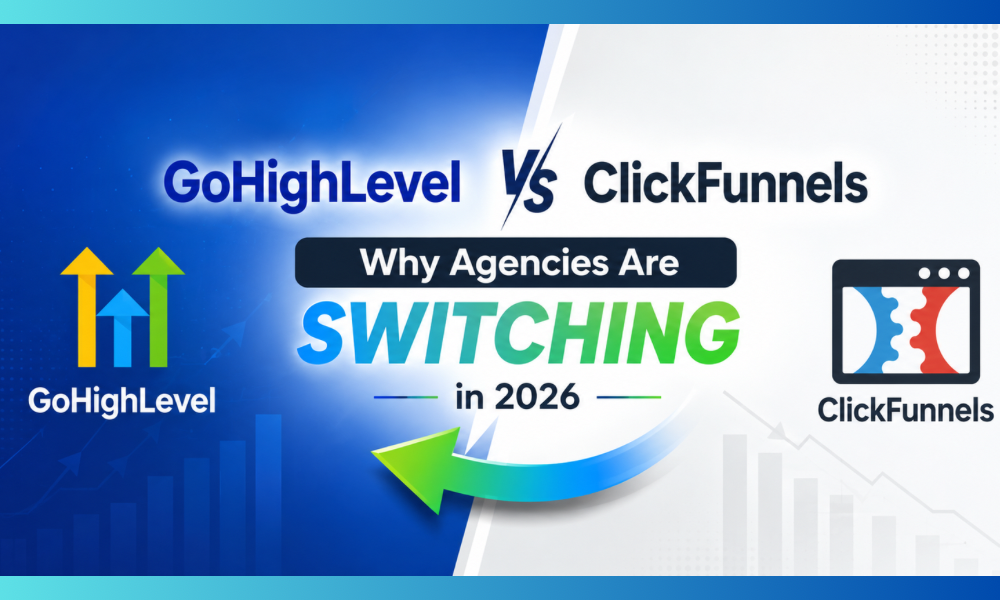
For years, ClickFunnels has been one of the most recognizable names in online funnel building. Thousands of entrepreneurs, coaches, consultants, and digital marketers have used it to create landing pages, sales funnels, and online offers that generate leads and sales. It played a major role in making funnel marketing accessible to businesses of all sizes.
However, the needs of digital agencies have changed dramatically. Clients no longer want just a high-converting landing page. They expect complete business systems that can generate leads, nurture prospects, manage customer relationships, automate follow-ups, schedule appointments, monitor pipelines, and provide measurable reporting from a single platform. Agencies are also under increasing pressure to deliver more services while keeping operational costs under control.
This shift in client expectations has led many agencies to rethink the software they rely on every day. Instead of managing multiple subscriptions for funnels, email marketing, CRM software, appointment scheduling, automation tools, and reporting platforms, agencies are moving toward integrated ecosystems that simplify operations and improve scalability.
That is one of the biggest reasons GoHighLevel has become increasingly popular among agencies in 2026. Rather than positioning itself as only a funnel-building platform, it has evolved into a complete operating system for agencies that combines CRM functionality, advanced go high level automation, client management, communication tools, reporting, marketing campaigns, and scalable business operations under one roof.
For agencies considering a platform upgrade, the question is no longer which software builds better landing pages. The real question is which platform can support long-term business growth while helping agencies deliver more value to every client.
Agencies Have Outgrown Single-Purpose Platforms
The digital marketing industry has changed significantly over the past few years. Clients expect agencies to provide complete marketing solutions instead of isolated services. A business owner hiring an agency today wants lead generation, customer nurturing, appointment booking, automated follow-up, sales tracking, reporting, and ongoing optimization—not just a landing page.
This evolution has exposed one of the biggest limitations of traditional funnel software. While landing pages remain important, they represent only one step within the customer journey.
Modern agencies require platforms capable of managing every interaction that occurs before and after someone fills out a form.
Many agencies implementing advanced gohighlevel marketing strategies have realized that managing multiple disconnected applications slows down operations, increases software costs, and creates unnecessary technical complexity.
Instead of constantly integrating different platforms, agencies increasingly prefer unified systems that centralize marketing, CRM management, communication, and automation.
The CRM Has Become More Valuable Than the Funnel
Several years ago, agencies focused heavily on building beautiful sales funnels because online advertising was less competitive and lead generation costs were lower.
Today, acquiring leads is often the most expensive part of digital marketing.
As a result, maximizing every lead has become far more important than generating additional traffic.
This is where customer relationship management has become a competitive advantage.
A business that responds immediately, consistently nurtures leads, tracks every conversation, and automates customer follow-up will usually outperform competitors that generate similar traffic.
GoHighLevel places the CRM at the center of the customer journey rather than treating it as an optional add-on.
This shift reflects how agencies now operate.
Generating leads matters.
Converting those leads matters even more.
Businesses working with an experienced Automation Specialist often discover that improving lead management produces greater revenue increases than simply increasing advertising budgets.
Agencies Want Fewer Tools, Not More
Software fatigue has become a growing challenge for agencies.
Many teams manage separate platforms for:
Landing pages.
Email marketing.
CRM management.
SMS campaigns.
Appointment scheduling.
Reporting.
Automation.
Reputation management.
Client communication.
Every additional platform introduces another login, another subscription, another integration, another update, and another opportunity for something to break.
This fragmentation increases operational costs while reducing efficiency.
GoHighLevel addresses this challenge by combining multiple essential business functions into a single platform.
Instead of spending time maintaining numerous software connections, agencies can focus on serving clients and growing their businesses.
Many agencies making the switch report that operational simplicity becomes one of the platform’s greatest long-term advantages.
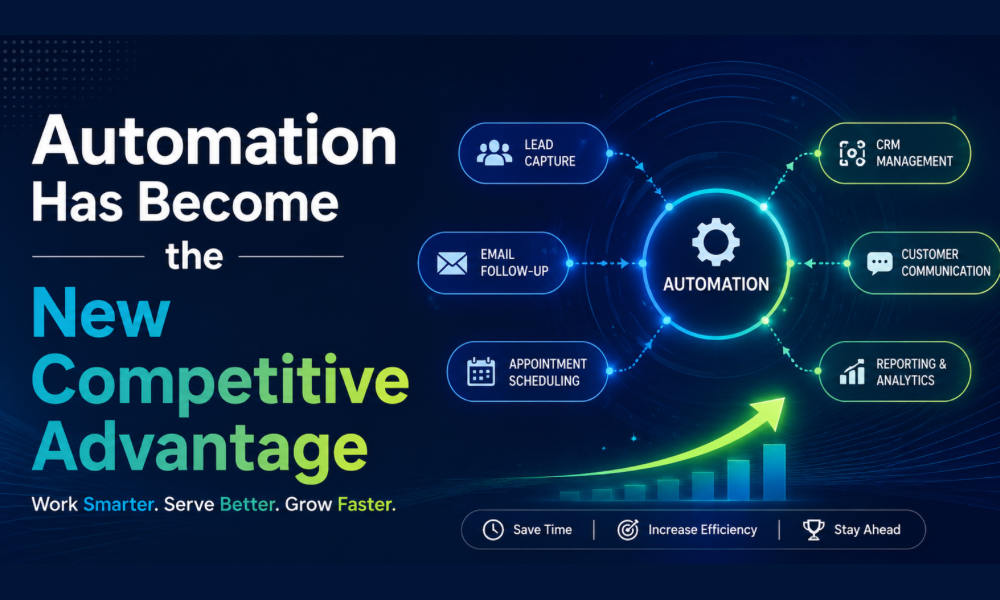
Automation Has Become the New Competitive Advantage
Clients no longer evaluate agencies solely based on advertising performance.
They want businesses that continue generating results after leads enter the CRM.
This has made automation one of the most valuable services agencies can offer.
Modern go high level consultant extends far beyond sending welcome emails.
Agencies now automate appointment confirmations.
Lead nurturing.
Missed call responses.
Internal notifications.
Sales follow-ups.
Review requests.
Customer onboarding.
Pipeline updates.
Task creation.
Long-term customer engagement.
An experienced Automation Specialist designs these systems around customer behavior rather than generic workflows.
This allows agencies to deliver measurable improvements in efficiency while providing significantly greater value to clients.
Automation has evolved from a technical feature into a major competitive differentiator.
Agencies Are Building Recurring Revenue Instead of One-Time Projects
Traditional funnel projects often generate one-time revenue.
Once the funnel is delivered, the project ends.
Many agencies are now shifting toward recurring revenue models because they provide greater financial stability and stronger client relationships.
This is where White-Label SaaS has become increasingly important.
Instead of selling only implementation services, agencies can provide ongoing software access together with CRM management, automation, reporting, communication tools, and strategic support.
This recurring model creates predictable monthly income while allowing agencies to continue improving client systems over time.
Rather than completing projects and moving on, agencies become long-term technology partners invested in customer success.
For many businesses, this transition has fundamentally changed the economics of running an agency.
GHL Migration Is Easier Than Most Agencies Expect
One of the biggest reasons agencies delay switching platforms is the fear of migration. After spending years building funnels, collecting contacts, creating email campaigns, and managing client data, many business owners worry that moving to a new system will disrupt operations or result in lost information. While these concerns are understandable, modern migration processes are far more structured than many agencies realize.
A well-planned GHL Migration is not simply about transferring contacts from one platform to another. It is an opportunity to improve the entire marketing ecosystem. During the migration process, agencies often clean outdated contact lists, simplify complicated workflows, rebuild inefficient funnels, organize CRM pipelines, improve automation sequences, and eliminate unnecessary software subscriptions. Instead of carrying old inefficiencies into a new platform, they start with a cleaner, more scalable system designed around current business goals.
Many agencies are surprised that the migration process actually becomes a chance to optimize their operations rather than simply recreate what already exists. With proper planning and experienced implementation, businesses can transition smoothly while improving both internal workflows and client experiences.
Agencies Want to Own Their Client Relationships
One of the biggest shifts happening across the agency industry is the desire to build stronger long-term relationships with clients instead of relying on individual service projects. Agencies no longer want to be viewed as companies that simply create landing pages or manage advertising campaigns. They want to become strategic business partners that help clients improve every stage of customer acquisition and retention.
This is one reason why White-Label SaaS has become increasingly attractive in 2026. Instead of delivering a project and ending the relationship, agencies can provide clients with a branded software platform they continue using every day. Clients log into the agency’s system, manage leads, communicate with customers, review reports, and automate marketing activities without leaving the platform.
This creates a stronger business relationship because the agency becomes part of the client’s daily operations rather than an occasional service provider. It also increases customer retention since businesses become invested in the systems supporting their growth. For agencies looking to build predictable recurring revenue while strengthening client loyalty, White-Label SaaS represents a significant competitive advantage.
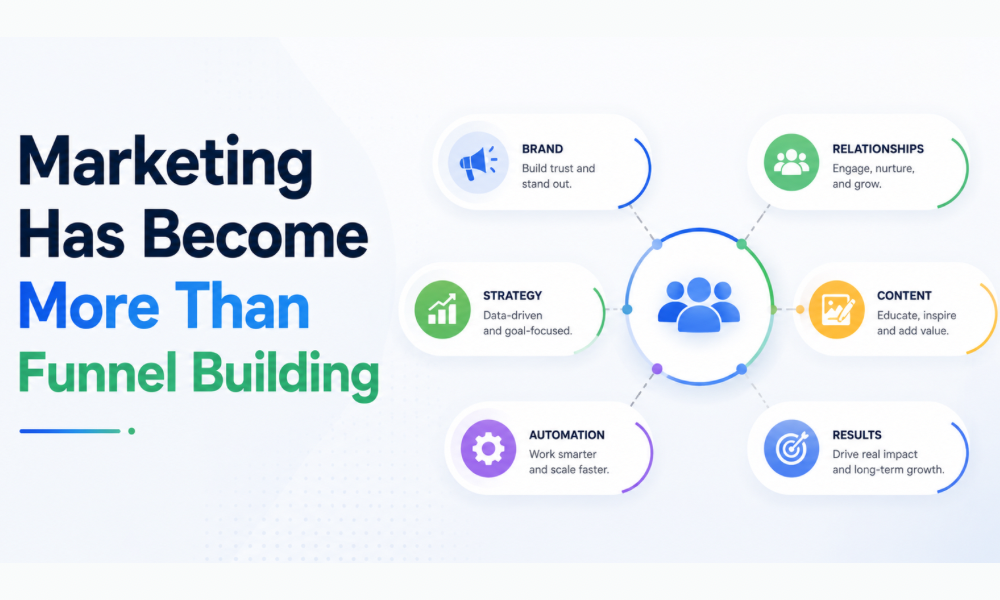
Marketing Has Become More Than Funnel Building
Several years ago, digital marketing often revolved around building a landing page, driving paid traffic, and hoping visitors converted into customers. While funnels remain an important part of online marketing, today’s customer journey is considerably more complex.
Prospects may discover a business through search engines, social media, online reviews, referrals, email campaigns, YouTube videos, webinars, or local directories before ever reaching a landing page. They may also require multiple interactions before making a purchasing decision.
Modern gohighlevel marketing strategies recognize this reality by connecting every stage of the customer journey into one coordinated system. Leads can be captured through multiple channels, automatically nurtured through personalized communication, assigned to sales teams, reminded about appointments, followed up after consultations, and encouraged to leave reviews after becoming customers.
Instead of focusing only on the first conversion, agencies increasingly focus on creating complete customer journeys that maximize long-term customer value. This broader marketing approach allows businesses to generate stronger results while delivering better customer experiences from the first interaction through ongoing retention.
Agencies Need Platforms That Adapt as Client Needs Change
Every client begins at a different stage of business growth. A startup may initially require only a simple lead capture system and basic automation. A growing company may later need advanced reporting, multiple sales pipelines, team permissions, sophisticated customer segmentation, and integrated communication across several locations.
This changing environment requires software that evolves alongside client requirements rather than forcing agencies to migrate repeatedly as businesses expand.
GoHighLevel’s flexibility allows agencies to introduce additional capabilities gradually without replacing existing systems. As client requirements become more sophisticated, agencies can expand automation, improve reporting, create additional workflows, integrate third-party services, and optimize customer journeys without disrupting daily operations.
This scalability is one of the primary reasons many agencies choose GoHighLevel over more narrowly focused platforms. Rather than solving today’s marketing challenges alone, they invest in technology capable of supporting years of future growth.
Why the Most Successful Agencies Think Like Technology Companies
One of the most noticeable trends among successful agencies in 2026 is that they increasingly operate like technology companies rather than traditional marketing firms. Their value no longer comes only from campaign management or creative services. Instead, they build repeatable systems that help clients automate operations, improve communication, and increase revenue through smarter processes.
An experienced Automation Specialist plays an important role in this transformation by designing systems that reduce manual work while improving consistency across every stage of the customer journey. These automation strategies help agencies deliver measurable improvements without continuously increasing staff or operational costs.
Rather than spending every day performing repetitive administrative tasks, agency teams can focus on strategic planning, creative problem-solving, and client growth. This shift not only improves profitability but also creates a better experience for both employees and customers.
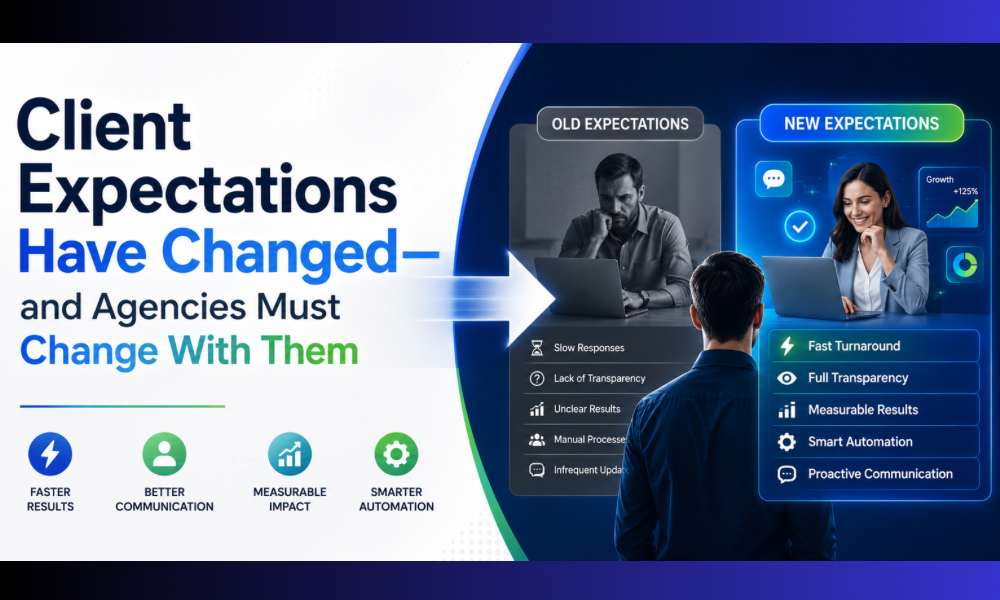
Client Expectations Have Changed—and Agencies Must Change With Them
The relationship between agencies and clients has evolved significantly over the past few years. Clients are no longer satisfied with receiving monthly reports that simply show impressions, clicks, or website traffic. They want measurable business outcomes. They want to know how many leads were generated, how quickly those leads were contacted, how many appointments were booked, how many opportunities moved through the sales pipeline, and ultimately how marketing activities contributed to revenue growth.
This shift has changed the type of software agencies need to operate successfully. Platforms that focus only on one part of the customer journey no longer provide enough visibility. Agencies need technology that connects marketing, sales, customer communication, and reporting into one complete ecosystem.
This is where GoHighLevel marketing has become particularly valuable. Instead of treating lead generation and customer management as separate activities, GoHighLevel allows agencies to monitor every stage of the customer journey from the moment a prospect first interacts with a campaign until they become a long-term customer. This complete visibility enables agencies to make smarter decisions, improve campaign performance, and demonstrate clear business value to their clients.
Reducing Software Complexity Helps Agencies Scale Faster
One challenge many growing agencies experience is operational complexity. As new clients are added, additional software subscriptions, integrations, logins, and workflows are introduced. What initially seems manageable can quickly become difficult to maintain. Team members spend valuable time switching between different platforms, troubleshooting integrations, and manually updating information across multiple systems.
Many agencies switching to GoHighLevel do so because they want to simplify their technology stack rather than continue expanding it. Consolidating CRM management, communication tools, reporting, sales pipelines, websites, automation, calendars, and client management into one platform reduces administrative overhead while improving team productivity.
An experienced Automation Specialist can further optimize these processes by designing workflows that eliminate repetitive manual tasks. Instead of employees performing routine activities every day, automated systems handle lead assignment, follow-up sequences, appointment reminders, internal notifications, and customer communication automatically. This allows agency teams to dedicate more time to strategy, client relationships, and business development instead of operational maintenance.
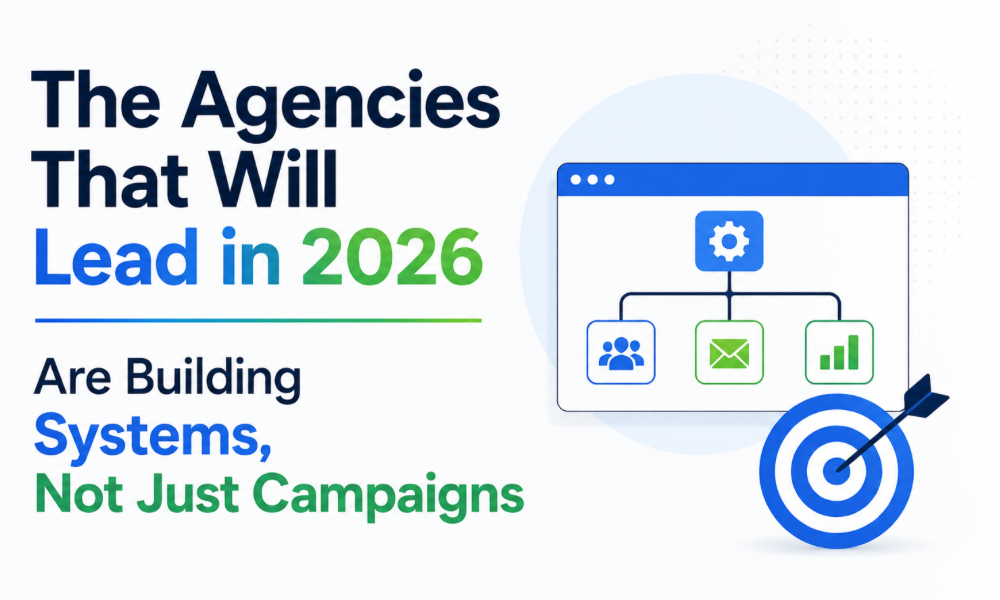
The Agencies That Will Lead in 2026 Are Building Systems, Not Just Campaigns
The agency industry is becoming increasingly competitive. Thousands of agencies offer similar advertising services, social media management, and website development. Standing out now requires more than creative campaigns or attractive designs. Agencies need to deliver systems that help clients grow consistently.
This is why many successful businesses are moving beyond traditional marketing services and embracing complete operational solutions powered by go high level automation. Instead of delivering isolated campaigns, they create repeatable systems that capture leads, nurture prospects, automate communication, manage appointments, organize sales pipelines, and generate ongoing business intelligence.