
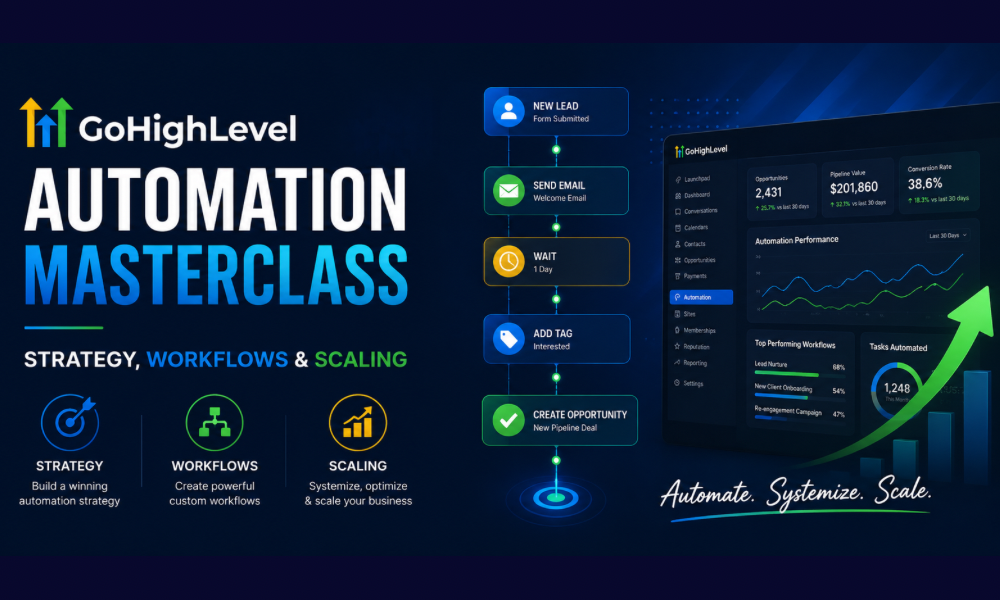
The GoHighLevel Automation Masterclass: Strategy, Workflows & Scaling
Automation is where GoHighLevel stops being a CRM and starts being a revenue machine. This masterclass covers the strategy, the exact workflows, and the mistakes that silently kill results — drawn from building 1,000+ automations across 200+ agency accounts.
Part 1: Automation Strategy — Think Journeys, Not Tasks
Amateur automation thinking: “When someone fills a form, send an email.” Professional automation thinking: “What is the complete journey from stranger to customer, and where does human attention actually add value?” Map your customer journey first — every touchpoint from first click to closed deal to repeat purchase. Then automate everything that doesn’t need human judgment, and route everything that does to the right person at the right moment with full context.
The 80/20 of GHL automation: 80% of revenue impact comes from five journey moments — the first 5 minutes after a lead arrives, missed connections (calls/no-shows), the gap between interest and decision, the post-purchase window, and the win-back moment for dormant customers.
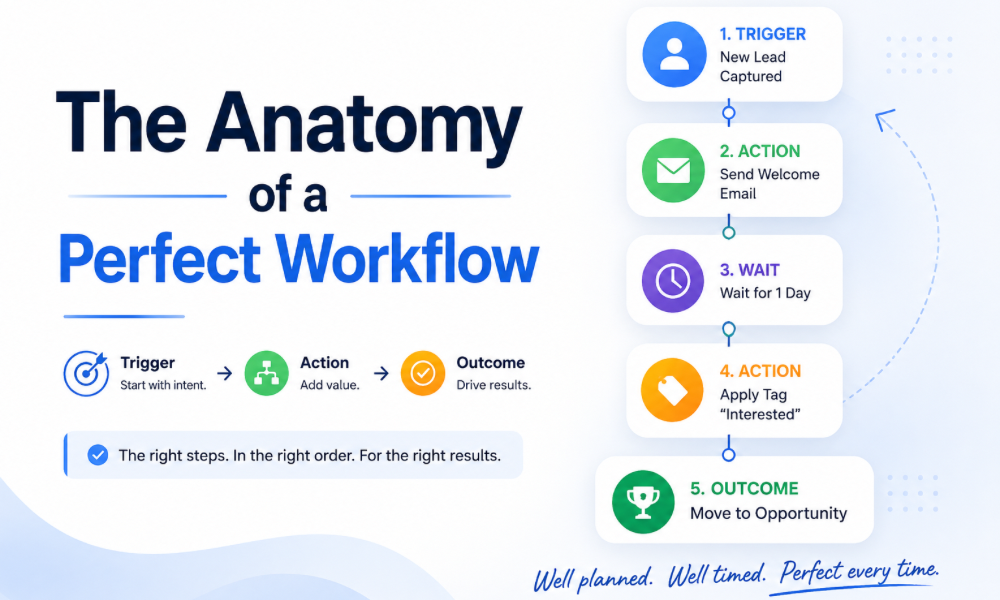
Part 2: The Anatomy of a Perfect Workflow
Every reliable GHL workflow shares this structure: a specific trigger (form submitted, tag added, pipeline stage changed), immediate acknowledgment to the contact, internal notification with context, conditional branching based on contact data, wait steps that respect human rhythms, and a defined exit condition. Workflows without exit conditions are how contacts end up getting messages meant for someone three stages behind them.
Trigger hygiene: Use one trigger per workflow where possible. Multi-trigger workflows become undebuggable. Instead, chain workflows: workflow A completes → adds tag → tag triggers workflow B.
Wait steps: Never send more than one message per day in nurture sequences unless there’s urgency. Space follow-ups: day 0, day 1, day 3, day 7, day 14. Respect business hours — GHL’s wait-until settings prevent 3 AM texts that get you blocked.
Part 3: Seven Revenue-Critical Automations (With Exact Logic)
1. The 60-Second Response: Trigger: form submission or new lead. Actions: SMS within 60 seconds (“Hi {first name}, got your request — quick question to point you right: [qualifying question]”), simultaneous email with booking link, Slack/internal notification to sales, task created if no reply in 2 hours. Expected impact: 2-4x contact rate versus hour-later response.
2. Missed-Call Text-Back: Trigger: missed call on tracking number. Action: instant SMS “Sorry we missed your call! Reply here or we’ll call you back within 15 minutes.” Route replies to team inbox with high priority. For local service businesses, this recovers 15-30% of otherwise-lost callers.
3. No-Show Recovery: Trigger: appointment status = no-show. Actions: wait 15 minutes, SMS “Hey {first name}, looks like we missed each other — want to grab a new time?” with reschedule link, wait 1 day, email with calendar link, wait 3 days, final SMS. Recovers 30-40% of no-shows without any human chasing.
4. Proposal Follow-Up: Trigger: pipeline stage = Proposal Sent. Actions: wait 2 days, check if stage changed (exit if yes), email “Any questions on the proposal?”, wait 3 days, SMS check-in, wait 4 days, “Should I close the file?” email — the breakup email that gets more responses than any other message in the sequence.
5. New Customer Onboarding: Trigger: pipeline stage = Won. Actions: welcome email with next steps, internal task list creation for delivery team, day-3 check-in SMS, day-14 satisfaction pulse, day-30 review request. Customers who complete structured onboarding churn at half the rate.
6. Database Reactivation: Trigger: manual or scheduled campaign to contacts inactive 90+ days. Message: value-first re-engagement (“We just published X — thought of you”) followed by soft offer. Run quarterly; typical results are 3-8% reactivation, which on a 2,000-contact dormant list means 60-160 warm conversations from zero ad spend.
7. Review Engine: Trigger: job completed / deal won. Actions: wait 2 days, SMS with direct Google review link, if review detected → thank-you message, if not → one email reminder at day 5, stop. Never send more than two asks. Consistent 20-30% review conversion compounds into local SEO dominance.
Part 4: The Mistakes That Kill Automation Results
Over-messaging: More messages ≠ more conversions. Past 5-7 touches, each additional message increases opt-outs faster than responses.
No exit conditions: Always exit contacts from sequences when they book, buy, or reply. Nothing destroys trust like “Just checking in!” after someone already purchased.
Generic merge fields: “Hi {first name}” isn’t personalization. Reference their actual situation: the service they asked about, the page they visited, the city they’re in.
Ignoring the data: Check workflow analytics monthly. A nurture sequence with 40% open rates and zero bookings has a message problem, not a deliverability problem.
Building without testing: Every workflow gets a test contact run through it before launch. Every branch, every merge field, every link.
Part 5: Scaling — From Workflows to Systems
Once core automations run reliably, the compounding move is snapshots: package your proven workflows into a snapshot and deploy to every new client or location in minutes. Agencies running 20+ sub-accounts from a master snapshot update once and push everywhere. This is how solo operators run automation for dozens of clients without drowning.
Get These Automations Built For You
Every workflow in this guide, built and tested by certified GHL automation specialists.
Book Free Consultation →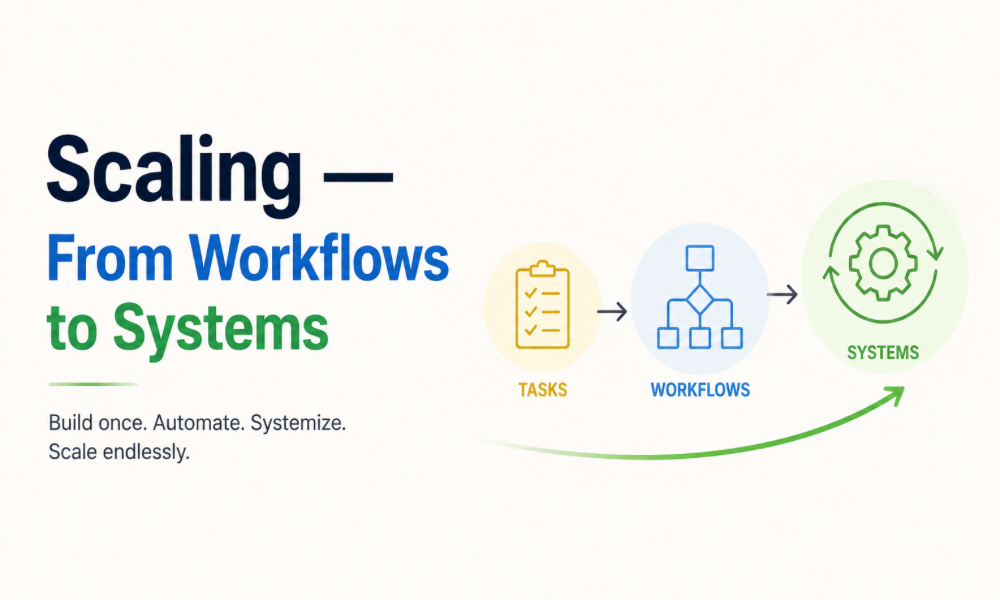
Get These Built For You
Every automation in this guide is something our team has built dozens of times. If you’d rather have it done than do it: our automation specialists build complete workflow systems from $1,500, or hire a dedicated GHL expert from $12/hr to build and run everything ongoing.
Related: 10 ready-to-use templates · Automation mistakes · SMS strategies