
GoHighLevel Automation Mistakes That Are Silently Killing Your Reply Rates
GoHighLevel Automation Mistakes That Are Silently Killing Your Reply Rates
One of the biggest reasons businesses invest in GoHighLevel is its ability to automate lead generation, customer communication, appointment scheduling, and sales follow-ups. With powerful GoHighLevel automation capabilities, companies can build systems that run around the clock, ensuring every lead receives timely communication without constant manual effort.
However, many businesses become frustrated when their automation workflows result in low engagement, low response rates, and fewer conversations than expected. The problem is rarely the platform itself. More often, the issue lies in how automation has been configured and managed.
Even businesses with a well-structured GHL CRM setup can unknowingly create workflows that overwhelm prospects, deliver irrelevant messages, or fail to create meaningful engagement. Over time, these mistakes silently reduce reply rates and limit the effectiveness of marketing campaigns.
Understanding the most common automation mistakes can help businesses improve customer communication, increase engagement, and maximize the value of their GoHighLevel investment.
Treating Automation Like a Broadcast System Instead of a Conversation
One of the most common mistakes businesses make is using automation as a one-way communication channel rather than a conversation-building tool.
Many workflows are designed to send messages repeatedly without considering how prospects actually respond. Businesses often focus heavily on message delivery while paying little attention to customer engagement and interaction.
Customers today expect personalized experiences. They want communication that feels relevant, timely, and connected to their needs.
When every lead receives identical emails, text messages, and follow-up sequences regardless of their behavior, reply rates naturally decline.
Successful Gohighlevel automation workflows focus on creating conversations rather than simply pushing messages. The goal should always be to build relationships and encourage engagement rather than flooding prospects with automated communication.
Businesses that create interaction-focused workflows often experience significantly stronger response rates because customers feel understood rather than targeted.
Poor CRM Organization Creates Automation Problems
Automation can only perform effectively when it is supported by a properly structured CRM system.
Many businesses build automation workflows before completing a proper GHL CRM setup, which often creates communication problems later.
When contacts are poorly organized, incorrectly tagged, or assigned to the wrong pipelines, automation systems struggle to deliver relevant experiences.
For example, a customer who has already booked a consultation may continue receiving lead-generation messages simply because CRM data was not updated correctly.
This creates confusion and reduces trust.
A strong CRM structure ensures that contacts move through appropriate stages while automation remains aligned with customer behavior and intent.
Businesses that prioritize CRM organization often achieve better automation performance because communication stays relevant throughout the customer journey.
Sending Too Many Automated Messages
Many businesses assume that increasing communication frequency will improve engagement.
In reality, excessive messaging is one of the fastest ways to reduce reply rates.
Customers who receive too many emails, SMS messages, reminders, and notifications often become overwhelmed. Instead of responding, they begin ignoring communication entirely.
This issue is especially common when businesses build multiple automation workflows without considering how those workflows interact with one another.
The result is often message overload.
Successful Gohighlevel automation strategies focus on communication quality rather than quantity.
Every message should provide value, answer questions, or move the customer journey forward.
Businesses that respect customer attention often generate stronger engagement because communication feels purposeful rather than repetitive.
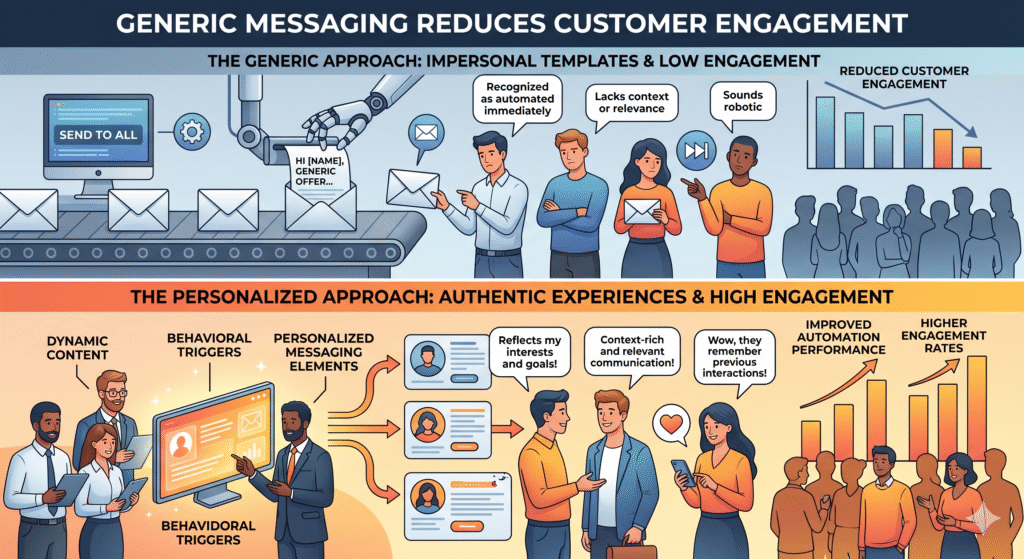
Generic Messaging Reduces Customer Engagement
One of the biggest advantages of automation is scalability. However, scalability should never come at the expense of personalization.
Many businesses rely on generic templates that sound robotic and impersonal.
Customers can often recognize automated messaging immediately, especially when messages contain generic language that lacks context or relevance.
Modern consumers expect personalized communication that reflects their interests, goals, and previous interactions.
Businesses using professional Gohighlevel expert services often build workflows that incorporate dynamic content, behavioral triggers, and personalized messaging elements designed to create more authentic customer experiences.
The more relevant communication becomes, the more likely customers are to engage and respond.
Personalization remains one of the most effective ways to improve automation performance.
Funnel and Automation Misalignment Hurts Reply Rates
Another major issue occurs when businesses create automation workflows that are not aligned with their sales funnels.
The Funnel Builder inside GoHighLevel allows businesses to create highly targeted customer journeys. However, many companies fail to connect automation logic correctly to funnel behavior.
For example, a prospect who downloads a lead magnet should not receive the same communication sequence as someone who schedules a sales consultation.
Different funnel stages require different messaging strategies.
When automation workflows ignore customer intent and funnel position, communication often feels irrelevant and poorly timed.
Businesses that align their Funnel Builder strategy with automation workflows typically experience stronger reply rates because communication reflects where prospects are within the buying journey.
The more aligned the funnel and automation systems become, the better the overall customer experience.
Ignoring Behavioral Triggers and Customer Actions
One of the most powerful features of GoHighLevel is the ability to trigger automation based on customer behavior.
Unfortunately, many businesses still rely heavily on time-based workflows that send messages according to fixed schedules rather than actual customer activity.
Behavior-based automation is far more effective because it responds to what customers are actually doing.
For example, a lead who visits a pricing page, opens multiple emails, or books an appointment demonstrates significantly different intent than a lead who has not engaged at all.
Businesses using advanced Gohighlevel automation often build workflows that react dynamically to customer actions rather than relying solely on predetermined timelines.
Behavior-driven communication feels more relevant and often produces higher engagement rates.
Lack of Human Oversight Reduces Automation Effectiveness
Automation is designed to improve efficiency, but it should not eliminate human involvement completely.
Many businesses make the mistake of assuming that once workflows are activated, they no longer require attention.
In reality, automation systems require ongoing monitoring, testing, and optimization.
A skilled GHL Virtual Assistant can play a valuable role in maintaining workflow performance by reviewing campaign activity, monitoring response rates, updating messaging, and ensuring CRM records remain accurate.
Without ongoing oversight, automation systems often become outdated and less effective over time.
Businesses that combine automation with human management typically achieve stronger results because workflows remain aligned with changing customer behavior and business objectives.
Poor Lead Qualification Creates Low Engagement
Not every lead should enter the same automation sequence.
Many businesses struggle with reply rates because they fail to qualify leads before placing them into nurturing workflows.
Prospects arrive through different channels and often have varying levels of interest, urgency, and buying intent.
Without proper segmentation, communication becomes less relevant and engagement suffers.
A strong GHL CRM setup helps businesses categorize contacts based on lead source, behavior, funnel stage, and qualification status.
This allows automation workflows to deliver more targeted communication that aligns with customer needs.
Better segmentation often leads to higher reply rates because prospects receive information that is more relevant to their specific situation.
Failing to Test and Optimize Automation Workflows
One of the biggest misconceptions about automation is that workflows can be built once and left unchanged indefinitely.
Customer behavior evolves, markets change, and messaging effectiveness shifts over time.
Businesses that fail to review automation performance regularly often experience declining engagement without understanding why.
Professional Gohighlevel expert services providers frequently conduct automation audits to identify opportunities for improvement.
This may involve testing:
Subject lines
SMS copy
Message timing
Call-to-action placement
Workflow logic
Segmentation strategies
Small adjustments often produce significant improvements in response rates.
The highest-performing automation systems are continuously optimized rather than treated as static assets.
Why Personalization Is the Future of GoHighLevel Automation
As marketing automation becomes more common, customer expectations continue to increase.
People no longer respond well to generic follow-up sequences that feel mass-produced and impersonal.
The future of Gohighlevel automation lies in creating highly personalized customer journeys powered by behavioral data, segmentation, and intelligent communication.
Businesses that leverage customer insights effectively can create workflows that feel natural, relevant, and valuable.
When combined with a structured GHL CRM setup, strategic Funnel Builder implementation, support from a skilled GHL Virtual Assistant, and professional Gohighlevel expert services, automation becomes a powerful relationship-building tool rather than simply a communication system.
GoHighLevel provides one of the most powerful automation ecosystems available for businesses and agencies. However, even the best technology can underperform when workflows are poorly structured.
Mistakes such as generic messaging, poor segmentation, excessive communication, weak CRM organization, and funnel misalignment can quietly reduce reply rates over time.
Businesses that invest in a strong GHL CRM setup, leverage the Funnel Builder effectively, utilize experienced GHL Virtual Assistant support, and implement strategic Gohighlevel automation through professional Gohighlevel expert services often achieve significantly stronger engagement and conversion performance.
Why Your Automation Timing May Be Destroying Engagement
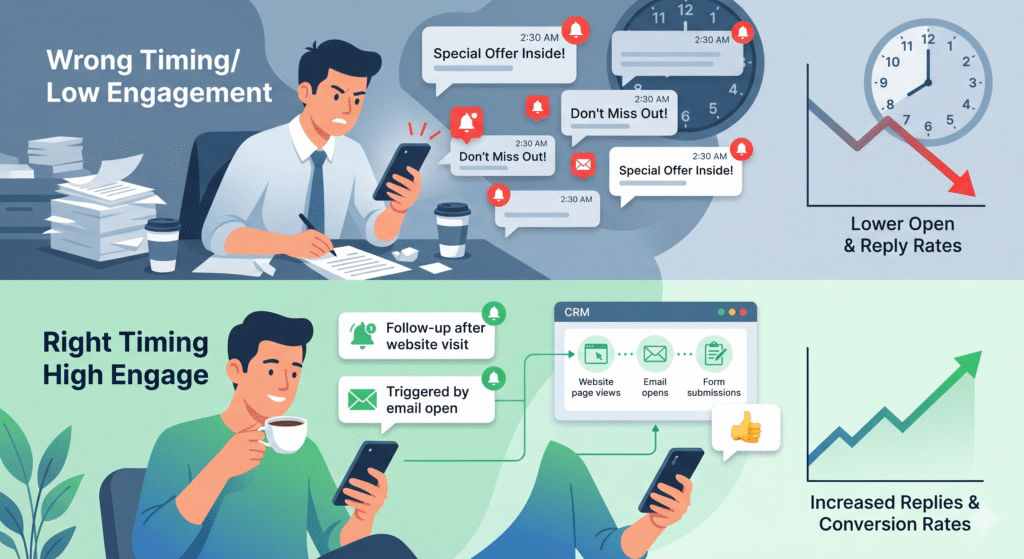
One of the most overlooked factors affecting reply rates is timing. Many businesses spend hours perfecting email copy, SMS templates, and workflow structures, but pay very little attention to when messages are actually being delivered. Even the best-written communication can fail if it reaches prospects at the wrong moment.
Many GoHighLevel users create automation sequences based on convenience rather than customer behavior. As a result, leads may receive messages too soon after opting in, too late after expressing interest, or during periods when they are unlikely to engage. This disconnect often leads to lower open rates, fewer replies, and weaker overall campaign performance.
Successful Gohighlevel automation strategies are designed around customer actions rather than arbitrary schedules. Instead of simply sending messages every day or every few hours, businesses should evaluate how prospects interact with content, websites, funnels, and previous communications.
A properly structured GHL CRM setup allows businesses to track engagement signals and trigger communication at moments when prospects are most likely to respond. This approach creates a more natural customer experience while significantly improving engagement metrics.
Businesses that optimize timing often discover that they can generate more replies with fewer messages because communication feels more relevant and less intrusive.
Your Funnel Might Be Generating Leads That Are Not Ready to Engage
Many businesses automatically blame automation when reply rates decline, but the real issue may begin much earlier in the customer journey.
If a funnel attracts low-intent leads, even the best automation workflow will struggle to generate meaningful engagement.
The Funnel Builder inside GoHighLevel allows businesses to create highly targeted lead generation systems. However, if funnel messaging is too broad, misleading, or focused on attracting volume rather than quality, businesses often fill their pipelines with prospects who have little genuine interest.
When these leads enter automation sequences, reply rates naturally suffer because prospects were never truly qualified in the first place.
Businesses should regularly evaluate funnel performance and ask important questions:
Are leads genuinely interested in the offer?
Does the funnel clearly communicate expectations?
Are prospects entering the correct workflows?
Is the lead magnet attracting the right audience?
Strong funnel qualification often leads to stronger automation performance because communication begins with higher-quality prospects.
Businesses that align their Funnel Builder strategy with customer intent typically experience better engagement and higher conversion rates throughout the entire sales process.
Automation Without Relationship Building Creates Weak Results
Many businesses view automation as a replacement for relationship building rather than a tool that supports it.
This mindset often creates communication that feels transactional instead of valuable.
Customers do not respond simply because they receive messages. They respond because they trust the business, find value in the communication, and believe the conversation will help solve a problem.
The most successful Gohighlevel expert services providers understand that automation should nurture relationships rather than simply deliver information.
This means creating workflows that educate, inform, and support prospects throughout the buying journey.
Instead of constantly asking for appointments or sales calls, businesses should provide helpful insights, useful resources, and meaningful guidance.
When prospects view communication as valuable rather than promotional, reply rates often improve significantly.
Relationship-driven automation creates stronger customer experiences and better long-term business outcomes.
The Importance of Regular Workflow Audits
One of the biggest reasons reply rates decline over time is that businesses rarely review their automation systems after launch.
Workflows that performed well six months ago may no longer align with current customer behavior, market conditions, or business goals.
As businesses grow, automation systems become more complex. Multiple campaigns, funnels, tags, triggers, and communication channels can create unexpected conflicts that negatively affect performance.
A regular automation audit helps identify issues such as:
Duplicate messages
Broken workflow paths
Outdated content
Poor segmentation
Inactive triggers
Unnecessary communication sequences
Many businesses rely on a skilled GHL Virtual Assistant to monitor automation performance and identify opportunities for improvement.
Routine workflow reviews help ensure that automation remains aligned with customer expectations and business objectives.
Continuous optimization is often the difference between automation that performs adequately and automation that consistently generates strong reply rates.