
Real estate marketing has a unique challenge: getting a lead is usually much easier than turning that lead into a serious buyer, seller, investor, or long-term client. Someone may inquire about a property today and disappear for several weeks. Another person may be interested in selling but spend months thinking about timing. A buyer might attend multiple viewings before making an offer. Meanwhile, agents are expected to respond quickly, remember previous conversations, schedule appointments, follow up consistently, and keep every opportunity organized.
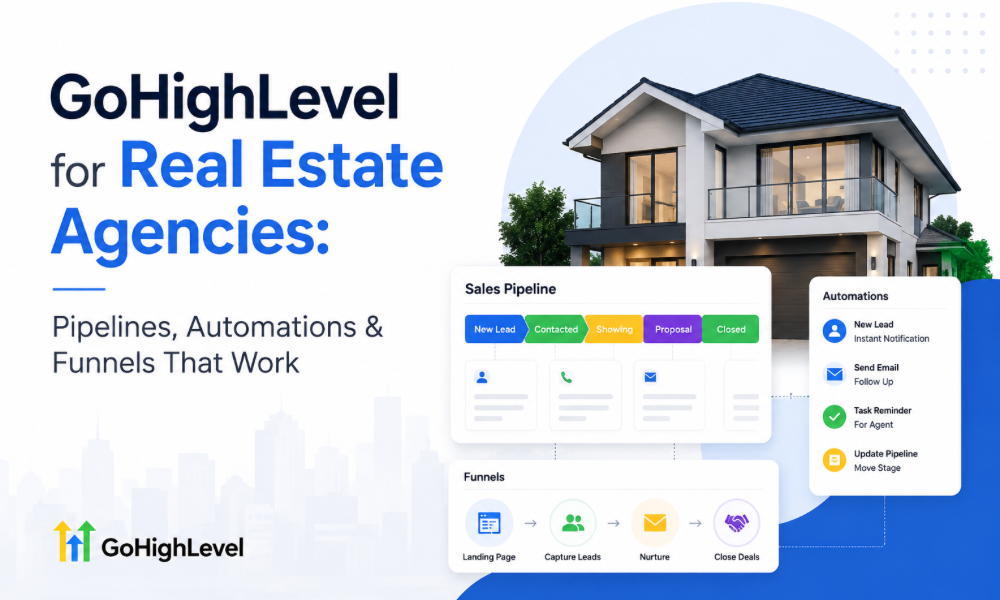
This is where GoHighLevel can become more than another CRM. When configured correctly, it can integrate lead capture, communication, pipelines, appointments, nurturing, and follow-up into a single, organized system.
The key, however, is implementation. Simply creating a pipeline and turning on a few automated messages does not create a successful real estate system. The workflows need to reflect how buyers and sellers actually behave.
Professional gohighlevel crm services can help agencies create this structure around their sales process. A certified gohighlevel GHL expert can configure the platform to meet specific operational requirements, while a gohighlevel automation expert can build workflows that respond to lead behavior. Businesses that use professional gohighlevel automation services or decide to hire gohighlevel expert support can create a more consistent process without forcing agents to manually manage every repetitive task.
Why Real Estate Agencies Need More Than a Basic CRM
A traditional CRM can store contact information and track opportunities, but real estate agencies often need much more context.
An agent may need to know whether a contact is a buyer or seller, what type of property they are interested in, which location they prefer, their approximate budget, whether financing has been arranged, when they expect to move, and what conversations have already taken place.
That information becomes much more valuable when it influences what happens next.
A buyer looking for a luxury property should not necessarily enter the same communication journey as someone searching for a first home. A seller preparing to list a property needs different information from an investor looking for opportunities.
GoHighLevel can help organize these differences when the CRM architecture is designed around actual customer journeys.
Build Separate Pipelines for Different Real Estate Journeys
One of the biggest mistakes agencies can make is placing every opportunity into one generic sales pipeline.
Real estate agencies often have multiple customer journeys operating simultaneously. Buyers, sellers, landlords, tenants, investors, and property management clients can all have different processes.
Creating separate pipelines or carefully structured stages can make these journeys easier to manage.
A buyer pipeline might begin with a new inquiry, move to qualification, consultation, property matching, viewing, offer, negotiation, and closing. A seller pipeline could follow a completely different sequence involving valuation, listing preparation, marketing, showings, offers, negotiation, and closing.
The objective is not to create as many pipeline stages as possible. It is to create stages that represent meaningful changes in the relationship.
Design Pipeline Stages Around Real Actions
Pipeline stages should answer one important question: what needs to happen next?
A stage called “Interested” may sound useful, but it does not tell an agent what action is required. A stage such as “Consultation Scheduled” is much more actionable because the next step is obvious.
Good pipeline architecture helps agents quickly understand which opportunities need attention.
This is particularly useful for agencies handling large volumes of leads. Instead of searching through conversations manually, agents can look at the pipeline and identify opportunities that need calls, appointments, property recommendations, or follow-up.
A gohighlevel automation expert can also connect specific pipeline movements with automated internal notifications and customer communication.
Capture More Than a Name and Phone Number
Real estate lead forms should collect information that helps agents understand the prospect.
For buyers, useful information might include property type, preferred location, approximate budget, number of bedrooms, expected purchase timeline, and financing status.
For sellers, the agency may need information about the property type, location, approximate timeline, reason for selling, and whether the owner has already spoken with another agent.
However, forms should not become unnecessarily long. Every additional question creates friction.
The best approach is to collect information that will actually influence qualification, routing, communication, or sales conversations.
Create Different Follow-Up for Buyers and Sellers
The same nurture sequence should rarely be used for every real estate lead.
Buyers may need property education, financing guidance, market information, viewing opportunities, and reminders about new listings.
Sellers may need information about valuations, preparing their property, market positioning, pricing considerations, and the listing process.
The CRM should recognize these differences as early as possible.
With properly designed gohighlevel automation services, agencies can route contacts into different communication journeys according to the information they provide.
Build an Immediate Lead Response System
Real estate leads can become less valuable when agents take too long to respond.
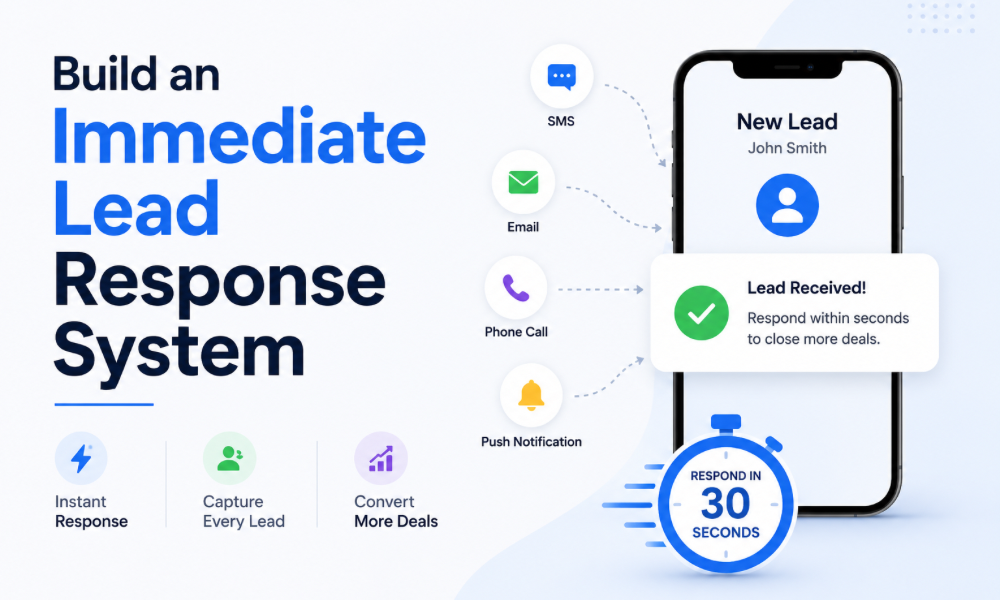
Someone who requests information about a property may be contacting multiple agencies at the same time. A delayed response can allow another agent to start the conversation first.
Automation can acknowledge the inquiry immediately while notifying the appropriate agent that a new opportunity has arrived.
The automated message does not need to replace human communication. Its purpose is to confirm that the inquiry was received and establish the next step while the agent prepares a personal response.
This combination of speed and human involvement can create a much stronger experience.
Create Property-Specific Follow-Up
A lead’s interest in a particular property provides valuable context.
If someone requests information about a specific listing, follow-up communication should acknowledge that interest rather than sending generic real estate marketing messages.
The system can record the relevant property information and help agents understand why the person originally reached out.
Even when the property is no longer available, that information can be used to identify similar opportunities.
This is where CRM structure becomes particularly powerful. The agency is not simply storing contact information; it is building a history of the prospect’s preferences and interactions.
Use Funnels to Capture Buyer Intent
A real estate funnel should do more than display a property photo and a contact form.
It should give prospects a reason to provide their information and help the agency understand what they are looking for.
A buyer-focused funnel might offer access to selected listings, a property search consultation, a neighborhood guide, or another useful resource.
The funnel can then collect information that helps qualify the lead.
A seller funnel might focus on valuation requests or market assessments. The messaging, information, and conversion path should be designed around the seller’s priorities rather than copied from a buyer campaign.
Build Landing Pages Around Specific Audiences
Generic real estate landing pages often try to appeal to everyone.
That can make the message less persuasive.
A better approach is creating focused experiences for different audiences. A first-time buyer may need reassurance and educational information. An experienced investor may care more about opportunities, numbers, and market insights. A seller may want evidence that the agency understands the local market and can generate serious buyer interest.
GoHighLevel can support multiple funnel experiences while keeping leads connected to the same broader CRM environment.
Automate Appointment Scheduling
Appointments are central to real estate.
Consultations, property viewings, valuations, listing meetings, inspections, and follow-up conversations all require coordination.
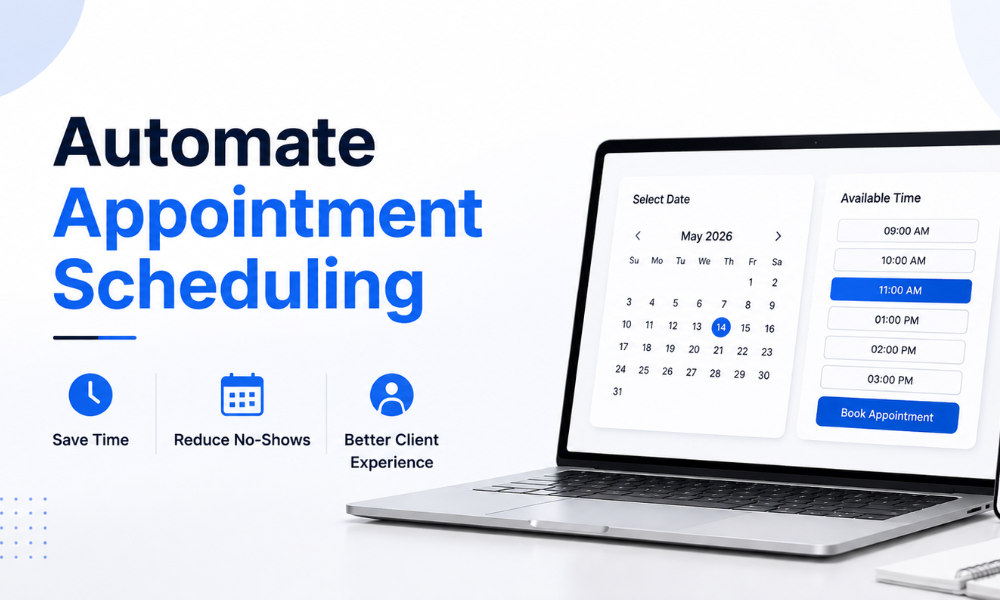
A connected appointment system can reduce unnecessary back-and-forth communication. Prospects can select suitable times while the CRM records the appointment and triggers the appropriate follow-up.
The important part is connecting appointment activity with the rest of the customer journey.
Someone who books a valuation should not continue receiving messages asking them to schedule a valuation. Someone who completes a viewing may need a different follow-up sequence afterward.
A certified gohighlevel ghl expert can help ensure these transitions happen correctly.
Build Separate Workflows for No-Shows
Real estate appointments can involve significant preparation, particularly when agents are traveling to properties or meeting sellers in person.No-shows therefore create a meaningful cost.
Instead of manually chasing every missed appointment, agencies can create a recovery process. The prospect can receive a polite message acknowledging the missed meeting and providing an easy way to reschedule.
The workflow should remain professional and avoid making the customer feel punished for missing an appointment.
This creates an opportunity to recover leads that might otherwise disappear.
Nurture Leads That Are Not Ready Yet
Not every real estate lead is ready to transact immediately.
Someone may be planning to buy in six months. A seller may be waiting for a better market. An investor may be researching opportunities before deciding where to invest.
These leads should not necessarily be marked as lost.
Long-term nurture can keep the agency visible until the prospect’s timing changes.
Useful communication may include market updates, educational resources, property opportunities, neighborhood information, or practical guidance related to the customer’s situation.
The objective is to remain relevant without overwhelming the prospect with constant sales messages.
Use Lead Behavior to Change the Follow-Up
Automation becomes much more useful when it reacts to behavior.
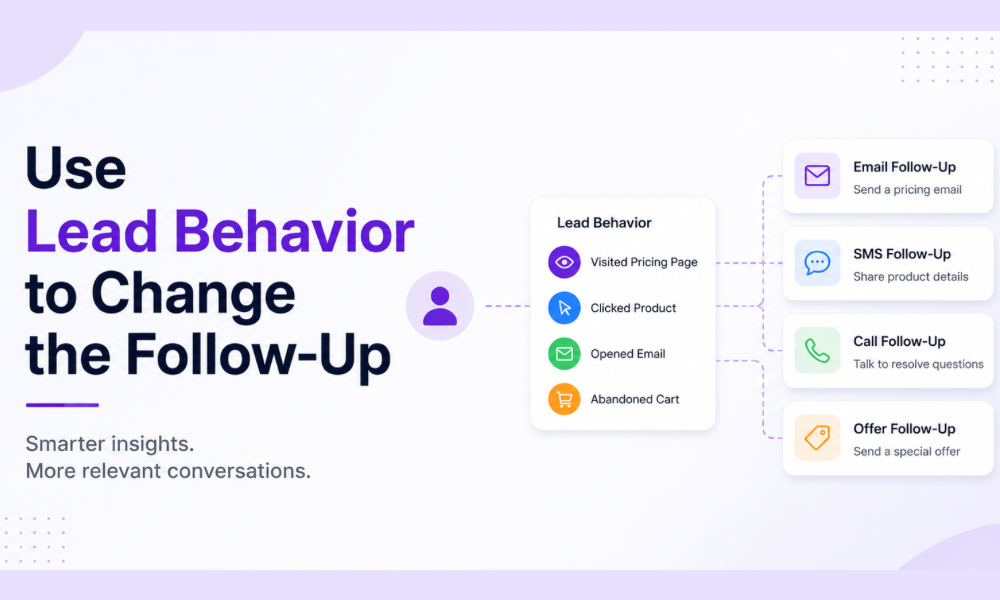
A prospect who repeatedly engages with property-related content may demonstrate stronger interest than someone who has not opened anything. Someone who requests a viewing is clearly further along than someone who downloaded a general guide.
These behaviors can influence what happens next.
A gohighlevel automation expert can create conditional workflows that respond differently depending on actions such as form submissions, appointment bookings, replies, or other engagement signals.
This helps agencies move away from one-size-fits-all nurturing.
Keep Agents Involved at the Right Moments
Automation should handle repetitive work, but real estate remains a relationship-driven industry.
Buying or selling property can involve substantial money and emotion. Customers often want to speak with a knowledgeable person, ask questions, discuss concerns, and receive advice based on their individual situation.
The best automation systems know when to bring the agent into the conversation.
A workflow can manage reminders and routine communication while alerting the agent when a lead demonstrates meaningful intent.
This allows agents to spend more time on conversations that require judgment and less time on repetitive administrative tasks.
Create Seller-Specific Automation
Seller journeys deserve special attention because the process often begins before a listing is officially created.
A homeowner may first request a valuation, ask about market conditions, or simply explore whether now is the right time to sell.
A seller-focused workflow can educate the prospect about the process while helping the agent understand their timeline.
Once the seller becomes more serious, the workflow can shift toward consultation and listing preparation.
This creates a gradual journey rather than pushing every homeowner immediately toward a sales conversation.
Create Buyer-Specific Automation
Buyer journeys can be equally complex.
A new buyer may not know exactly what they want. Preferences can change after property viewings, market research, or discussions with lenders.
The CRM should therefore be capable of updating information as the relationship develops.
The buyer may begin with a broad location preference and later narrow their search. Their budget may change. They may move from research to active viewing.
Automation should support these changes rather than treating the first form submission as permanent information.
Build Re-Engagement Campaigns
Real estate databases often contain older leads that have not been contacted recently.
Some of these people may no longer be interested, but others may simply have changed their priorities or timing.
A re-engagement campaign can provide a reason to restart the conversation.
The message could reference new market conditions, updated property opportunities, a new service, or another genuinely useful reason to reconnect.
This can turn dormant database records into potential future opportunities without requiring agents to manually contact every old lead.
Track Lead Sources
Knowing where leads come from is essential for improving marketing performance.
An agency may generate inquiries from property portals, social media, paid advertising, organic search, referrals, email campaigns, or its own website.
If all leads are treated identically, it becomes difficult to determine which sources are generating the strongest opportunities.
A well-organized CRM should preserve lead-source information and connect it with pipeline outcomes.
This allows agencies to evaluate not only which channel produces the most leads but which channel produces the most valuable customers.
Build Follow-Up Around the Property Lifecycle
Real estate marketing does not end when a property is sold.
Past buyers and sellers can become future customers, referral sources, investors, or repeat clients.
After a transaction, the communication strategy can change from acquisition to relationship management.
The agency may request feedback, encourage reviews, stay connected through useful market information, or maintain a relationship for future opportunities.
This turns the CRM into a long-term relationship system rather than a database focused only on active transactions.
Use Automation to Reduce Administrative Work
Agents spend significant time on repetitive activities: sending reminders, confirming appointments, updating records, following up after meetings, and organizing lead information.
Automation can reduce this workload.
The goal is not to automate the entire sales process. It is to remove repetitive tasks that do not require human judgment.
Professional gohighlevel crm services can help agencies identify which administrative processes are suitable for automation and which should remain manual.

Make Reporting Useful for Agency Owners
A CRM should help managers understand what is happening across the sales operation.
Agency leaders may want to know how many new leads entered the system, how quickly they were contacted, how many appointments were scheduled, how many were attended, and how many opportunities progressed toward transactions.
These numbers become more meaningful when they are connected to lead sources and pipeline stages.
A hire gohighlevel expert approach can help agencies create reporting structures that reflect their actual business model instead of relying on generic dashboards.
Do Not Over-Automate the Customer Experience
Real estate marketing can quickly feel impersonal when every interaction becomes automated.
Messages should have a reason for being sent. Timing should feel natural. Customers should have easy opportunities to communicate with a real person.
Automation should support the agent relationship, not replace it.
The best systems are almost invisible to the customer. They make the experience faster and more organized without making the person feel like they are communicating with a machine.