

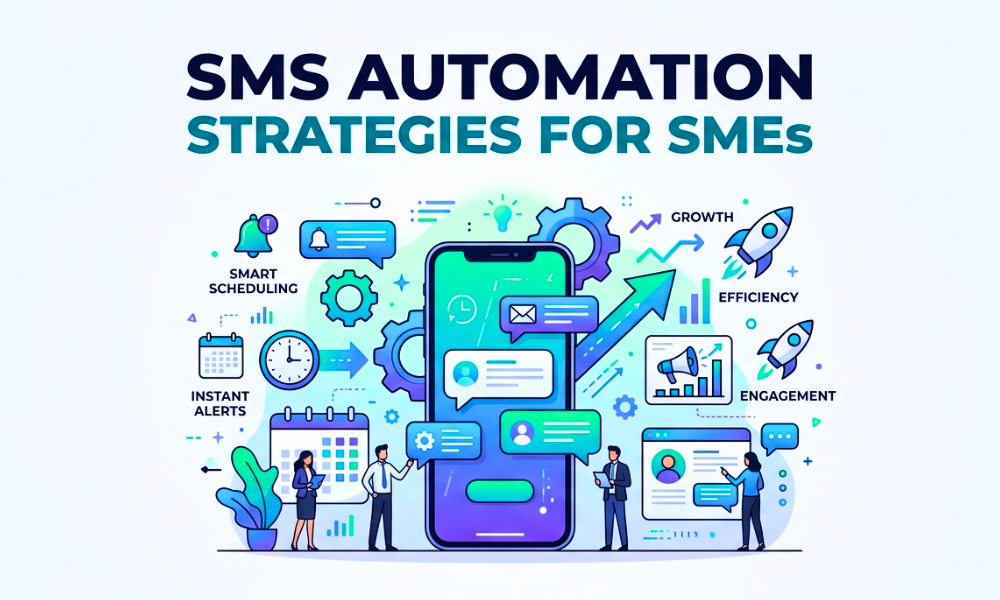
Why SMS Automation Matters for SMEs
For SMEs, SMS automation means businesses can instantly communicate with customers while reducing manual tasks. Automated systems eliminate the need for manual messaging by triggering messages based on customer actions, scheduled times, or marketing campaigns.
For small and medium-sized businesses, SMS automation improves response rates, engagement, and conversions, making communication efficient and timely.
Compared to email, SMS messages are usually opened within minutes. This makes SMS marketing automation one of the most effective channels for time-sensitive communication, such as appointment reminders, promotional offers, and follow-up messages.
Structured automated SMS workflows help businesses foster faster responses and stronger customer relationships.
Why SMS Marketing Is Powerful for Small Businesses
Small and medium-sized businesses often struggle to maintain consistent communication with customers.
Maintaining quick responses is often difficult due to limited staff, multiple channels, and high operational demands.
SMS communication solves this problem because it is immediate and highly visible.
Most customers read text messages almost instantly, increasing the likelihood of immediate engagement.
This makes SMS automation for small businesses extremely effective for:
Appointment confirmations
Service reminders
Order updates
Promotional announcements
Instead of relying solely on email or social media, businesses can reach customers directly through their mobile devices.
The Rise of SMS Marketing Automation
Traditional SMS communication required businesses to send messages manually.
But as customer lists grow, this approach quickly loses efficiency.
Modern SMS marketing automation platforms enable businesses to create workflows that automatically send messages based on predefined triggers.
For example:
A customer books an appointment.
The system automatically sends a confirmation message.
A customer abandons an online checkout.
A reminder message is triggered after a short delay.
These automated systems allow businesses to maintain communication without constant manual effort.
How Automated SMS Marketing Works
At its core, automated SMS marketing relies on triggers and workflows.
Triggers are events that initiate a message.
Common triggers include:
Form submissions
Appointment bookings
Purchase confirmations
Missed calls
Website actions
Once a trigger occurs, the system automatically sends a message.
For example:
When a customer submits a contact form, the system may send a message saying, “Thank you for your inquiry. Our team will contact you shortly.”
This immediate response improves customer experience and increases trust.
Key Benefits of SMS Automation for SMEs
Businesses that adopt SMS automation strategies for SMEs experience several advantages.
One of the most important benefits is faster response time.
Today’s customers expect instant communication.
Automated messages ensure that businesses respond instantly, even outside business hours.
In addition, higher engagement becomes another clear benefit.
Text messages usually have much higher open rates than email marketing, enhancing overall engagement.
Automated SMS strategies also improve operational efficiency.
Businesses can maintain communication with hundreds or thousands of customers without hiring additional staff.
Appointment Reminder Automation
Many service-based businesses rely on appointments.
Scheduling gaps and lost revenue often result from missed appointments.
SMS automation for small businesses helps reduce no-shows through automated reminders.
Typical reminder workflows may include:
A confirmation message when the appointment is booked.
A reminder is sent one day before the appointment.
A final reminder was sent one hour before the scheduled time.
These simple reminders significantly reduce missed appointments.
Promotional Campaigns Using SMS Marketing Automation
Promotions are another powerful use case for SMS marketing automation.
Businesses can send targeted offers directly to customers who have previously expressed interest.
Examples of promotional campaigns include:
Seasonal discounts
Limited-time sales
Product launch announcements
Event invitations
Because SMS messages are short and direct, they encourage quick responses.
Businesses that use automated SMS marketing often achieve high conversion rates during promotional campaigns.
Customer Follow-Up Automation
Following up with customers after a purchase or service is essential for maintaining relationships.
Still, consistent follow-up is often overlooked by many businesses.
SMS automation tools for businesses allow companies to create follow-up workflows.
For example:
After a service is completed, a message may ask the customer if everything met expectations.
After a product purchase, the system may send instructions or support information.
Follow-up communication helps businesses build trust and improve customer satisfaction.
Lead Nurturing Through SMS
Not all leads convert immediately.
Some prospects require time and additional information before making a purchase decision.
SMS can be used as part of a lead-nurturing strategy.
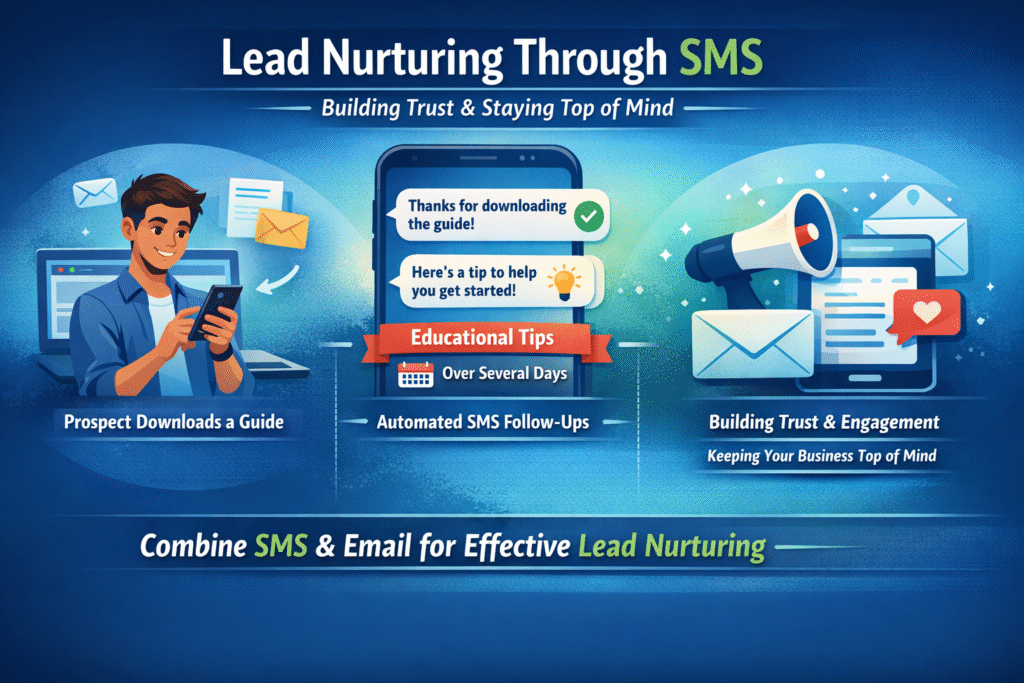
For example:
A prospect downloads a guide from a website.
The system sends a thank-you message followed by additional educational content over several days.
These nurturing messages keep the business top of mind while gradually building trust.
When combined with email campaigns, SMS automation strategies for SMEs can create powerful nurturing systems.
Integrating SMS With Other Marketing Channels
SMS works best when integrated with other marketing channels.
For example:
Email campaigns can provide detailed information.
SMS messages can prompt recipients to check their inboxes or respond promptly.
Social media campaigns can generate leads.
SMS automation can follow up with those leads immediately.
Combining multiple communication channels creates a stronger customer experience.
Businesses using integrated strategies often achieve better marketing performance.
Personalization in SMS Marketing
Personalization increases engagement in automated SMS marketing campaigns.
Modern SMS automation systems allow businesses to personalize messages using customer data.
For example:
Including the customer’s name in the message.
Referencing a specific product or service they previously purchased.
Mentioning upcoming appointments or events.
Personalized communication feels more relevant and increases response rates.
Customer Feedback and Review Requests
Customer feedback is essential for improving services and building a reputation.
SMS automation makes it easy to request reviews.
After completing a service or delivering a product, businesses can ask customers to share feedback.
For example:
“Thank you for choosing our service. If you enjoyed your experience, we would appreciate your review.”
Review requests sent via SMS often receive higher response rates than those sent via email.
Abandoned Cart Recovery
E-commerce businesses frequently experience abandoned shopping carts.
Customers add products to their carts but leave before completing their purchases.
SMS automation tools for businesses can send purchase reminders to encourage customers to complete their purchases.
These reminders may include:
A message reminding the customer about the items left in the cart.
A limited-time discount code.
A message offering assistance with the purchase process.
Abandoned cart SMS campaigns often recover significant revenue.
Compliance and Responsible SMS Marketing
While SMS marketing is powerful, businesses must use it responsibly.
Customers should always opt in before receiving marketing messages.
Respecting customer preferences and providing easy opt-out options is essential.
Responsible messaging practices help maintain trust and protect brand reputation.
Choosing the Right SMS Automation Tools
Selecting the right SMS automation tools for businesses is an important decision.
Businesses should look for tools that offer:
Automation workflows
Contact segmentation
Integration with CRM systems
Analytics and reporting features
These capabilities allow businesses to design effective communication strategies and measure campaign performance.
Measuring SMS Marketing Performance
To improve SMS marketing automation campaigns, businesses should track key performance metrics.
Important metrics include:
Message open rates
Response rates
Conversion rates
Customer engagement levels
Analyzing these metrics helps businesses refine their messaging strategies and improve results over time.
Building a Sustainable SMS Marketing Strategy
Successful SMS automation strategies for SMEs focus on long-term customer relationships.
Businesses should avoid sending excessive promotional messages.
Instead, messages should provide real value.
Useful reminders, helpful updates, and relevant offers create positive customer experiences.
Balancing promotional communication with informative messaging helps maintain engagement.
SMS remains one of the most effective communication channels for businesses.
Implement SMS automation today to transform your customer interactions and stay ahead of your competition. Start optimizing your business communication now.
Start using automated SMS marketing workflows now to respond faster, nurture leads, and strengthen customer relationships. Take action today to see measurable improvements.
Modern SMS automation tools for businesses allow companies to scale communication without increasing operational complexity.
Why SMS Automation Matters for Modern SMEs
Small and medium-sized businesses operate in an environment where speed and communication quality directly influence customer decisions. When customers reach out to a business, they expect fast responses and clear updates. Delayed communication often leads customers to explore other options.
This is why SMS automation strategies for SMEs have become increasingly important. SMS allows businesses to communicate instantly with customers, ensuring that messages are delivered and read quickly.
Unlike many other marketing channels, text messages have extremely high open rates. Most SMS messages are read within minutes, making them ideal for time-sensitive communication. With SMS marketing automation, businesses can ensure consistent engagement without requiring constant manual effort.
For SMEs with limited resources, automated systems allow teams to maintain strong customer communication while focusing on operations and growth.
Understanding SMS Automation
At its core, SMS automation uses technology to automatically send text messages when specific actions or triggers occur.
Instead of manually sending each message, businesses can create workflows that handle communication automatically. These workflows are powered by SMS automation tools for businesses that trigger messages based on customer behavior or specific events.
For example, when a customer submits a form on a website, an automated system can immediately send a confirmation message. If a customer schedules an appointment, reminder messages can be sent automatically before the scheduled time.
This automated SMS marketing reduces manual work while ensuring customers receive timely communication.
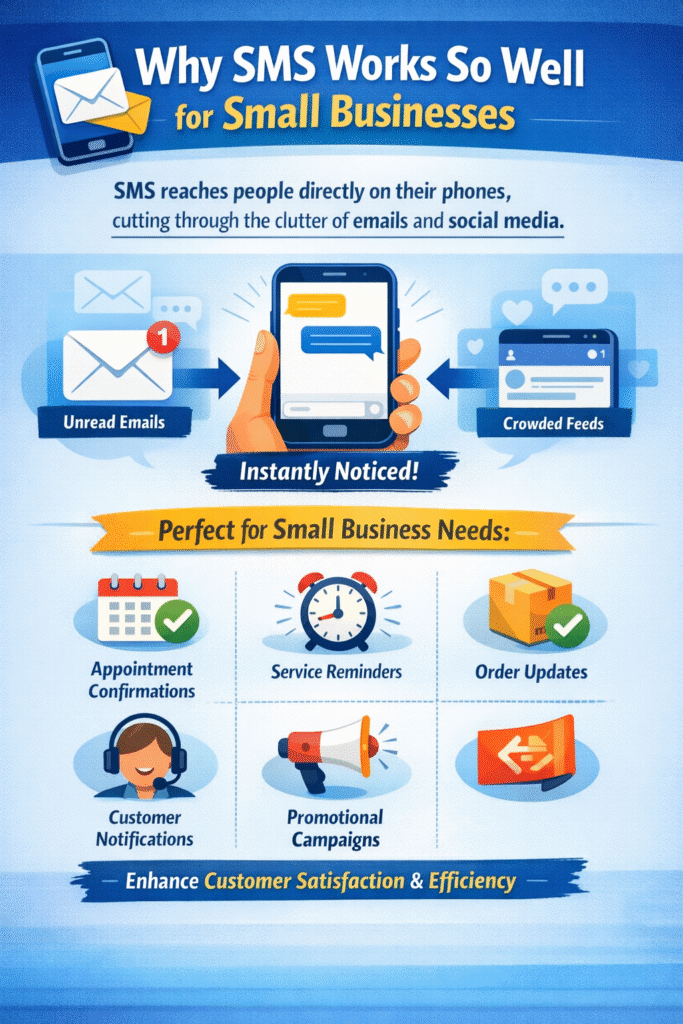
Why SMS Works So Well for Small Businesses
Many marketing channels compete for customer attention, but SMS stands out because it reaches people directly on their phones.
Emails may remain unread in inboxes, and social media messages may get lost in crowded feeds. Text messages, however, are typically noticed almost immediately.
For small businesses, this creates a powerful communication opportunity.
SMS automation for small businesses can be used for a wide range of purposes, including:
Appointment confirmations
Service reminders
Order updates
Customer support notifications
Promotional campaigns
By implementing structured SMS automation strategies for SMEs, businesses can improve both customer satisfaction and operational efficiency.
The Role of SMS in Customer Experience
Customer experience plays a major role in business success.
Customers appreciate businesses that communicate clearly and promptly. SMS automation helps deliver this level of responsiveness.
For example, when a customer books a service appointment, an automated SMS confirmation can provide reassurance that the booking was received.
Later, reminder messages can help the customer prepare for the appointment.
These small communication improvements create smoother interactions and reduce confusion.
Businesses that adopt SMS marketing automation often find that customers respond more quickly and feel more confident in the service provided.
Lead Generation and Instant Response
Speed is critical when responding to new leads.
A potential customer who fills out a form or calls a business expects a prompt response.
SMS automation enables businesses to send instant messages acknowledging inquiries.
For example:
“Thank you for contacting us. Our team will reach out to you shortly.”
This quick response reassures the customer that the message was received.
Many businesses implementing SMS automation strategies for SMEs report improved lead conversion rates because prospects receive immediate engagement.
Appointment Reminder Workflows
Appointment-based businesses often face the challenge of missed appointments.
Missed appointments disrupt schedules and reduce revenue.
SMS automation for small businesses can significantly reduce no-shows by automatically sending reminder messages.
A typical reminder workflow may include:
Confirmation immediately after booking
Reminder 24 hours before the appointment
Final reminder, a few hours before the appointment
These reminders help customers remember their commitments and reduce scheduling disruptions.
Promotional Campaigns Through SMS
Promotional messaging is another effective use of SMS marketing automation.
Businesses can send targeted promotions directly to customers who have opted in to receive updates.
Examples include:
Holiday sales announcements
Limited-time offers
Product launch notifications
Event invitations
Because text messages are brief and direct, promotional SMS campaigns often achieve strong engagement.
However, businesses should balance promotional content with valuable information to avoid overwhelming customers.
Nurturing Leads Over Time
Not every lead converts immediately.
Some prospects need time to evaluate options before making a purchase decision.
This is where automated SMS marketing can support lead nurturing.
Businesses can create sequences that gradually share helpful information with prospects.
For example:
A new lead might receive a welcome message followed by additional information over several days.
These messages may include educational content, tips, or links to helpful resources.
This approach helps build trust and keeps the business top of mind.
SMS for Customer Support
Customer support is another area where SMS automation provides value.
Many customers prefer sending a quick text message rather than calling or emailing.
Businesses can use SMS automation to acknowledge support requests and provide updates.
For example:
A customer submits a support request.
The system sends an automated message confirming receipt of the request.
Later updates can notify the customer when the issue is resolved.
These communications improve transparency and customer satisfaction.
Post-Purchase Follow-Up
Maintaining communication after a purchase is essential for building customer loyalty.
Businesses can use SMS automation tools to send follow-up messages after a transaction.
Examples include:
Thank-you messages
Delivery confirmations
Usage instructions
Customer feedback requests
Post-purchase communication strengthens relationships and encourages repeat business.
Review Requests and Reputation Management
Online reviews play an important role in business credibility.
Satisfied customers often forget to leave reviews unless prompted.
SMS automation allows businesses to request reviews at the right moment.
For example, after completing a service, a customer may receive a message inviting them to share feedback.
Review requests sent via SMS often achieve higher response rates than those sent via email.
This makes SMS a valuable tool for building online reputation.