

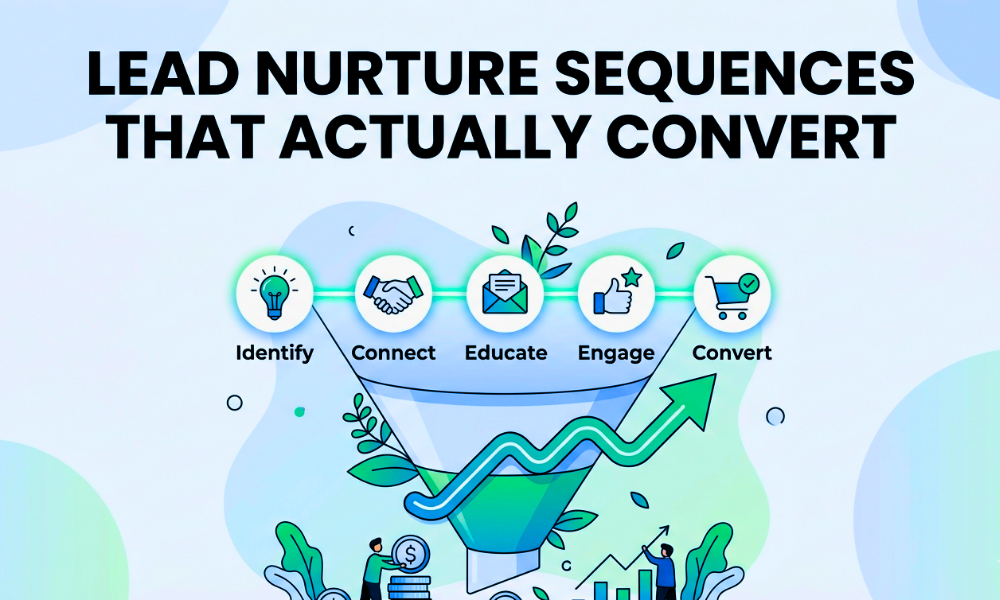
Why Lead Nurturing Determines Marketing Success
Many businesses focus on generating leads but often struggle to convert them into customers. Marketing teams invest resources in advertising, content, and campaigns to attract buyers. Yet, leads entering the system rarely receive follow-up communication.
This gap is where lead-nurturing sequences become essential.
A strong system guides prospects through the buying process with helpful information, trust-building, and gradual movement toward purchase decisions. Nurturing emphasizes relationship building over immediate sales pressure.
Businesses with structured lead nurturing sequences often achieve higher conversion rates because prospects receive targeted information at the right time.
A well-planned lead nurturing strategy ensures that no lead is forgotten and every opportunity receives consistent engagement.
Why Most Lead Nurture Campaigns Fail
Despite the importance of nurturing, many lead-nurturing campaigns fail to deliver meaningful results.
Several common mistakes contribute to this problem.
One common issue is overly aggressive sales messaging. Prospects who are still exploring solutions may feel pressured when businesses push for immediate purchases.
Poor timing is another issue: messages sent too often may overwhelm prospects, while infrequent messages may cause interest to fade.
A third challenge is a lack of personalization. Generic communication rarely resonates with modern audiences.
Effective nurturing requires careful planning and a clear grasp of customer needs.
Without a well-designed lead nurturing strategy, nurturing campaigns often become ineffective or ignored.
The Structure of High-Converting Lead Nurture Sequences
Successful lead nurture sequences follow a structured progression that mirrors the buyer’s journey.
Each sequence stage addresses a unique prospect mindset or level of awareness.
Stage 1: Welcome and Introduction
The first message should acknowledge interest and clearly introduce your business.
After someone downloads a resource or subscribes, a welcome message thanks them and outlines upcoming content.
This stage sets expectations and begins building trust.
Stage 2: Education and Problem Awareness
Once contact has been established, the next step is to provide valuable insights.
Educational content helps prospects better understand their challenges and potential solutions.
At this stage, businesses should avoid aggressive sales and focus on helpful information.
Stage 3: Solution Exploration
After prospects recognize their problem, they begin evaluating possible solutions.
Messages at this stage may include product explanations, comparison guides, or case studies demonstrating how the solution works.
This part of the lead-nurturing sequence helps prospects understand how your offering addresses their needs.
Stage 4: Social Proof and Credibility
Trust is essential before prospects commit to a purchase.
Case studies, testimonials, and stories show other customers’ positive results.
Including these elements strengthens the credibility of lead nurture campaigns.
Stage 5: Conversion Invitation
Finally, prospects should receive a clear opportunity to take action.
This could mean scheduling a consultation, starting a trial, or purchasing.
At this stage, the nurturing sequence transitions naturally into conversion.
Types of Lead Nurture Campaigns
Businesses can create several types of lead-nurture campaigns based on their goals and audience.
Welcome Campaigns
Welcome campaigns introduce new leads to the brand and show how the company solves problems.
These campaigns typically begin immediately after a prospect joins a mailing list or downloads a resource.
Educational Campaigns
Educational campaigns offer ongoing industry insights and best practices.
These campaigns help position the company as a trusted authority.
Product Introduction Campaigns
Once prospects know their problem, product-focused messages show how solutions address their needs.
Re-Engagement Campaigns
Leads don’t always stay engaged.
Re-engagement campaigns aim to reconnect with inactive contacts by leveraging new insights, offers, or updates.
When implemented effectively, lead nurturing automation ensures each campaign operates consistently without requiring constant manual effort.
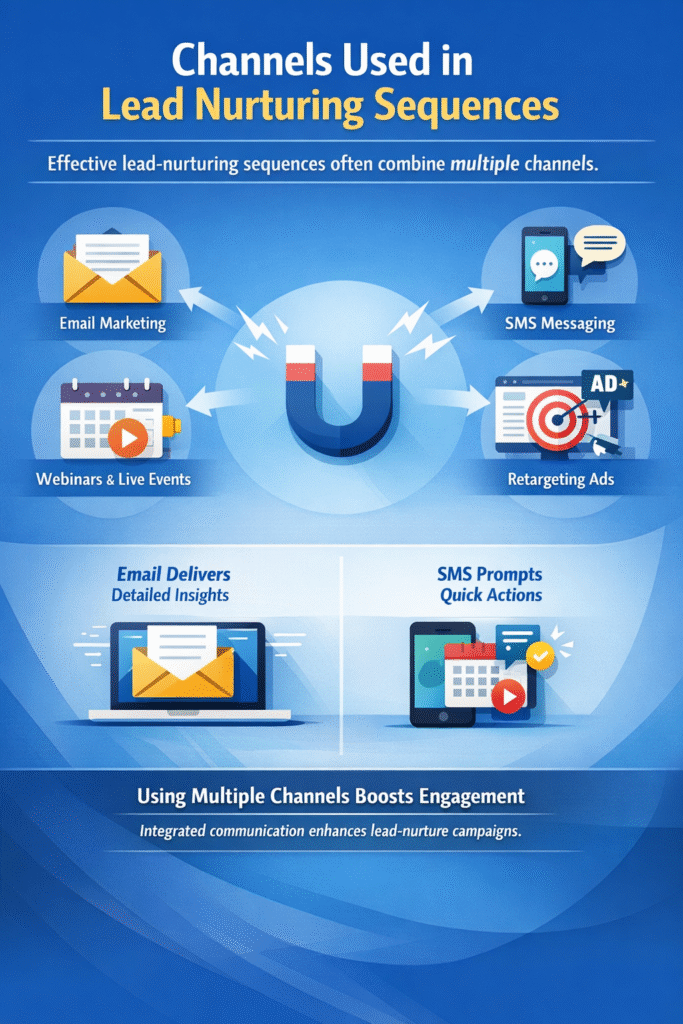
Channels Used in Lead Nurturing Sequences
While email remains the most common channel for nurturing, effective lead-nurturing sequences often combine multiple channels.
These may include:
Email marketing
SMS messaging
Retargeting advertisements
Social media engagement
Webinars or live events
Using multiple channels increases the chances that prospects will engage.
For example, email may deliver detailed insights, while SMS reminders may prompt prospects to check new content or attend an event.
Integrated communication enhances the effectiveness of lead-nurture campaigns.
Personalization in Lead Nurture Sequences
Modern consumers expect personalized communication.
Generic messages often fail to capture attention.
Strongly nurture segments of prospects by interests, behavior, or buyer journey stage.
For example:
Prospects who downloaded a beginner’s guide may receive introductory content.
Prospects who attended a product webinar may receive more advanced information.
Personalization boosts engagement because messages match the recipient’s needs.
Automation platforms now make it easier to deliver personalized content at scale.
Lead Nurturing Automation and Workflow Design
Technology plays a crucial role in implementing effective nurturing systems.
Lead nurturing automation lets businesses design workflows responding to customer behavior.
For example:
A prospect downloads an eBook.
The system automatically sends a thank-you email.
Two days later, the system sends a follow-up message with additional insights.
If the prospect clicks a specific link, they may enter a different sequence focused on deeper product education.
Automation ensures that every lead receives consistent attention regardless of team size.
Measuring the Success of Lead Nurture Campaigns
To improve lead nurture campaigns, businesses must track key performance metrics.
Key metrics include email opens, click-throughs, engagement, conversion rates, and lead-to-customer conversion time. These show prospect interaction. For instance, high opens but few clicks may indicate that the messaging needs adjustment. Continual analysis refines strategy.
Best Practices for Creating Lead Nurture Sequences
Several best practices help ensure that lead nurturing sequences produce meaningful results.
Provide value before selling.
Keep messages concise.
Space messages to avoid overwhelming prospects.
Use personalization for relevant communication.
Monitor performance and adjust strategy.
When these principles guide campaign design, nurturing becomes a powerful driver of customer conversion.
The Long-Term Value of Lead Nurturing
Lead nurturing is not only about short-term sales.
Consistent communication builds lasting relationships. Even if prospects don’t convert quickly, nurturing keeps the brand visible and relevant. These relationships can lead to purchases or referrals over time.
Businesses that invest in structured lead nurturing automation often develop stronger customer loyalty and higher lifetime customer value.
Generating leads is only the start of marketing. Without structured follow-up, many opportunities disappear before becoming customers.
Effective lead nurture sequences bridge the gap between interest and conversion.
By providing valuable insights, building trust, and guiding prospects through the decision process, businesses can transform leads into loyal customers.
A thoughtful lead nurturing strategy, supported by modern automation tools, ensures every lead receives consistent communication.
Why Lead Nurturing Determines Marketing Success
Many businesses focus heavily on generating leads but struggle to convert those leads into paying customers. Marketing teams invest time and money into advertising, content creation, and campaigns designed to attract potential buyers. However, once those leads enter the system, they often receive little follow-up communication.
This gap is where lead-nurturing sequences become essential.
A strong nurturing system guides prospects through the buying journey by providing helpful information, building trust, and gradually moving them toward a purchase decision. Instead of relying on immediate sales pressure, nurturing focuses on relationship building.
Businesses that implement structured lead nurturing sequences typically see higher conversion rates because prospects receive the right information at the right time.
A well-planned lead nurturing strategy ensures that no lead is forgotten and every opportunity receives consistent engagement.
What Are Lead Nurture Sequences?
Lead nurture sequences are structured communication workflows designed to guide potential customers from initial interest to final conversion.
Rather than sending a single message or promotion, these sequences involve a series of messages delivered over time.
These messages may include:
Educational content
Helpful resources
Case studies
Product explanations
Invitations to speak with a sales representative
The goal is to provide value while gradually introducing solutions that address the prospect’s needs.
Modern lead-nurturing automation systems enable businesses to deliver these messages automatically based on user behavior and engagement.
For example, if someone downloads a guide or signs up for a webinar, they may enter a nurturing sequence that provides additional insights on that topic.
Why Most Lead Nurture Campaigns Fail
Despite the importance of nurturing, many lead-nurturing campaigns fail to deliver meaningful results.
Several common mistakes contribute to this problem.
One common issue is overly aggressive sales messaging. Prospects who are still exploring solutions may feel pressured when businesses push for immediate purchases.
Another problem is poor timing. Messages sent too frequently may overwhelm prospects, while messages sent too infrequently may allow interest to fade.
A third challenge is a lack of personalization. Generic communication rarely resonates with modern audiences.
Effective lead nurturing sequences require thoughtful planning and a clear understanding of customer needs.
Without a well-designed lead nurturing strategy, nurturing campaigns often become ineffective or ignored.
The Structure of High-Converting Lead Nurture Sequences
Successful lead nurture sequences follow a structured progression that mirrors the buyer’s journey.
Each stage of the sequence addresses a different mindset or level of awareness.
Stage 1: Welcome and Introduction
The first message should acknowledge the prospect’s interest and provide a clear introduction.
For example, after someone downloads a resource or subscribes to a newsletter, a welcome message may thank them and explain what type of content they will receive.
This stage sets expectations and begins building trust.
Stage 2: Education and Problem Awareness
Once contact has been established, the next step is to provide valuable insights.
Educational content helps prospects better understand their challenges and potential solutions.
At this stage, businesses should avoid aggressive sales messaging and focus on delivering helpful information.
Stage 3: Solution Exploration
After prospects recognize their problem, they begin evaluating possible solutions.
Messages at this stage may include product explanations, comparison guides, or case studies demonstrating how the solution works.
This part of the lead-nurturing sequence helps prospects understand how your offering addresses their needs.
Stage 4: Social Proof and Credibility
Trust is essential before prospects commit to a purchase.
Case studies, testimonials, and success stories provide reassurance that other customers have achieved positive outcomes.
Including these elements strengthens the credibility of lead nurture campaigns.
Stage 5: Conversion Invitation
Finally, prospects should receive a clear opportunity to take action.
This might involve scheduling a consultation, starting a trial, or making a purchase.
At this stage, the nurturing sequence transitions naturally into conversion.
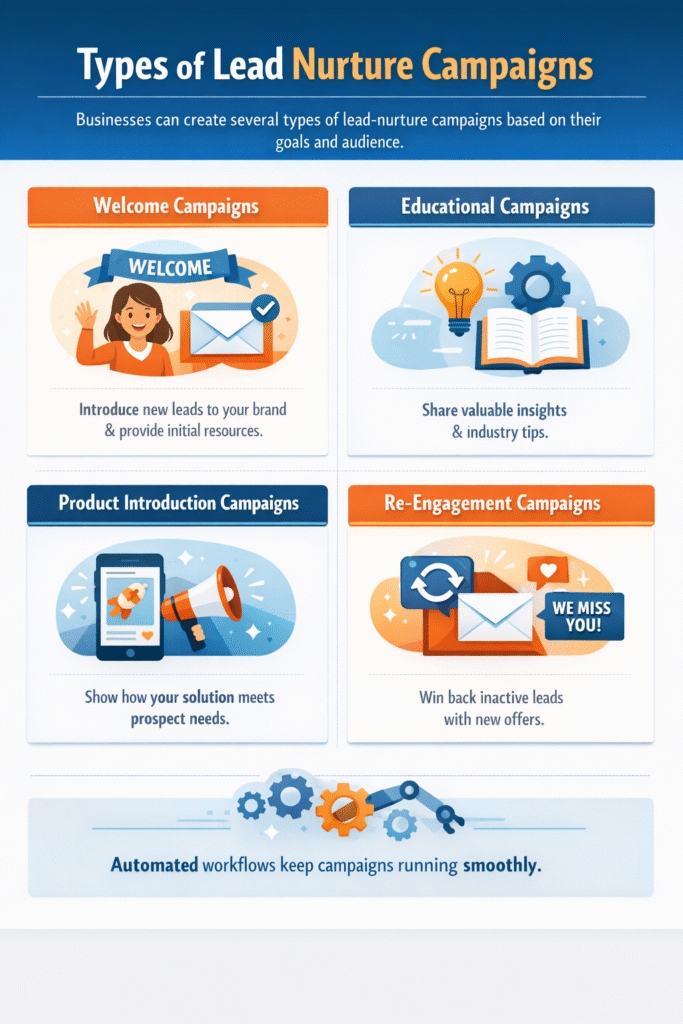
Types of Lead Nurture Campaigns
Businesses can create several types of lead-nurture campaigns based on their goals and audience.
Welcome Campaigns
Welcome campaigns introduce new leads to the brand and explain how the company can help solve specific problems.
These campaigns typically begin immediately after a prospect joins a mailing list or downloads a resource.
Educational Campaigns
Educational campaigns provide ongoing insights about industry challenges and best practices.
These campaigns help position the company as a trusted authority.
Product Introduction Campaigns
Once prospects understand their problem, product-focused nurturing messages can demonstrate how specific solutions address those needs.
Re-Engagement Campaigns
Not all leads remain active indefinitely.
Re-engagement campaigns aim to reconnect with inactive contacts by leveraging new insights, offers, or updates.
When implemented effectively, lead nurturing automation ensures each campaign operates consistently without requiring constant manual effort.
Channels Used in Lead Nurturing Sequences
While email remains the most common channel for nurturing, effective lead-nurturing sequences often combine multiple channels.
These may include:
Email marketing
SMS messaging
Retargeting advertisements
Social media engagement
Webinars or live events
Using multiple channels increases the likelihood that prospects will engage with the content.
For example, email may deliver detailed insights, while SMS reminders may prompt prospects to check new content or attend an event.
Integrated communication enhances the effectiveness of lead-nurture campaigns.
Personalization in Lead Nurture Sequences
Modern consumers expect personalized communication.
Generic messaging often fails to capture attention.
A strong lead nurturing strategy segments prospects based on their interests, behavior, or stage in the buyer journey.
For example:
Prospects who downloaded a beginner’s guide may receive introductory content.
Prospects who attended a product webinar may receive more advanced information.
Personalization improves engagement because messages feel relevant to the recipient’s needs.
Automation platforms now make it easier to deliver personalized content at scale.